
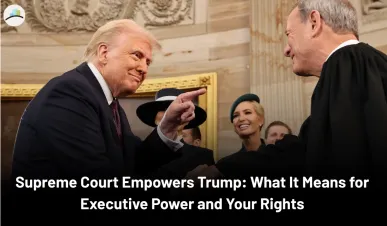
What Just Happened at the Supreme Court?
So, here's the deal. The U.S. Supreme Court just wrapped up its term, and honestly, it feels like President Trump came out ahead on almost every big issue. One of the biggest rulings was about limiting how federal judges can block government policies. The court basically said that judges can’t stop a national policy for the whole country unless it directly involves the people who are suing. That may not sound huge at first, but it actually is—it gives a lot more space for the President to act without getting immediately blocked by one judge in one state. And let’s be honest, Trump has been waiting for this kind of backing.
Supreme Court just handed President Trump a MASSIVE win.
— Desiree (@DesireeAmerica4) June 27, 2025
Judges can no longer block his policies nationwide with one ruling.
This changes everything.
Trump’s agenda just got supercharged.
Presidents make decisions. Not unelected activists in robes. 🇺🇸 pic.twitter.com/FGNu3pngYI
Why This Really Matters (More Than People Think)
Here’s what a lot of people aren’t saying: this changes the game for how laws and orders are challenged. If someone sues over a federal rule, only they get the protection, not the entire country. That could mean we start seeing different laws apply in different states. It’s gonna get messy—what works in Texas may not hold up in New York. And for businesses, that could be a nightmare. Companies usually want one rule they can follow everywhere, not 10 different ones depending on where they operate.
And another thing—this isn't just about Trump. Even if someone else becomes President next time, they’ll have the same power. The court didn’t give Trump special treatment; they just gave more space to whoever’s in charge of the White House.
Not Just One Win—A Pattern
This ruling wasn’t some one-off thing. The court also backed Trump on other stuff: immigration changes, limits on who can serve in the military, and even what kind of content schools need to include. All of this points in one direction: the court is clearly more conservative now, and it’s comfortable giving the President more control.
Here are a few things the court allowed:
-
Quicker deportations without long court hearings
-
A ban on transgender people serving in the military
-
Letting parents pull their kids out of classes with LGBT content
-
Age checks for adult websites
That’s a lot. And it all fits a pattern of handing more power to the executive branch—and fewer checks from the courts.
What Could This Lead To?
This could actually shift how the U.S. government works. If courts stop blocking presidential orders at the national level, presidents could pass big policy changes without facing major legal roadblocks. That’s good for speed, sure. But what if a policy is harmful? Or unfair? It might take months or even years before it’s challenged properly—and by then, a lot of damage could be done.
It also creates a weird situation where Congress becomes even more stuck. Think about it: if the President can act fast and courts don’t push back, what’s Congress really left with? Debates that go nowhere. And people lose faith in the system when nothing feels balanced.
More Articles:
A Warning Sign or a New Normal?
Some experts are already calling this a turning point. And honestly, it does feel that way. The court has basically told presidents: “Go ahead, just make sure the paperwork’s solid.” That’s a big deal. Especially since most of these rulings came from emergency requests—things that didn’t even go through the full legal process.
And we’re not just talking about legal theory. This stuff affects real lives. Immigrant families. LGBTQ soldiers. Public school kids. What the court did wasn’t just legal housekeeping—it reshaped what it means to live under federal policies in the U.S.
So now, people are watching closely. Will this become the new normal for how presidents use their power? Will the next term bring even more changes?
We’ll see. But one thing’s clear: things just shifted in a big way, and it’s going to be felt in more places than just Washington.



