
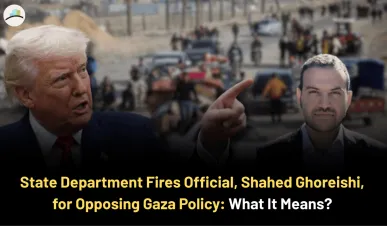
The Firing of Shahed Ghoreishi: What It Means for U.S. Policy on Israel and Gaza
The recent dismissal of Shahed Ghoreishi, a press officer at the U.S. State Department, has raised eyebrows and sparked debates about internal policy disagreements and the broader direction of U.S. foreign policy toward the Israeli-Palestinian conflict. Ghoreishi’s termination follows his refusal to align with certain official talking points about Gaza, revealing deep tensions within the U.S. government on how to approach this highly sensitive issue.
What a reason to fire someone:
— Dana Afana (@DanaAfana) August 20, 2025
Monday’s firing occurred days after an internal debate about releasing a statement to the news media that said, “We do not support forced displacement of Palestinians in Gaza.” https://t.co/1AQXfY7W1C
Why This Event Matters
The firing of a U.S. government official for challenging policy positions isn't just an internal personnel matter—it has larger implications. This event showcases a significant rift within the U.S. State Department regarding its approach to the Israeli-Palestinian conflict, particularly in relation to the situation in Gaza.
Ghoreishi’s actions, questioning the forced relocation of Palestinians and pushing back against the term "Judea and Samaria" used to describe the West Bank, strike at the heart of longstanding political debates. His firing underscores how contentious foreign policy decisions have become within U.S. government circles, with some officials facing professional consequences for advocating positions that may differ from the administration’s preferred narrative.
MORE ARTICLES:
What’s Not Being Discussed Enough?
What’s particularly concerning here is the chilling effect this incident may have on internal dissent within government agencies. While the State Department has remained tight-lipped about the details, the broader message is clear: questioning the government's approach to Israel or Palestine could cost you your job. This raises questions about how much space there is for debate within the U.S. government, particularly in a time when foreign policy decisions have far-reaching consequences on global diplomacy.
Ghoreishi’s critics have argued that his approach was overly idealistic or counterproductive, but the decision to fire him also reveals an underlying issue—how U.S. foreign policy is being shaped at the top and the degree to which internal voices are being silenced. There's a need for more transparency about the policies that drive these kinds of firings. How much room should there be for government officials to dissent when it comes to sensitive geopolitical issues?
Hidden Risks and Opportunities
One hidden risk in this situation is the potential loss of nuanced foreign policy debate within the U.S. government. By quashing internal disagreement, the administration risks adopting overly one-sided or simplistic approaches to complex issues. If the government doesn’t allow for more diverse viewpoints on critical matters like the Israeli-Palestinian conflict, it could lead to policy decisions that are out of touch with global realities, potentially undermining diplomatic efforts and international relations.
However, there is an opportunity as well. If this controversy leads to greater awareness about the suppression of dissent, it might inspire calls for reform and openness within government institutions. By allowing space for varied opinions, the U.S. could foster a more robust and nuanced foreign policy, ensuring that decisions reflect a broader range of perspectives.
Political and Economic Implications
Politically, the firing of Ghoreishi aligns with the administration’s continued support for Israel’s stance on Gaza, but it also highlights the risks of consolidating power within a narrow ideological framework. This could alienate a significant portion of the U.S. electorate, particularly those who advocate for more balanced approaches to the Middle East conflict.
On the economic front, the fallout from this situation could have indirect effects. U.S. foreign policy decisions regarding the Middle East influence trade relationships, security alliances, and even energy markets. A more rigid, less nuanced policy could destabilize relationships with key allies or impact economic interests in the region, from oil markets to defense contracts. Moreover, how the U.S. approaches Gaza could influence global sentiment and shape international markets in unpredictable ways.
A Historical Parallel: The Consequences of Suppressing Dissent
The dismissal of Ghoreishi may also call to mind other historical examples where government dissenters faced professional consequences for voicing contrary opinions. In the past, such incidents have often led to public outcry and, in some cases, shifts in policy. For instance, during the Vietnam War, many officials who questioned U.S. involvement faced marginalization or dismissal, but the broader anti-war movement eventually influenced a change in policy. Similarly, today’s firing could eventually spur greater public debate on U.S. foreign policy, especially as the Palestinian cause continues to resonate worldwide.
Conclusion: What’s at Stake Moving Forward
The firing of Shahed Ghoreishi is more than a single incident—it’s a reflection of the growing tensions within U.S. foreign policy, particularly regarding Israel and Gaza. This event raises critical questions about the space for disagreement within the government, the risks of narrowing policy debates, and the long-term impact on U.S. international relationships. As global political dynamics continue to evolve, it will be crucial to monitor how this situation unfolds and whether it sparks a larger conversation about the need for diverse voices in shaping the nation’s foreign policy.



