
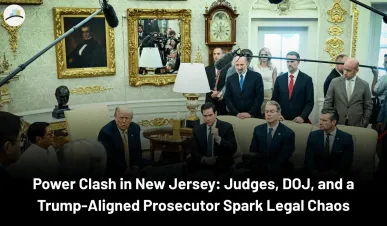
A Quiet Legal Switch Turns Into a Public Power Struggle
So here’s what happened: The federal judges in New Jersey tried to quietly move forward by appointing a new interim U.S. Attorney—Desiree Leigh Grace—after Alina Habba’s 120-day term expired. Habba, by the way, is known for being one of Trump’s personal lawyers. It should’ve been a smooth handover, but the Department of Justice had other plans. Within hours, Grace was removed, and Habba was reinstated. That’s not something you see often, and honestly, it’s left a lot of people wondering what just happened—and what this could mean for how things work between courts and the DOJ from now on.
NJ district judge blocked U.S. Attorney Alina Habba and installed her top assistant as the state’s top prosecutor.
— .*Funkytown™*. (@01Funkytown) July 23, 2025
Hours later, Pam Bondi fired "the chosen one."
These people are something else. Until treason is dealt with, it will only increase.
Bondi can redeem herself.… pic.twitter.com/TeBanZLq1q
Why This Feels Bigger Than Just a Personnel Move
This might look like a basic reshuffle from the outside, but it really isn’t. What we’re seeing is a rare case where the judicial branch—the judges—stepped in to appoint someone, only to get immediately overruled by the executive branch, led by the DOJ. That’s a serious tug-of-war between two branches of government. Usually, things like this happen quietly behind the scenes, and everyone plays by the book. But this time, the book was practically thrown out the window.
It’s raising real questions—like, if judges have the legal power to appoint someone when a term ends, can the DOJ just undo that? And if yes, then what's even the point of the judges having that authority in the first place?
What’s Fueling the Tension Behind the Scenes
There’s politics all over this. Habba, who had been in the interim role, came in under Trump’s team and made headlines by going after some Democratic leaders in New Jersey. Some charges were later dropped, but it still sparked major debate. Meanwhile, Democratic Senators from the state weren’t on board with making Habba’s role permanent, which stalled her official nomination. When the judges named Grace instead—a quiet career prosecutor—it probably looked like a way to calm the waters.
But then the DOJ flipped that decision within hours, and now it feels more like a message: “We decide who runs this office.”
That’s the part people are worried about—this isn’t just about who sits in the chair. It’s about who holds the power to make that decision and why that power might be shifting.
Also read on Procapitas
What No One's Really Talking About—But Should Be
Honestly, one of the biggest things flying under the radar is the long-term effect this could have on how independent U.S. Attorneys really are. These prosecutors are supposed to work without political pressure, right? That’s the whole idea. But if they’re being appointed, removed, and swapped around based on who’s in charge politically, that independence starts to fade.
And think about this: what’s going to happen in future situations? Let’s say another judge tries to make an appointment during a gap—will they now hesitate, wondering if the DOJ is just going to throw it out? That kind of hesitation could shake the foundation of how justice is managed across districts.
Also, we’re not just talking about New Jersey. Other politically sensitive regions might see similar battles if this becomes the new playbook. That could change how power is distributed between federal courts and the DOJ all across the country.
Where This Could All Be Heading
There’s a good chance this isn’t over. Legal challenges might come up if people push back on whether the DOJ had the authority to cancel the judges’ choice. Some lawmakers might start pressing for clearer rules about appointments to make sure this kind of mess doesn’t keep happening.
At the same time, this whole story is a reminder of how fragile the balance between the executive branch and the courts can be. When one side pushes too hard, it risks throwing the whole system off balance—and that doesn’t just affect politics. It affects real cases, real prosecutors, and public trust in how justice is carried out.
In Summary
This wasn’t just a disagreement about one appointment. It’s a sign of deeper cracks between parts of the government that are supposed to check each other. If these kinds of decisions keep getting made behind closed doors and then overturned within hours, it could mean big changes in how the justice system works—starting in New Jersey, but not ending there. The real question now is whether anyone will step in to fix it, or if this will become the new normal.



