
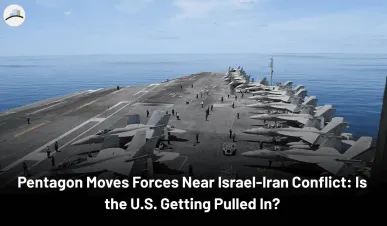
So, here's what’s happening — and honestly, it’s kind of tense. The United States has started moving military planes, ships, and defense systems closer to the Middle East. They say it’s not because they want to get involved in the fight between Israel and Iran, but just to “protect their own people and bases.” Still, when you see aircraft carriers and missile defense systems being moved around like this, it’s hard not to wonder what might happen next.
Wow 16-18 tankers and C-17’s heading from America to Israel and the Middle East. America is 100% entering the war and will be striking Iran within days. You do NOT send 18+ tankers and C-17’s for no reason. I’ve never seen this many. Trump giving Israel everything they want pic.twitter.com/VU07IZavLW
— Keith🇺🇸✝️ (@Americaonly9) June 16, 2025
Why Is the U.S. Doing This Now?
The main reason, at least officially, is that Israel and Iran are trading attacks. Israel carried out some major airstrikes on Iran a few days ago — they’re calling it “Operation Rising Lion.” In response, Iran has fired back with drones and missiles. So yeah, things are heating up fast.
And the U.S.? Well, they have a lot of people, bases, and interests in that region. So they’re saying they just want to keep their own safe. That’s why they’ve moved dozens of tanker planes to NATO bases in Europe, sent the USS Nimitz carrier closer to the region, and added missile defense systems in case things get worse.
Still, this feels like more than just defense. It almost looks like they’re preparing for something bigger — just in case.
More Articles:
What's Not Really Being Talked About
One thing that’s kind of flying under the radar is how this could mess with oil prices. If this fight grows and something happens to oil supply routes — like the Strait of Hormuz — we could all feel it at the pump. Energy prices could jump fast, and not just in the U.S., but globally.
Another thing — the U.S. is setting up a lot of these planes in Europe, not just the Middle East. That might mean they’re preparing to work from a safer distance, or maybe they’re thinking some countries in the Gulf region won’t want to be directly involved.
Also, Congress is a bit upset. Some politicians are saying, “Hey, if this turns into a real war, we need to vote on it first.” So there’s some pushback happening back in Washington too.
Is This Like Anything We've Seen Before?
Yeah, kind of. Back in 2003, when the U.S. was gearing up for the Iraq War, they said it was all defensive at first — just like now. And in 2019, when Iran hit Saudi oil plants, there was also a big military buildup. So this isn’t totally new.
But here’s the twist: This time, the U.S. isn’t leading the attack. Israel is. And the U.S. seems to be playing more of a “wait and see” role. Still, they’ve got so many assets in the region that if anything goes wrong — like if a missile hits a U.S. base — they might not be able to stay out of it.
What Happens If It Escalates?
That’s the big question. Right now, countries like Oman and Qatar are trying to calm things down. They’re known for quietly helping in situations like this. But if Israel keeps hitting deeper into Iran, or if Iran decides to go after American bases, things could get out of hand fast.
If that happens, the U.S. might feel forced to step in. And that’s where things could really spiral — not just for those involved, but for the whole region. Investors are already nervous, especially in energy and logistics sectors. And everyday people? Well, they might soon see higher fuel bills or hear about delays in global shipping.
Final Thoughts
To be honest, it’s one of those moments where everything feels kind of uncertain. The U.S. says it’s just being careful, but this kind of military movement doesn’t happen unless they’re really worried. Whether this turns into a wider conflict or gets solved with backchannel diplomacy — that’s still up in the air. But for now, all eyes are on what happens next.



