
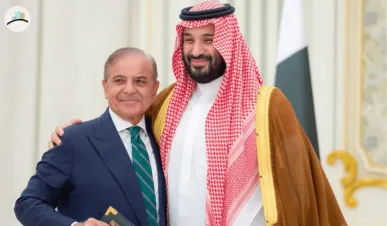
Pakistan and Saudi Arabia are reportedly negotiating a major defence‑for‑debt swap in which about $2 billion that Pakistan owes Riyadh could be converted into a deal for JF‑17 fighter jets, as Islamabad grapples with severe financial strain and mounting external obligations.
This unusual arrangement would see Saudi Arabia accept JF‑17 Thunder jets from Pakistan in lieu of cash repayment — a move that reflects deepening military cooperation, Pakistan’s economic distress, and shifting regional security priorities.
Why This Deal Is Happening: Pakistan’s Financial Stress and Strategic Pivot
Pakistan is currently under significant economic pressure, with strained foreign reserves and repeated reliance on international financial support including from the International Monetary Fund (IMF). In this context, Islamabad is reportedly unable to repay a roughly $2 billion loan to Saudi Arabia, prompting innovative alternatives to direct cash settlement.
Rather than asking for a traditional repayment, Pakistani and Saudi officials are in talks to convert that loan into deliveries of JF‑17 fighter jets — aircraft jointly developed by the Pakistan Aeronautical Complex and China’s Chengdu Aircraft Corporation, known for being affordable and combat‑proven.
For Pakistan, such a deal would help reduce debt obligations and support its domestic aerospace sector. For Saudi Arabia, acquiring capable combat jets at a lower price point than many Western fighters could fit its evolving defence modernization goals.
🚨🇵🇰🇸🇦 BREAKING:
— The Arab Eye (@TheArabEye0) January 7, 2026
Pakistan and Saudi Arabia are in talks to convert about $2 billion of Saudi loans into a JF-17 fighter jet deal.
Source: Reuters pic.twitter.com/MeCvZiwOjQ
What’s in the Proposed Deal
According to sources familiar with the negotiations:
-
About $2 billion in Saudi loans could be offset by a JF‑17 fighter jet procurement package.
-
The total package might expand to around $4 billion when factoring in weapons, training, spare parts, simulators, maintenance, and support infrastructure.
-
The JF‑17 Block III — the most advanced variant — is at the center of discussions, prized for its versatility and cost‑effectiveness compared with Western fourth‑generation jets.
This kind of debt‑to‑defence swap is rare and shows how military cooperation and financial strategy are becoming intertwined between the two countries.
MORE ARTICLES:
Why Saudi Arabia Is Interested
Saudi Arabia’s interest in the JF‑17 deal isn’t just about acquiring more aircraft. It also reflects geopolitical and defence shifts:
-
Saudi Arabia is reassessing its security partnerships amid concerns over traditional allies and changing U.S. defence commitments in the Middle East.
-
Adding JF‑17 jets could be part of a broader diversification of defence suppliers, enhancing capability without overly relying on Western systems.
-
The arrangement turns financial support into tangible military capability, strengthening bilateral ties and operational cooperation.
This deal would not just be a simple purchase — it would mark a structural shift in how defence cooperation and debt obligations are managed between Pakistan and Saudi Arabia.
What It Means for the Region
If the deal goes ahead, it could have broader implications:
-
Pakistan’s defence exports could grow, helping somewhat with its economic strain and reducing reliance on external bailouts.
-
Saudi Arabia’s air force would gain a cost‑effective multirole fighter in addition to its existing fleet, potentially increasing its military flexibility.
-
The arrangement could signal new models of international military cooperation where financial and defence strategies are integrated.
It also comes against the backdrop of a broader Strategic Mutual Defence Agreement signed in September 2025 between Pakistan and Saudi Arabia, under which both countries pledged to treat aggression against one as aggression against both.



