
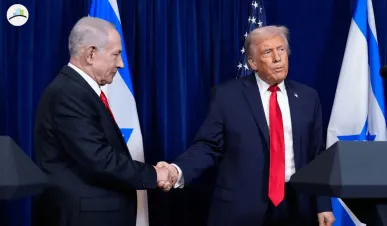
Benjamin Netanyahu, the Prime Minister of Israel, has been in the United States for high‑level meetings with U.S. officials, including discussions with President Donald Trump. The central focus of their talks has been Iran’s nuclear program, with Netanyahu pushing for stricter limits, not just on uranium enrichment but also on Iran’s ballistic missile capabilities and regional activities. This comes amid ongoing efforts to curb Iran’s influence in the Middle East, with both nations agreeing on a strategy of maximum pressure. Despite this alignment, their long‑term goals diverge, with Netanyahu emphasizing the dismantling of Iran’s entire nuclear infrastructure rather than just limiting its enrichment activities.
🇮🇱 🇺🇸 ❗ American war lord Lindsey Graham is in Israel
— WANGIRA IV, CFA🇰🇪🏴 (@OkandaJnr) February 17, 2026
Met with Netanyahu
'Wars of the future are being planned here in Israel', Lindsey says. pic.twitter.com/HIPIR8uZNK
Netanyahu's Peace Push: A “Board of Peace” for Gaza
In addition to discussions around Iran, Netanyahu has also spoken about joining a U.S. initiative referred to as the "Board of Peace". This initiative is aimed at stabilizing Gaza under a long‑standing ceasefire agreement, with plans for reconstruction and governance. While the initiative has received mixed responses, Netanyahu views it as a step toward lasting peace, particularly focusing on Gaza's reconstruction.
Tensions Around Iran Negotiations
The ongoing U.S.–Iran nuclear talks have seen some progress, but Netanyahu has expressed that any agreement should go further than just halting uranium enrichment — it should include dismantling Iran’s nuclear infrastructure entirely. This approach has caused friction, as some feel that Netanyahu’s influence could hinder a deal. Iran, on the other hand, continues to assert that it is committed to diplomacy but has voiced concerns about external pressures that might complicate negotiations.
MORE ARTICLES:
International and Domestic Impact
Netanyahu’s leadership has faced criticism both internationally and domestically. In the United States, while there is still considerable support for Israel, opinions about Netanyahu’s policies and actions in the Middle East are divided. Some view his hardline stances as necessary for national security, while others feel his policies contribute to further instability in the region.
Domestically in Israel, Netanyahu’s political future remains uncertain. Upcoming elections are expected to test his political strength as debates continue over his governance and military strategies, particularly in light of ongoing conflicts and shifting alliances.
Why It Matters Now
Netanyahu’s meetings with U.S. leaders are critical because they touch on some of the most pressing geopolitical issues facing both Israel and the broader Middle East. How these discussions unfold will have significant implications for regional security, the future of U.S.–Israel relations, and the broader dynamics of international diplomacy, especially with Iran. Netanyahu’s stance could influence both future peace efforts and military actions in Gaza, while also shaping global perspectives on Middle East security.
Conclusion
Prime Minister Netanyahu continues to play a crucial role in Middle East diplomacy. His push for stricter nuclear restrictions on Iran, coupled with his efforts to influence the post‑ceasefire landscape in Gaza, keeps him at the center of discussions on regional security and international cooperation. Whether or not his strategies will succeed in achieving long‑term peace or stability remains uncertain, but Netanyahu’s actions will undeniably shape the course of future U.S.–Israel relations and Middle Eastern politics.



