
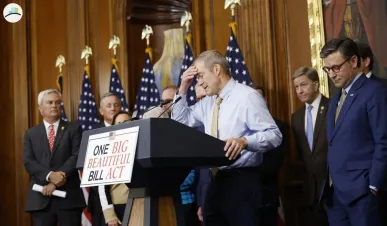
Okay, so here's the deal. A massive bill, the "One Big Beautiful Bill Act" – seriously, that's what they're calling it – just squeaked through the House. It's a huge budget bill, over 1000 pages long, packed with stuff on taxes, immigration, healthcare…and, buried deep inside, a ten-year moratorium on states regulating artificial intelligence. This is a major development, and honestly, I'm still trying to wrap my head around the implications.
A Decade-Long Pause on AI Regulation?
This part of the bill, tucked away in Section 43201, basically says that for the next ten years, no state can pass any laws controlling AI or "automated decision systems." That's a pretty broad definition, and experts are already pointing out it could affect way more than just AI. Think self-driving cars, algorithms used in hiring, even some really basic computer programs. The National Conference of State Legislatures (NCSL) says this could wipe out over 60 existing state laws aimed at tackling everything from algorithmic bias to government use of AI. Hundreds more are in the works. It's a massive power grab, and the whole thing feels incredibly rushed.
Who's For It, and Why?
The supporters are a mix of Republicans, tech giants, and free-market groups. Their argument is that a federal, unified approach is better than a confusing patchwork of state rules. They say it'll boost US companies' innovation and help them compete with China. OpenAI, the company behind ChatGPT, even went so far as to suggest banning AI models from China in their submission to the Trump administration's AI Action Plan. It sounds good on the surface – avoiding a messy, state-by-state approach – but I'm skeptical. This smells suspiciously like a major win for Big Tech.
The Opposition: Concerns about Consumer Protection and Federal Overreach
The opposition is made up of Democrats, some Republicans (yes, really!), state lawmakers, attorneys general, AI experts, and consumer rights groups. Their main worry is that pausing state regulations leaves consumers vulnerable. There are serious concerns about the potential for increased AI bias, discrimination in hiring, and other harms without adequate state-level safeguards. Plus, there are serious constitutional questions being raised about whether this is federal overreach. Senator Marsha Blackburn, a Republican, even voiced concerns that the bill could eliminate crucial protections already in place in her state. The whole "states' rights" argument seems to have gone out the window here.
Big Tech's Divided Stance
The tech industry itself isn’t united on this. OpenAI's CEO Sam Altman wants one clear federal rule, not 50 different state ones. He argued that a unified approach was essential for the tech industry to thrive, basically saying that navigating 50 different regulatory landscapes would be a logistical nightmare. However, other industry leaders, such as Anthropic’s CEO Dario Amodei, are expressing concerns about the potential downsides of a complete moratorium, suggesting it might be a bit too drastic of a measure.
What Happens Next?
The bill now heads to the Senate. It's far from a sure thing. Democrats will fight it, and even some Republicans have concerns. There’s a Senate rule, the Byrd Rule, that could trip this up if the AI moratorium is deemed “extraneous” to the budget. The entire thing is a huge gamble, and if I had to guess, I'd say the Senate is where this whole thing could fall apart, or else, it could pass, ushering in a new era of unregulated AI development in the U.S. which seems rather concerning. This is a big deal. It’s not just about the economy, it’s about consumer protection, and the balance of power between the states and the federal government. This is something that needs a lot more discussion and scrutiny than it’s gotten so far.



