
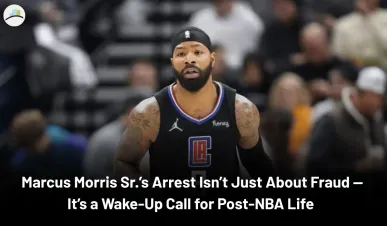
Over the weekend, former NBA player Marcus Morris Sr. was arrested in Florida on a fraud charge — and honestly, it caught a lot of people off guard. According to reports, the issue started with a casino debt that turned into a legal warrant. He’s currently being held without bond in Broward County, and right now, we don’t know exactly how this will play out.
This isn’t just about a bounced check. There’s a lot going on behind the scenes, and if you look a little deeper, it raises bigger questions — not just for Morris, but for how retired athletes deal with money, fame, and life after basketball.
Marcus Morris Sr. was arrested on Sunday related to a fraud charge while in Broward County, Florida, online booking records showed.
— Real Ones Know (@RealOnesKnow_) July 28, 2025
The NBA player and ex-Knick was picked up on a felony charge of Fraud – Writing a Check with Insufficient Funds, with the report indicating he was… pic.twitter.com/SzbPLmTKBS
The Casino Marker and the Confusion Around It
So the story goes like this — Marcus apparently had a casino marker (kind of like a line of credit you use while gambling), and it went unpaid. Once it crossed a certain amount — over $1,200 in this case — it became a legal issue, not just a private debt. Some states treat that as fraud, especially if the casino feels like the player isn’t planning to pay.
Now here’s the thing — a lot of athletes have dealt with this kind of issue, and it usually gets settled quietly. What makes this different is that it turned into a public arrest. His brother Markieff Morris has already spoken up, saying it shouldn’t have gone down like this and it’s been blown out of proportion. Maybe he’s right. Maybe it was just bad timing or someone trying to send a message.
A Career After the NBA — And What’s Now At Risk
What makes this whole thing even more surprising is where Marcus was headed next. Since stepping away from the league, he’s been working his way into sports media. He’s made appearances on ESPN, talked hoops with real confidence, and was starting to build a second career off the court. That kind of pivot doesn’t happen overnight, and he was doing it well.
But now? That’s all up in the air. Media companies, especially big ones like ESPN, don’t love being attached to controversy — even if it’s over something small. One legal mess, even if it gets resolved quickly, can be enough to pause everything. And honestly, it’s kind of sad to see that progress interrupted over a financial issue that might just be a misunderstanding.
MORE ARTICLES:
This Isn’t Just About Marcus — It’s About a Bigger Pattern
Here’s what’s not being talked about enough: a lot of former athletes face stuff like this. The game ends, the regular checks stop, and suddenly there’s pressure to keep things going — lifestyle, investments, responsibilities. Not everyone is prepared for that shift. Even players who made millions can find themselves dealing with unexpected bills or bad financial choices.
What Marcus is going through might seem like a one-off thing, but it’s not. It shows how important it is for athletes to have real support when their career ends. That means financial advice, mental health resources, and a clear plan for what comes next.
What Could Happen Next
Right now, it’s hard to say where this is headed. If it turns out to be just an unpaid marker and he settles it, things could calm down quickly. But even then, the damage to his public image might take longer to fix. If the case drags out or more details come out that make it look worse, it could cost him future media work, partnerships, or other opportunities.
There’s still a chance to turn this around — if his team handles the messaging right and if the public sees it for what it might really be: a financial misstep, not criminal intent.
Final Take
This story isn’t just about Marcus Morris getting arrested. It’s about what happens when athletes move from the court to the real world — and how fragile that journey can be. One small legal issue can knock things off course fast, especially when the cameras are still watching.
Whatever happens next, this should be a reminder for both the sports world and the players in it: retirement doesn’t mean the spotlight is gone. And sometimes, the hardest plays happen long after the final buzzer.



