
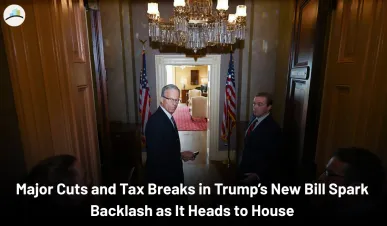
What Just Happened
So here’s the deal — President Trump just got the Senate to pass his big plan called the “One Big Beautiful Bill.” It’s basically a mix of tax cuts, more money for border enforcement, and some pretty big changes to how government spending works. The Senate was split right down the middle, and Vice President J.D. Vance had to step in to cast the tie-breaking vote. Now the bill is going to the House of Representatives, and Trump says he wants it all done by July 4th. That’s a really short deadline.
But here’s the thing — while the headlines are all about how Trump scored a win, the real story is much deeper. This bill could affect how the government spends money for years, and some of those changes might hit working families the hardest.
🇺🇸 Stuck in the Senate: Trump’s Mega-Bill Falters
— Beyond Wars (@BeyondWars) July 1, 2025
After an all-night session, Republicans still can’t secure votes for Trump’s $3.3T tax & immigration bill — risking default, Medicaid cuts, and GOP infighting.#Trump #Senate @washingtonpost
READ⬇️https://t.co/qRCNAFGbRH pic.twitter.com/ptOMmJeX7I
Why This Bill Feels Risky
On the surface, the bill looks like it’s helping regular people — no taxes on tips, more deductions for overtime, and tough rules on illegal immigration. But when you really look at it, the money for all this has to come from somewhere. And that “somewhere” seems to be programs like Medicaid and food assistance.
-
Around $1 trillion in cuts are planned for things like healthcare and food programs.
-
Analysts say over 17 million people could lose health coverage.
-
At the same time, military and immigration spending would go up.
It’s being sold as a win for hardworking Americans, but in reality, many of the benefits go to people who already earn more. Meanwhile, low-income families might lose access to basic needs like healthcare or food support.
What People Aren’t Talking About Enough
There’s something that doesn’t get enough attention: this bill adds a huge amount of debt to the government — nearly $4 trillion over the next 10 years. That might sound like just a big number, but it actually has long-term effects. Other countries lend us money by buying U.S. Treasury bonds, but if they start worrying about how we’re handling our money, they might stop doing that.
-
Countries like China and Japan are already pulling back on buying U.S. debt.
-
If interest rates keep rising, paying off this debt will become even harder.
-
That could affect the value of the dollar or even how the world sees America’s economy.
So yeah, passing a big bill is one thing. But what if it makes the country look less stable in the eyes of investors or global allies?
Could This Backfire Politically?
Right now, it looks like a win for Trump. But there’s a real chance it could turn into a political mess later. Democrats are already warning about the damage this bill could cause. They say it’s not really helping working-class people the way it claims to.
If you remember, something kind of similar happened in 2005 when President Bush tried to change Social Security. That didn’t go well. People got scared, and the whole thing collapsed under pressure. Trump’s bill might face a similar fate if it ends up hurting the people it promised to help.
Also, even Republicans aren’t all on the same page. Some voted against the bill because they’re worried about the debt and how it’s being handled. That division could make things messier when the bill hits the House.
More Articles:
Bigger Picture: What It Means for Everyday People
Here’s something important that most news sites haven’t talked about much — if Medicaid and other social programs get slashed, people might stop going to the doctor, skip medicine, or delay treatment. That means more health problems down the line, especially in rural or low-income areas.
And when people get sick, they miss work. When they miss work, companies lose productivity. Eventually, that hurts the economy. So a bill that’s supposed to help workers could actually make life harder for them — just in slower, more invisible ways.
It’s not just about politics. It’s about how healthy and supported everyday people feel. And right now, this bill raises a lot of doubts.
What To Expect Next
-
The House will take a vote soon, and changes might be made before anything becomes law.
-
Multiple states are planning to sue over parts of the bill, especially the cuts to mental health programs.
-
The economy and financial markets are watching closely. If confidence drops, we could see ripple effects in the stock market or interest rates.
At the end of the day, this bill may seem like a short-term win for Trump. But the real question is — what happens next? And who ends up paying the price?
Final Thought
Sometimes the loudest political wins come with the quietest long-term costs. Whether this bill actually delivers what it promises—or ends up making things worse—is something we’ll only understand months or even years down the line. For now, it’s not just about what passed. It’s about what’s been left out of the conversation.



