
What Just Happened in Los Angeles
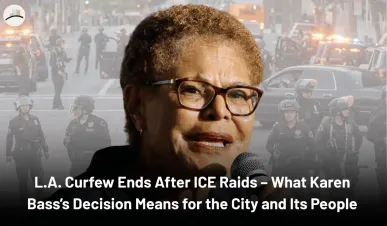
So here’s the deal — after more than a week of protests, curfews, and tension in downtown Los Angeles, Mayor Karen Bass finally lifted the curfew on June 17. The curfew had been in place since June 10, starting at 8 p.m., later moved to 10 p.m., and it covered the heart of the city — the area around the 5, 10, and 110 freeways. It was all because of the chaos that broke out after immigration raids hit some of L.A.’s most immigrant-heavy neighborhoods. The protests got heated, and there were some clashes and vandalism too. Bass says things have cooled down now, but she made it clear she’s ready to bring the curfew back if things spiral again.
Karen Bass has lifted the curfew for downtown LA.
— Spitfire (@DogRightGirl) June 17, 2025
What could go wrong? pic.twitter.com/11pnUzDCAt
The Raids That Sparked It All
It started with federal immigration raids — the kind that usually happen quietly. But this time, they were huge. ICE didn’t just target undocumented people — some U.S. citizens and people from mixed-status families got caught up in it too. That’s what really lit the fire. Neighborhoods like Pico-Union, Boyle Heights, and MacArthur Park were especially hit. People were angry, scared, and confused. Soon, protests broke out downtown. Some turned rowdy. Businesses were looted, windows smashed, and the city kind of felt like it was teetering on the edge.
Why the Curfew Was a Big Deal
Honestly, for some people, the curfew felt like protection. For others, it felt like being silenced. Mayor Bass said it helped calm things down — LAPD said it stopped more property damage and made things safer. But groups like the ACLU didn’t see it that way. They’re saying people’s rights to protest and move freely were restricted without enough reason. There are already talks of legal challenges. Some say it reminded them of past curfews, like during the George Floyd protests or even back in ’92 after Rodney King. In short, it stirred up some old wounds.
Impact on Daily Life in the City
The curfew didn’t just affect protestors — it hit businesses and regular people too. Hotels had cancellations, especially with the Dodgers-Giants series happening. Restaurants closed early. Even after-school programs were affected. Transit services had to adjust their evening schedules, and families worried about getting home in time. It’s not just about politics — people’s routines got thrown off in a big way. For some working-class families, that one hour difference in curfew made their evening harder than anyone realized.
What the Numbers Say
LAPD reported that about 180 people were arrested during the curfew enforcement. Most of them were cited for minor stuff like violating curfew. Around 45 people were arrested for vandalism or clashing with police. ICE hasn’t released exact numbers, but reports say over 300 people were detained during the raids. What’s scary is that some of those people were legal residents or even citizens. That’s why there’s such a backlash. The fear isn’t just about being undocumented — it’s about being unfairly targeted.
More Articles:
Who’s Fighting Back
Now, civil rights groups are stepping in. The ACLU, MALDEF, and others are getting ready to file legal complaints. They say what happened violated constitutional rights — from how the raids were handled to the conditions people were kept in. Some detainees didn’t have clean clothes or access to basic hygiene. California lawmakers like Judy Chu and Mark Takano are also speaking up, saying the federal government crossed the line. And Mayor Bass? She’s walking a fine line — defending the curfew but also calling out federal overreach.
Federal vs. Local Power Struggle
One thing making this even more tense is the legal fight over the National Guard. There’s a case in court right now about whether Trump can take control of California’s Guard units during all this. A lower court tried to block it, but that ruling’s on pause. If the higher courts side with the White House, it would let Trump bypass California’s governor and send troops wherever he wants. That’s a huge deal — not just for L.A., but for any city that pushes back on federal immigration policy.
What’s Next for L.A.?
Mayor Bass says she’s keeping an eye on everything. She’s not afraid to bring the curfew back if things flare up again. Local groups are pushing for more oversight, better treatment of detainees, and more transparency. And honestly, even though the streets are calmer now, there’s still a lot of tension in the air. People are waiting to see what the courts say, how federal officials respond, and whether more raids will happen. So while the curfew is gone — the story isn’t over.



