
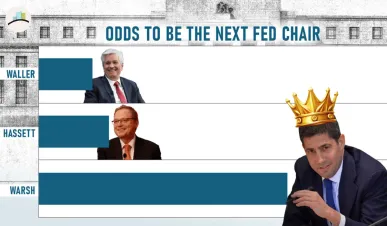
The U.S. economy stands at a crossroads, and one of the most powerful positions in global finance is about to change hands. President Donald Trump is expected to announce Kevin Warsh as his choice to replace Jerome Powell as the next Chair of the Federal Reserve. This potential leadership change could have significant implications for U.S. monetary policy, interest rates, and the broader economy. Here's everything you need to know about Warsh's expected nomination and what it means for the financial world.
Kevin Warsh: The Likely Successor to Jerome Powell
The buzz is growing around Kevin Warsh, a former Federal Reserve governor, as the leading contender to replace Jerome Powell at the helm of the central bank. Warsh served on the Fed's Board of Governors from 2006 to 2011 and has since remained a prominent voice in financial circles. Known for his deep understanding of economic theory, financial markets, and monetary policy, Warsh is considered a more hawkish figure compared to Powell, which could signal a shift in the Fed’s stance on issues like interest rates and inflation management.
Warsh's background includes a stint at Stanford’s Hoover Institution and Stanford Graduate School of Business, where he earned a reputation as an economist with an eye for financial stability and risk management. His extensive experience on Wall Street and as a former advisor on economic policy makes him a natural candidate to lead the Fed during these uncertain economic times.
Why Is Trump Replacing Jerome Powell?
The timing of Powell’s replacement comes at a critical juncture. Powell’s tenure has been marked by challenges, including disagreements with President Trump over interest rate policies. Trump has been vocal in his desire for more aggressive rate cuts to stimulate economic growth, a stance Powell has sometimes resisted, prioritizing inflation control and financial stability.
JUST IN: Trump Administration Prepares for Warsh Fed Chair Nomination
— Opinion ⁒ (@opinionlabsxyz) January 30, 2026
On Opinion: Next Fed Chair — Kevin Warsh now leads with 94.69%.
Trade now: https://t.co/h43rhzLFLl pic.twitter.com/0y5ty4kOh9
With Powell’s term set to end in May 2026, the nomination of Warsh could represent a shift in Fed policy—especially on the interest rate front. Warsh’s monetary policy views have been seen as more in line with Trump's desire for a more proactive approach to economic growth, potentially leading to lower interest rates in the short term to bolster the economy.
What Does Kevin Warsh Bring to the Table?
Warsh’s economic approach has been a point of debate for many. As a monetary policy expert, Warsh advocates for a more hawkish stance on inflation, warning against the dangers of too much monetary stimulus. In contrast to Powell’s more cautious approach, Warsh has shown a willingness to take bold steps when necessary to protect the economy from financial instability.
Having worked in private equity and financial consulting, Warsh is well-versed in both the technical aspects of central banking and the pressures faced by businesses in volatile economic conditions. His deep ties to Wall Street make him a more market-friendly candidate, but his views on the Fed’s role in inflation and financial regulation are expected to differ from Powell’s, possibly leading to a more aggressive tightening of U.S. monetary policy in the future.
MORE ARTICLES:
Who Else Was in the Running?
Before Warsh became the front-runner, there were several contenders for the Fed Chair position, including:
-
Kevin Hassett, Trump’s former economic advisor.
-
Christopher Waller, a sitting Federal Reserve governor.
-
Rick Rieder, an executive at BlackRock specializing in fixed income.
Despite the competition, Warsh has emerged as the clear favorite, with sources close to the White House indicating he’s Trump’s top pick for the role. (reuters.com)
The Impact of Kevin Warsh's Appointment on U.S. Economy
If Kevin Warsh is appointed as the next Fed Chair, it could lead to a shift in U.S. monetary policy. Here are some potential impacts of his leadership:
-
Interest Rates: Warsh is expected to adopt a hawkish stance on interest rates, possibly tightening policies to curb inflation. This could increase borrowing costs but also help stabilize the economy in the long term.
-
Inflation Control: Warsh has historically been more aggressive in addressing inflation, suggesting he may implement policies to control price hikes more rigorously than Powell.
-
Financial Stability: Warsh's financial acumen will be key in maintaining the stability of the U.S. economy, particularly as markets navigate the challenges of a post-pandemic world and increasing government debt.
What Happens Next?
Trump’s nomination of Kevin Warsh is expected to be announced soon. However, the confirmation process will still require Senate approval, which could spark further debate on the Fed’s independence and its approach to monetary policy. Warsh’s confirmation will not only mark a new era for the Federal Reserve but could also reshape the financial landscape for years to come.
As Warsh prepares for a potentially historic role, the question remains: How will his policies impact the U.S. economy, and what will be his approach to managing global financial risks and domestic inflation?



