
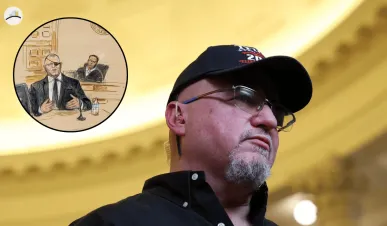
The final federal criminal prosecution connected to the January 6, 2021, attack on the U.S. Capitol has officially come to a close. U.S. District Judge Amit Mehta approved the Department of Justice's request to dismiss the remaining case involving Stewart Rhodes, founder of the Oath Keepers, and several co-defendants.
The decision marks the end of one of the most closely watched legal proceedings stemming from the Capitol riot. While Judge Mehta granted the government's motion, he expressed concern about the broader implications of ending the case, describing the outcome as a significant moment in the nation's ongoing debate over accountability for January 6.
Final January 6 Prosecution Comes to an End
The dismissal officially closes the last unresolved federal criminal case related to the Capitol attack. Stewart Rhodes and other Oath Keepers members had previously been convicted on serious charges, including seditious conspiracy, for their roles in planning and coordinating activities surrounding January 6.
A federal judge agreed to dismiss the seditious-conspiracy case against the leader of the Oath Keepers, Stewart Rhodes, and seven other members of the extremist group who planned to storm the U.S. Capitol on Jan. 6, 2021. https://t.co/cWdaWX0EG3
— The Washington Post (@washingtonpost) August 5, 2026
The Justice Department argued that ending the remaining legal proceedings was consistent with the administration's policy of bringing all outstanding January 6 prosecutions to a close. Since many defendants had already received pardons or sentence commutations, this case remained one of the few still active due to pending appeals and post-conviction matters.
MORE ARTICLES:
Who Is Stewart Rhodes?
Stewart Rhodes is the founder of the Oath Keepers, a militia organization established in 2009 that has drawn national attention for its anti-government views and involvement in several high-profile political events.
Federal prosecutors alleged that Rhodes helped organize efforts to prevent Congress from certifying the results of the 2020 presidential election. In 2022, he became one of the highest-profile defendants convicted in connection with the Capitol attack after a jury found him guilty of seditious conspiracy. He was later sentenced to prison before receiving executive clemency that reduced his sentence.
Judge Amit Mehta Voices Concern
Although Judge Amit Mehta approved the dismissal, he made it clear that the decision should not be interpreted as an endorsement of ending the case.
In his written remarks, Mehta indicated that dismissing the final January 6 prosecution could weaken public confidence in the justice system and diminish the seriousness of the attack on the Capitol. However, he also acknowledged that federal prosecutors have broad authority to determine whether criminal cases should continue, leaving the court with limited power to deny the request.
Why Barack Obama Is Part of the Conversation
Former President Barack Obama has been mentioned in coverage of the case because he nominated Amit Mehta to serve as a federal judge in 2014.
While this background has attracted public attention, Obama's role is limited to the original judicial appointment. It had no influence on the legal reasoning behind the dismissal, which was based solely on the Justice Department's request and the court's application of federal law.
Justice Department's Position
The Justice Department maintained that dismissing the remaining January 6 proceedings was appropriate under the administration's current legal and policy priorities.
Government attorneys argued that continuing appeals and related litigation would not serve a meaningful purpose after broader executive actions had already resolved most of the criminal cases arising from the Capitol attack.
Closing a Historic Investigation
The conclusion of the Stewart Rhodes case marks the formal end of the federal government's criminal prosecutions related to January 6.
The Capitol riot triggered one of the largest investigations in U.S. history, resulting in charges against hundreds of individuals across a wide range of offenses. Over the years, defendants either pleaded guilty, were convicted at trial, or reached other legal resolutions. The Rhodes case remained one of the final matters still pending before its dismissal.
Political and Legal Debate Continues
Although the criminal proceedings have ended, the political debate surrounding January 6 remains far from settled.
Supporters of the dismissals argue that the legal chapter should now be closed and that the country should move forward. Critics, however, believe ending the remaining prosecutions risks undermining accountability for one of the most significant attacks on American democratic institutions in modern history.
Judge Mehta's comments reflected that broader divide, recognizing both the government's legal authority to dismiss cases and the lasting public importance of the events of January 6.
What Comes Next?
With the dismissal now finalized, Stewart Rhodes and the remaining Oath Keepers defendants no longer face ongoing federal criminal proceedings related to the Capitol attack.
The conclusion of the final January 6 prosecution closes a historic legal chapter, but discussions over the events of that day, their political consequences, and their impact on the American justice system are expected to continue for years to come.



