
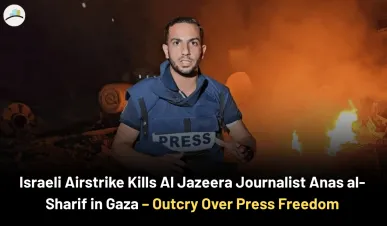
A Deadly Strike in Gaza Raises Global Alarm
Anas al-Sharif, a well-known reporter in Gaza, was killed alongside four other journalists when an Israeli airstrike hit near al-Shifa Hospital on August 10. Israel says the target was a Hamas commander. His colleagues, press-freedom groups, and much of the global community see it differently—calling it an attack on journalism itself. His death isn’t just another casualty of war; it’s a flashpoint in a larger fight over truth, accountability, and the right to report from conflict zones.
🚨 Reports indicate Al Jazeera's Gaza correspondent Anas al-Sharif was killed today in an Israeli airstrike on a journalists' tent at Al-Shifa Hospital. Another journalist has been silenced forever 💔 pic.twitter.com/OEaU8gQNGp
— Ihtisham Ul Haq (@iihtishamm) August 10, 2025
The Importance of This Event
Honestly, this isn’t just about one journalist losing his life. It’s about whether anyone can safely tell the world what’s happening inside Gaza right now. When a reporter is killed—and then accused of being a militant—there’s a chilling effect. Other journalists may think twice before covering the story. And when that happens, regular people lose access to firsthand accounts, leaving governments and armed groups to control the narrative.
Key points to think about:
-
Press freedom is at stake, especially in active war zones.
-
Labeling journalists as militants without clear proof sets a dangerous precedent.
-
The world’s understanding of Gaza’s reality may shrink without independent voices.
MORE ARTICLES:
Hidden Factors to Consider
One thing that isn’t being discussed enough is how incidents like this change the way wars are documented. If international media can’t operate freely, future conflicts may unfold with far less transparency. There’s also the political dimension—these accusations come during an intense phase of Israel’s military operations, which means public opinion at home and abroad could be influenced. Historically, wartime killings of journalists often push debates about accountability into international courts or UN bodies, but these processes move slowly, if at all.
Analysis worth noting:
-
Targeting or discrediting journalists can discourage critical coverage.
-
In past conflicts, similar incidents have fueled long-term diplomatic disputes.
-
Expert observers warn that without eyewitness reporting, humanitarian abuses risk going unverified.
Understanding the Consequences
From here, the fallout could go in multiple directions. International watchdogs may increase pressure on Israel to explain its evidence. Media outlets might pull back their teams, limiting coverage and making independent reporting even harder. For people on the ground, it means fewer stories told, fewer truths recorded, and more reliance on official statements. In the bigger picture, this could lead to new calls for binding protections for journalists in conflict zones—though history tells us such measures rarely gain quick traction.
Conclusion
The death of Anas al-Sharif is more than a personal tragedy. It’s a warning about how fragile press freedom can be in wartime. The coming weeks will likely see more debate over who controls the story of Gaza, and whether reporters can keep telling it without becoming targets themselves.
Forward-looking note: Watch for whether this triggers stronger international demands for journalist safety—or if it becomes yet another unresolved case in a long list of wartime press killings.



