
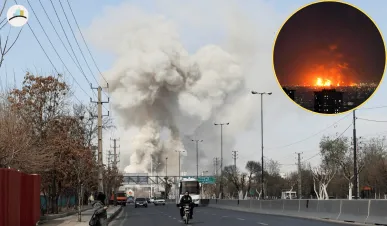
The Middle East finds itself engulfed in an unprecedented escalation of violence as Israel and Iran engage in a full-scale military conflict. The tensions that have simmered for decades over regional dominance, nuclear development, and ideological differences have now flared into a violent confrontation, with widespread implications not only for the two countries involved but for global peace and stability.
🚨 JUST IN: BRENT CRUDE OIL SURGES +3.3%!
— Crypto Aman (@cryptoamanclub) March 3, 2026
Due to rising geopolitical tensions in the Middle East, there has been a major jump of +3.3% in Brent Crude $UKOIL.
Oil prices have now increased to reach $81.6/bbl.
The escalating conflict between Iran and Israel has cast a shadow of… pic.twitter.com/kWk8LlhRHD
The Attack on Tehran: Israel Bombs Oil Depots
The recent escalation began with a series of airstrikes by Israel, targeting critical Iranian infrastructure, including major oil depots in Tehran. On March 8, Israel's military forces bombed key locations, sending shockwaves through the region. The destruction of these oil depots, which supply not only Tehran but several surrounding nations, has sparked fears of an oil crisis, further straining global supply chains that are already under pressure due to the ongoing conflict. The strikes are believed to be a direct response to Iran's continued military buildup in Syria and its alleged involvement in fueling conflicts across the Gulf states.
Israel’s military confirmed the airstrikes, stating that they were aimed at neutralizing Iranian military capabilities. Tehran has condemned the attacks as "acts of aggression," promising swift retaliation. The escalation has raised the stakes, with fears of a broader regional war becoming increasingly real.
The Role of Proxy Forces and Escalating Tensions in the Gulf
Iran's role in supporting militant groups across the Middle East is a key point of contention. Over the years, Tehran has been accused of arming and funding groups such as Hezbollah in Lebanon and various Shiite militia factions in Iraq and Yemen. These groups, often backed by Iran, have launched several attacks on Israeli and American assets, further inflaming tensions. In a turn of events, reports suggest that Iran has deployed drone and ballistic missile strikes targeting U.S. military bases in the region, leading to several casualties.
Meanwhile, Saudi Arabia, the UAE, and other Gulf states have expressed alarm over Iran's expanding influence in the region, particularly in Iraq and Yemen. These countries have long viewed Iran as a threat to their Sunni-led monarchies, leading to multiple proxy conflicts that have further destabilized the region.
MORE ARTICLES:
The Shifting Leadership in Iran: Khamenei's Successor Announced
As the conflict intensifies, political developments in Iran add another layer of complexity. On March 9, the Iranian government named Mojtaba Khamenei, the son of the late Supreme Leader Ali Khamenei, as the new Supreme Leader of Iran. The move marks a significant shift in Iran's political leadership. Mojtaba's rise to power is expected to solidify the hardline stance of the Iranian regime, particularly in its relations with Israel and the West.
Mojtaba's appointment is seen by many as a move to maintain the hardline revolutionary policies of his father, especially as Iran seeks to assert itself against external pressures. His leadership is expected to escalate the country’s opposition to Israeli and American influence in the region, making a diplomatic resolution seem even more distant.
Global Reactions: US and Israel's Stance
The United States, which has long been Israel's ally, has strongly supported Israel’s right to defend itself. President Donald Trump reiterated America’s unwavering support for Israel, emphasizing that the U.S. would stand firm in its commitment to ensure the safety and security of its allies in the Middle East.
On the other hand, Israel’s Prime Minister Benjamin Netanyahu has called the recent bombings "necessary to ensure national security." Netanyahu warned that the country would continue its strikes if Iran does not cease its hostilities, including halting the support of proxy forces that threaten Israel’s security.
The Humanitarian Impact: Civilian Casualties and Displacement
The ongoing conflict has had devastating consequences for civilians on both sides. In Tehran, the bombings have killed dozens of people, with many more injured in the aftermath of the airstrikes. In addition to the civilian casualties, the conflict has displaced thousands of people, with refugees fleeing to neighboring countries, adding to the already strained humanitarian situation in the region.
The conflict’s ripple effect can also be seen in the growing refugee crisis as individuals from conflict zones seek asylum in countries like Turkey, Lebanon, and Jordan. Aid organizations are warning of an impending humanitarian disaster if the violence continues to escalate, particularly as the region struggles with the COVID-19 pandemic's aftereffects.
The Future of the Conflict: Can Diplomacy Prevail?
As the conflict between Israel and Iran reaches new heights, the international community is facing a stark challenge: how to de-escalate tensions before they spiral into a full-blown regional war. While the United Nations has called for restraint and an immediate ceasefire, diplomatic efforts have so far proven futile.
Iran's nuclear ambitions remain a key concern for the West, particularly Israel, which perceives the development of nuclear weapons as an existential threat. Despite various rounds of negotiations and sanctions, Iran has continued to pursue its nuclear program, exacerbating tensions further.
Israel, on the other hand, views its military action as a defensive necessity in a volatile region. However, the larger question remains whether these actions will lead to a long-term resolution or whether the cycle of violence will continue to escalate, pulling in other regional players.
Conclusion
The Israel-Iran conflict is far from over, and the current phase of violence is just one chapter in a long history of geopolitical rivalries. The ongoing airstrikes, proxy wars, and rising political tensions only deepen the crisis. As both nations brace for further military action, the world watches, holding its breath, hoping for a diplomatic breakthrough that seems more distant by the day.
For now, the people of the Middle East remain caught in the crossfire of a conflict that shows no signs of abating. With the appointment of Mojtaba Khamenei as Supreme Leader and Israel’s continued military operations, the trajectory of the region seems headed for further unrest. Only time will tell if diplomacy can break through the mounting walls of hostility or if the region will be condemned to more years of conflict.



