
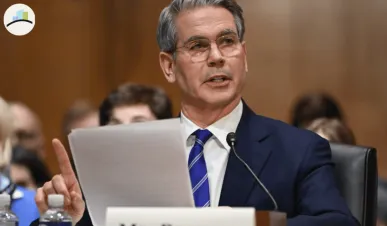
Is the U.S. Economy in Trouble? Scott Bessent Sounds the Alarm
In a recent interview, U.S. Treasury Secretary Scott Bessent raised eyebrows with his bold statement about the health of the U.S. economy. While the general outlook may appear optimistic on the surface, he revealed that several key sectors are already in recession. His comments—made during a high‑profile interview on CNN’s State of the Union—are now sparking conversations nationwide. The issue? The housing market. It’s not just sluggish; Bessent believes that it's "effectively in a recession" for many low‑income consumers, thanks to soaring mortgage rates and limited access to affordable homes.
Bessent, a key figure in managing U.S. finances, is no stranger to tough economic questions. However, his recent warning strikes a more urgent tone. While he acknowledges that parts of the economy remain stable, he emphasizes that certain areas, particularly housing, are at a breaking point. He warns that, if the Federal Reserve doesn’t act quickly to reduce interest rates, the situation could worsen, potentially dragging other sectors into a broader economic downturn.
MORE ARTICLES:
The Housing Market: A Core Concern
Bessent’s remarks focus heavily on the U.S. housing market—a sector that has long been a key indicator of economic health. According to him, rising mortgage rates have put an immense strain on homebuyers and renters, particularly those with lower incomes. "What we’re seeing is a classic case of high rates causing significant distress,” Bessent said. He pointed to the fact that home sales have dropped, and many Americans are now unable to afford the homes they once could.
This isn't just bad news for potential homeowners—it’s a domino effect. Fewer home sales lead to fewer construction jobs, fewer retail sales of home goods, and eventually, a knock‑on effect on local economies. Bessent made it clear that this isn’t just a temporary blip; the longer high interest rates are maintained, the more entrenched these problems will become. The heart of the problem is affordability—a challenge that's not going away anytime soon unless action is taken.
What Does This Mean for Homebuyers?
For anyone looking to buy a house right now, things are tough. Mortgage rates are at some of the highest levels in decades, making monthly payments more expensive. According to recent data, the typical mortgage rate is over 7%, which has significantly raised the cost of homeownership for average Americans. In fact, many first‑time buyers are now being pushed out of the market, unable to afford even modest homes. This isn’t just an inconvenience—it’s a barrier to wealth building for many young families and middle‑class individuals who would otherwise be able to invest in a home.
If rates remain high, the prospect of homeownership for these buyers may become increasingly remote. It's a troubling sign for future generations who might find themselves locked out of the real estate market for the foreseeable future.
The Bigger Picture: Economic Recession Risk
While Bessent's primary focus has been on the housing market, the implications of his warnings stretch much farther. The housing sector is often seen as the backbone of the American economy. When this sector falters, other industries such as retail, construction, and financial services often follow suit.
But what if the problem doesn’t stop at housing? Bessent's concern isn't isolated to just one industry. He suggests that the U.S. economy could be facing a larger economic slowdown if these issues aren’t addressed quickly. Interest rates, which have been raised to combat inflation, are now standing in the way of growth in vital areas. If consumer confidence continues to drop, spending on big‑ticket items—cars, homes, and other loans—will likely continue to fall.
This ripple effect could touch nearly every industry, from tech to manufacturing. If people can’t afford homes, they’re also less likely to spend on appliances, furniture, and even vacations. The consumer-driven economy that the U.S. relies on could be in jeopardy.
What Needs to Happen?
Bessent is clear that action must be taken—and quickly. He has been calling for the Federal Reserve to ease interest rates, arguing that higher rates are squeezing Americans in ways that go far beyond housing. According to Bessent, the Fed’s hesitation could prolong a painful economic cycle, where ordinary citizens bear the brunt of the pain.
The next few months will be critical. If the Federal Reserve doesn’t make adjustments, we could see a full-blown recession unfold in the coming year. Bessent’s suggestion that rate cuts are needed now signals a shift in economic strategy, from trying to curb inflation to ensuring that the economy doesn’t grind to a halt. The Fed is expected to take these warnings into account when it meets later this year.
What Does This Mean for You?
For everyday Americans, Bessent's warning isn't just a headline—it’s a reality check. The cost of living is already high, and if the housing market remains sluggish and interest rates stay high, it could lead to widespread financial stress. Consumers may hold back on spending, employers may slow hiring, and the economy could stagnate further.
But it's not all doom and gloom. Lower interest rates could provide a much-needed spark. For homeowners, it means more affordable loans, lower mortgage payments, and possibly a rebound in the housing market. For businesses, it could encourage spending and investment, helping to jump-start the economy.
For many, the uncertainty about the future of the U.S. economy is the hardest part. It's a waiting game—waiting to see if the Fed will respond, waiting to see if housing prices will stabilize, and waiting to see if we can avoid the worst of a recession. As Bessent wisely put it, “We are in a transition period, but it’s clear that action is needed sooner rather than later.” The question now is: will the government take that action in time?
Key Takeaways
-
Scott Bessent warns that while the U.S. economy is not in full‑blown recession, key sectors, especially housing, are already struggling.
-
Interest rates are at the heart of the issue, making mortgages unaffordable for many and preventing broader economic growth.
-
Bessent is calling for faster rate cuts by the Federal Reserve to help ease the strain on consumers and businesses.
-
If these challenges continue unchecked, the risk of a recession grows, threatening jobs, consumer spending, and economic recovery.



