
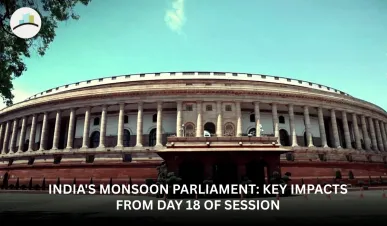
India’s Monsoon Parliament: Key Takeaways from Day 18 of the 2025 Session
As the Monsoon Session of Parliament enters its 18th day, the political landscape in India continues to be dominated by contentious debates, legislative milestones, and shifting alliances. With the Lok Sabha and Rajya Sabha deliberating on a range of issues, there’s much more at play than simply the passage of bills. The ongoing session holds deeper implications, not just for the functioning of Parliament, but for India's political trajectory, the economy, and the general public.
Parliament Monsoon Session: Lok Sabha To Hold Special Discussion On Astronaut Shubhanshu Shukla's Space Mission To Honour Him
— NDTV (@ndtv) August 18, 2025
Track live updates: https://t.co/1sHXaNXEzJ pic.twitter.com/4EAAjVdcw0
Critical Analysis: Why the Event Happened
The Monsoon Session of 2025 is taking place at a particularly volatile time for Indian politics. With multiple crucial pieces of legislation being discussed and a looming general election in the coming years, this session has proven to be a high-stakes political battlefield. The government, led by the BJP, is looking to push through its key policy agenda, while the opposition parties are using every opportunity to question the government’s motives, particularly regarding transparency, governance, and economic policies.
What stands out about this session is the increased polarization of debates, both in the Parliament halls and on social media platforms. The economic concerns of the middle class and lower-income groups—specifically related to inflation, unemployment, and the economy’s recovery post-COVID—are simmering under the surface. At the same time, the government's political maneuvering, especially in light of regional elections, is contributing to the intensifying rhetoric.
What’s Not Being Discussed Enough?
-
The Long-Term Impact on India’s Legislative Process: While the debates over specific bills often dominate media coverage, the larger issue is the efficiency of the legislative process. Repeated disruptions, walkouts, and non-productive sessions raise questions about the functionality of a bipartisan Parliament. Experts argue that if this continues, the country could face further delays in critical reforms, particularly in sectors like healthcare, education, and infrastructure.
-
Political Polarization and its Economic Consequences: Another angle not being discussed enough is the economic impact of rising political tensions. While national unity is being touted in speeches, the reality is that the country’s political gridlock is indirectly slowing down key reforms that could boost economic growth. Analysts suggest that the constant bickering in Parliament might be deterring foreign direct investment (FDI), as businesses prefer political stability when making investment decisions.
-
The Future of Coalition Politics: While the session is seeing intense debates between the BJP and its main opposition parties, there’s little discussion about the future of coalition politics in India. With several state elections around the corner, regional parties are positioning themselves as kingmakers for 2024. Their role in the passage of major national bills during this session will be crucial, but the broader implications of these coalitions forming a unified opposition are still not fully understood.
Possible Consequences
-
Impact on India’s Business Climate: The ongoing political wrangling could have long-term effects on India’s business environment. With frequent disruptions and the lack of a consensus on key economic policies, investor confidence might dip. This could hinder growth in critical sectors, such as manufacturing, real estate, and infrastructure development.
-
Legislative Stalemates: If key reforms continue to be blocked due to political deadlock, India could face prolonged legislative stalemates, impacting government schemes and public welfare initiatives. Areas such as labor laws, tax reforms, and healthcare accessibility could suffer the most.
-
Public Sentiment and Voter Engagement: The general public is becoming increasingly disillusioned with the political process, especially when Parliament is seen as dysfunctional. This could have profound effects on voter engagement, leading to decreased trust in the political system, especially among younger generations.
MORE ARTICLES:
Economic, Political, and Business Implications
-
Economic Implications: The ongoing session’s economic debates—particularly those centered around tax reforms, subsidies, and budget allocations—will be critical in shaping the fiscal landscape. Experts argue that any policy paralysis could delay crucial reforms needed for economic recovery, especially in sectors that require foreign capital.
-
Political Implications: Politically, the Monsoon Session of 2025 sets the stage for coalition-building ahead of the 2024 elections. The session is shaping public perception of the ruling government’s performance and may play a decisive role in voter sentiment. For opposition parties, it’s an opportunity to form alliances that could challenge the current ruling party’s hold.
-
Business Implications: Businesses are keeping a close eye on the session, particularly for any policy changes that might affect their operations. The session’s progress will signal the government’s ability to pass important legislation such as labor laws, GST amendments, and corporate taxation reforms—all of which are key to attracting investment and driving growth.
Historical Parallels and Expert Opinions
Historically, the Monsoon Session of Parliament has been a critical time for the Indian government to push through legislative agendas. However, this session is unique due to the political climate ahead of the 2024 elections. Similar periods, such as the 2004 elections and 2014 elections, saw significant political maneuvering in Parliament, but the current environment is more polarized than ever, with the role of regional parties becoming even more significant.
Experts suggest that this session could be pivotal in determining India’s legislative future. Prof. Anup Kumar, a political analyst, says, “The government’s ability to push through key economic reforms will determine the country’s growth trajectory in the next few years. If the deadlock continues, it could further strain investor confidence.”
Why Is This Important?
This Monsoon Session isn’t just about passing laws—it’s about shaping India’s future. The decisions made, or delayed, during this session will affect everything from the business climate to social welfare policies and, ultimately, the general election outcomes.
Hidden Risks and Opportunities
-
Hidden Risk: The growing polarization in Parliament is creating political gridlock, which could delay crucial reforms. This is a hidden risk for India’s economic growth, as stalled policies may cause investor uncertainty.
-
Opportunity: The coalition dynamics could present an opportunity for smaller regional parties to assert more influence over national policy-making. This could result in a more inclusive set of policies in the future, or at least foster greater debate over major reforms.
Conclusion: What Lies Ahead for India’s Monsoon Session
As Parliament’s Monsoon Session continues, the key question remains: Will the current political climate allow for constructive dialogue, or will the deadlock persist? The outcome of this session will have significant consequences on the political and economic landscape of India in the lead-up to the 2024 elections. Whether it serves as a launchpad for meaningful reform or as a battleground for partisan conflict will shape the nation’s trajectory for years to come.



