
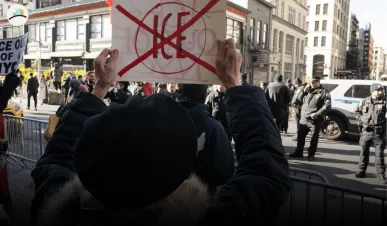
A growing conflict over privacy, surveillance, and immigration enforcement is unfolding across U.S. courtrooms and city streets. Immigration and Customs Enforcement (ICE) is engaged in a battle to identify critics, while activists continue to fight for privacy and the right to protect their identities.
The clash stems from a series of efforts by activists to document ICE’s actions, often through online platforms, and highlight the activities of individual officers. This tactic, known as doxing, has drawn sharp opposition from ICE, which is now seeking to uncover the identities of these activists. The issue has escalated to the courtroom, with ICE attempting to force social media companies to reveal users who share information about raids and other enforcement actions.
NEW: Leftists appear to dox ICE and FBI agents after looting a government vehicle, proudly documented on a Meidas Touch livestream.
— Collin Rugg (@CollinRugg) January 15, 2026
I have blurred out sensitive information.
“The ICE agent vehicles that were parked on the street in the shooting, they had to leave their cars… pic.twitter.com/drMdY67u5O
Legal Struggles Over Identity
In several major cities, ICE has asked courts to compel tech companies to disclose the identities of those responsible for the online tracking of its operations. ICE argues that this information is necessary to protect its officers and to investigate efforts to disrupt its activities. Activists, however, contend that such subpoenas undermine free speech and the right to anonymously protest.
This legal battle highlights the growing tension between law enforcement’s desire for operational security and the public’s right to monitor and critique government actions. Legal experts note that these conflicts are not just about protecting personal privacy, but about maintaining a democratic balance where government agencies do not overstep their boundaries in monitoring dissent.
Privacy and Protest Tactics on the Streets
Meanwhile, on the streets, activists have adapted to the growing surveillance state with privacy tools designed to protect their identities. Some use burner phones, encrypted messaging apps, and other methods to shield themselves from government surveillance. Additionally, some have circulated flyers naming ICE officers involved in controversial raids, a move that has drawn widespread condemnation from law enforcement.
While activists argue that public documentation of ICE activities ensures accountability and prevents abuses, ICE has labeled such actions as dangerous, claiming that exposing officers’ identities puts lives at risk. These opposing views represent a key area of contention in the broader debate about civil liberties versus government transparency.
The Role of Surveillance Technology
ICE has increasingly relied on surveillance technology to track both undocumented immigrants and activists who monitor its actions. The agency uses license plate readers, facial recognition software, and other tools to gather information about both individuals and vehicles. Critics argue that such technologies blur the lines between legitimate law enforcement and pervasive, indiscriminate surveillance of the general public.
Activists maintain that while ICE has access to advanced technologies for surveillance, they must rely on much lower-tech means, such as community-led alerts and anonymous social media accounts, to document and resist enforcement actions. This disparity in resources underscores the uneven playing field activists face when challenging government actions.
Public Reactions and the Broader Debate
The confrontation between ICE and activists has sparked widespread protests in various cities, with demonstrators calling for greater transparency and accountability from federal immigration enforcement. Protests have included both public rallies and legal challenges to the increasing use of surveillance technologies by government agencies.
Supporters of the activists argue that documenting ICE activities is necessary for holding the agency accountable, while critics contend that such tactics endanger officers and compromise public safety. This clash over privacy, safety, and civil liberties reflects the broader tension in American society over the limits of government power and the right to protest.
What’s at Stake?
The conflict between ICE and activists touches on some of the most pressing issues of modern society: how to balance national security with individual freedoms, and how to ensure that government agencies operate transparently and within legal bounds. As the legal and public battles continue, both sides remain entrenched in their positions, with activists pushing for greater oversight and ICE working to protect its officers and operations.
The resolution of this conflict, whether in court or on the streets, could set a precedent for how privacy, surveillance, and dissent are handled in future immigration policy and law enforcement practices. What happens next will likely shape the future of protest, digital privacy, and government transparency in the United States.



