
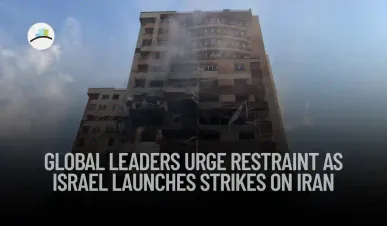
Israel’s airstrikes on Iran early Friday morning have sparked widespread global reactions, with world leaders urging restraint amid fears of a broader regional conflict. The strikes, which reportedly targeted Iranian nuclear facilities and killed several key figures, come as tensions remain high across the Middle East—especially near the volatile Gaza Strip.
A Rapid Escalation
According to Israeli authorities, the mission was aimed at disrupting Iran’s nuclear ambitions. Iranian media confirmed casualties, including senior nuclear scientists and high-ranking military officials. In response, Iran launched approximately 100 drones toward Israeli territory, prompting a state of emergency within Israel.
Also read on Procapitas
While the U.S. did not participate, officials confirmed that former President Donald Trump had been briefed in advance.
Secretary of State Marco Rubio stated, “We are not involved in strikes against Iran. Our top priority remains the protection of American forces in the region.” He added that the U.S. still prefers a diplomatic solution to Iran’s nuclear program.
Global Reactions: Calls for De-escalation
United States
Trump took to Truth Social, stating that he had warned Iran of the strength of U.S. and Israeli military capability. He urged Iran to reach a nuclear deal “before there is nothing left.”
United Kingdom
U.K. Prime Minister Kier Starmer called the situation “deeply concerning” and urged all parties to “step back and reduce tensions urgently.”
Foreign Minister David Lammy echoed the sentiment, saying that further escalation “is a serious threat to peace & stability in the region.”
France
Jean-Noël Barrot, French Foreign Minister, called for restraint while affirming Israel’s right to defend itself. “Tensions must be eased through diplomacy,” he added.
Germany
Chancellor Friedrich Merz stated, “We affirm that Israel has the right to defend itself. But both sides must avoid actions that could destabilize the entire region.”
China
China’s foreign ministry urged all parties to remain calm and expressed willingness to assist in diplomatic efforts.
Russia
Russia condemned the strikes, calling them “unprovoked attacks on a sovereign U.N. member,” and termed them “categorically unacceptable.”
United Nations
UN Secretary-General António Guterres expressed concern over the escalation and specifically criticized attacks on nuclear installations while talks between Iran and the U.S. are ongoing.
Regional Responses: High Alert in the Middle East
Saudi Arabia
Saudi Arabia denounced the airstrikes, calling them a “blatant violation” of Iran’s sovereignty and a breach of international law.
United Arab Emirates
The UAE condemned the attacks and called on the UN Security Council to take immediate action. It stressed the need for a ceasefire and urged all sides to use diplomatic means.
Qatar
Qatar labeled the strikes as a “clear breach of international law” and a “violation of Iran’s sovereignty.”
Turkey
Ankara urged Israel to halt its aggressive actions immediately. “We do not want to see more bloodshed and destruction in the region,” the foreign ministry said.
A Volatile Situation
European Union foreign policy chief Kaja Kallas stated, “The situation in the Middle East is dangerous. Diplomacy remains the best path forward.”
Global markets are closely watching developments as geopolitical instability continues to roil oil prices and financial assets.
'Now is the time for restraint:' World leaders react to Israel's strikes on Iran
— News Hub (@NewsHubGlobe) June 13, 2025
🔴 Follow us for 24/7 world news. https://t.co/3APSaWFaFU
World leaders called for restraint after Israel launched a series of airstrikes on Iran as concerns about the sta… https://t.co/Ec3M7Ds2EV pic.twitter.com/78vTObKgem
What’s Next?
With drone attacks and diplomatic tensions unfolding, the international community remains on edge. Whether diplomacy can prevail over confrontation remains to be seen.



