
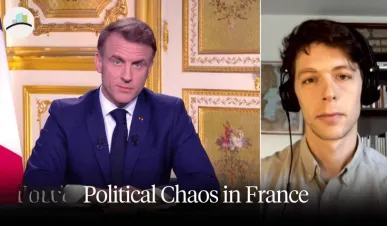
Breaking: French Prime Minister Resigns in a Stunning Move! What This Means for France's Future
Paris, France – October 6, 2025 – In an unexpected and dramatic political move, France’s Prime Minister has officially resigned after intense pressure and a tumultuous few weeks in office. The resignation has sparked an immediate crisis, leaving the French political landscape in shock. How could this happen? Why now? What does this mean for President Macron and the future of France?
The news has sent waves of uncertainty throughout France, with political analysts and ordinary citizens alike scrambling to make sense of what could be a turning point in the nation’s politics. What happens now?
MORE ARTICLES:
The Shocking Resignation: Why Did It Happen?
After months of growing controversy surrounding the Prime Minister’s leadership, severe public backlash, and increasing divisions within Macron’s party, the Prime Minister’s resignation wasn’t entirely unexpected, but the timing caught the country off guard. So, what led to this dramatic decision?
Rising Discontent
The Prime Minister was initially praised for his leadership, but cracks began to appear as his economic and social policies clashed with public expectations. Protests over controversial labor reforms and tax increases rocked the country, and it became clear that his approval ratings were plummeting.
Internal Party Struggles
Behind closed doors, Macron’s party had been deeply divided. Prominent members of Macron’s inner circle were at odds with the Prime Minister over how to handle critical issues like France’s struggling economy, the refugee crisis, and tensions with the European Union. The lack of a unified strategy made it difficult for the Prime Minister to maintain any semblance of control.
Public Outcry and Political Isolation
Public frustration with his leadership boiled over. Political rivals wasted no time in seizing on his vulnerabilities, with far-right leader Marine Le Pen accusing him of being too weak to govern. Meanwhile, the left-wing opposition blasted him for failing to push forward progressive policies.
What This Means for Macron’s Presidency and France’s Future
This resignation is much more than just a political blip. It’s a crisis that could alter the course of French politics for years to come.
A Shattered Presidency
President Macron, already under fire for his handling of social unrest and economic challenges, now faces a gaping leadership hole at the helm of the government. His carefully crafted political vision is in jeopardy as the resignation exposes the cracks in his administration. Can Macron survive this setback, or is this the beginning of the end for his presidency?
Leadership in Limbo
With the Prime Minister stepping down, France’s political future is uncertain. Macron is now tasked with finding a replacement who can unite the fractured political landscape. But who will take the reins? Will it be a moderate figure who can mend fences, or will Macron risk a more polarizing appointment that could deepen the political divide? The pressure is on Macron to act swiftly and decisively.
The 2025 Elections: A Game Changer?
As the 2025 French elections loom closer, the resignation raises new questions about the direction of the country. Will this political turmoil fuel opposition movements, especially from Marine Le Pen’s National Rally, or will it give Macron’s party a chance to rebuild and come out stronger?
What Happens Next: Is This the Beginning of Even Bigger Turmoil?
The resignation of the Prime Minister has opened the floodgates for potential chaos in the French government. With public anger simmering, labor unions on strike, and rising discontent across political lines, France is on the brink of a political revolution. What does this mean for France's stability in the coming months?
Could early elections be called, or will Macron attempt to regain control? Is this the end of the Macron era, or is there a possibility of a dramatic political rebound?
What Does This Mean for the European Union?
The political crisis in France also has major implications for the European Union. As one of the EU’s most powerful member states, the uncertainty in France will certainly affect the EU’s stance on immigration, economic policy, and foreign relations. France’s instability could affect the EU’s ability to address challenges like the refugee crisis, economic reforms, and Brexit negotiations.
Will the EU step in to help stabilize the situation in France, or will it watch from the sidelines as political forces push Macron’s administration to the brink?



