
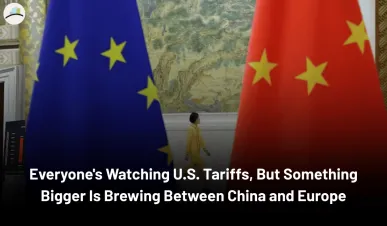
There’s been a lot of noise lately about President Trump’s new round of tariffs — especially that 35% one on Canada. It’s not stopping there. He’s threatening more, including duties on copper, cars, and even allies like the EU, Japan, and South Korea. But while the U.S. is making all the headlines, something bigger might be happening quietly — a growing trade standoff between China and Europe that could seriously shift how global trade works.
U.S. tariffs take center stage but China and the EU are quietly clashing https://t.co/K39VPZCpg4
— CNBC (@CNBC) July 11, 2025
Why Trump Is Pushing Tariffs Again
Trump says he’s doing this to fix what he sees as unfair trade deals — especially with the EU. He’s angry about the big U.S. trade deficit and claims that American companies are getting a bad deal when it comes to things like tech and manufacturing. So, he’s using tariffs to pressure other countries to lower their own barriers or come to the table for new deals.
It’s not just about economics though. There’s politics in it too — sending a message to voters that he’s being tough on trade. But a lot of economists say slapping more tariffs might make things worse, not better. They’re warning this could hurt businesses, raise prices, and scare off investors if it keeps going like this.
China and the EU Are Playing a Different Game
While the U.S. is getting louder, both China and the European Union are staying quieter — but not inactive.
China isn’t just firing back with its own tariffs (some up to 125% on U.S. goods). It’s also doing something smarter: building stronger trade relationships with other countries, especially in the Global South. They’re trying to show they can be a calm, steady partner — not unpredictable like the U.S. has been lately.
The EU is trying to stay diplomatic, but they’re not happy either. Germany wants to find a way to avoid a full-blown trade war, while countries like France think it’s better to hold firm. Behind the scenes, the EU is preparing its own countermeasures just in case talks with the U.S. fall through.
What Nobody Is Really Talking About
There are some serious issues that aren’t getting enough attention right now.
-
First, financial markets are starting to feel it. U.S. and European stock markets dropped when the tariff news came out. Investors are moving their money into safer places like gold and government bonds.
-
Second, if these tariffs go into effect — especially on things like copper, auto parts, and tech components — global supply chains could be thrown into chaos. Some factories might face delays or even have to stop production for a while.
-
Third, there’s the bigger issue of how all this affects the World Trade Organization (WTO). The U.S. has already blocked a lot of WTO rulings in recent years. Now, with more unilateral tariffs, it’s putting the whole system of global trade rules at risk.
The Real Risks and What Might Still Work
There are definitely risks here. If things get worse, you could see:
-
Higher prices on cars, electronics, and other imported goods
-
More stress on manufacturers that depend on cross-border supply chains
-
A shift in global trade leadership, where countries start looking to China instead of the U.S. for stability
But there’s still a chance to turn things around. If the U.S. and EU can agree on limited trade deals — even just small ones — it could calm things down. And if countries like Japan or South Korea step in and mediate, it might stop this from becoming a bigger mess.
MORE ARTICLES:
What Could Happen Next
The next few weeks are crucial. Trump is expected to send official letters outlining the tariffs to other countries, including the EU. Those letters will reveal a lot — which products are targeted, which countries are spared, and whether there's any room for negotiation.
Europe will have to decide quickly: should they push back or try to make a deal before things escalate? Meanwhile, investors will be watching how markets react and whether global companies start making major changes to how they operate.
Why This Actually Matters
This isn't just about a few new taxes on foreign products. It’s about how the U.S. handles global trade going forward — and whether allies and trading partners still see America as a reliable economic partner.
If this keeps going, it could lead to higher costs for everyone, fractured alliances, and a real shift in who leads global trade policy. China and Europe aren’t just waiting around — they’re quietly stepping up. And the decisions made now could shape the economy for years to come.



