
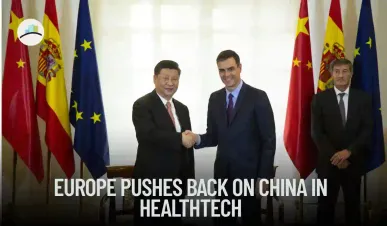
Europe Pushes Back on China in Healthtech—And It’s a Big Deal
In a quiet but powerful move, the European Union is tightening the screws on Chinese companies trying to sell medical devices to European governments. The idea? If European companies can't fairly access China's public health procurement markets, then Chinese companies shouldn't get a free pass in Europe either.
At first glance, this might sound like just another bureaucratic trade spat—but it's way more than that. What’s really happening here is Europe redrawing the lines in its economic relationship with China. And this time, it's happening in a place that hits close to home for citizens: healthcare.
So, What Sparked This?
It's all about reciprocity. European medtech companies—think Siemens Healthineers or Philips—struggle to get fair treatment in China. They face red tape, favoritism for local firms, and often feel shut out of big contracts. Meanwhile, Chinese companies have had relatively easy access to European hospitals and clinics.
Now, EU policymakers are saying, "Enough." If Europe keeps its markets open while China doesn’t play fair, Europe loses leverage and industrial strength in a sector that’s both economically vital and sensitive from a public health standpoint.
But this isn’t just tit-for-tat. There’s a bigger strategy behind the scenes.
Europe's Not Just Reacting—It's Future-Proofing
This decision fits into a broader EU push to protect its economy from over-reliance on global supply chains—especially after the COVID-19 pandemic exposed how fragile those supply chains really are. Remember the rush for masks and ventilators? That was a wake-up call.
Now the EU wants more control over the tools that keep its healthcare systems running—from MRI machines to surgical robots. And with devices becoming smarter and more connected, there’s also growing anxiety about where that data ends up.
Many European officials worry that some Chinese devices could pose data privacy or cybersecurity risks, especially as healthcare gets more digital. It's not just about who builds the device—but who owns the data it collects.
EU to restrict China’s access to medical device procurements https://t.co/RHnQgU31eb via @europressos pic.twitter.com/yyZ8WVNDKN
— Zoe Schneeweiss (@ZSchneeweiss) June 20, 2025
What People Aren’t Talking About Yet
Here’s the kicker: this move might seem like it only hits Chinese manufacturers, but it could ripple across Europe’s healthcare systems, too.
Countries in Eastern Europe that rely heavily on affordable Chinese equipment might suddenly see procurement costs rise. Hospitals could face tough decisions—wait longer for European alternatives or pay more upfront for non-Chinese options.
There’s also the question of speed. European innovation cycles tend to be slower, more compliance-heavy. If the EU cuts off access too quickly without building up its own supply, it could slow down the adoption of cutting-edge medical tools.
Is This a One-Off, or the Start of Something Bigger?
We’ve seen this playbook before. Think about the EU’s strict data privacy rules (GDPR) or its growing pressure on Big Tech. The message is the same: Europe wants to set the rules for its own market—and isn’t afraid to close the door if others won’t cooperate.
But there’s a risk here, too. If China responds by blocking European healthtech companies, it could freeze access to one of the world’s largest and fastest-growing healthcare markets. That’s no small threat for EU companies trying to expand globally.
More broadly, this could lead to a "split world" of medical tech—where Chinese and Western devices become incompatible, running on different standards and systems. That kind of fragmentation makes global cooperation harder, and it could delay progress in fields like AI diagnostics, cancer treatment, or telemedicine.
More Articles:
Where’s the Opportunity in All This?
Despite the drama, there’s a silver lining for some. European medtech startups—especially in places like Germany, Sweden, and the Netherlands—might get a bigger shot at contracts that would’ve gone to Chinese firms. Governments may start pumping more funds into local manufacturing or innovation hubs to fill the gaps.
Investors and policymakers should watch this space. Healthtech isn’t just a public good anymore—it’s a strategic asset. And the EU is making it clear that it wants more control over it.



