
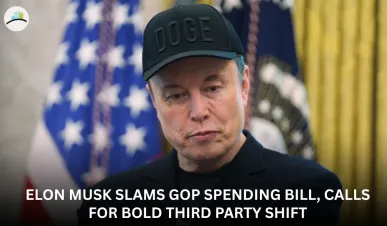
Elon Musk is no stranger to controversy, but his latest political volley — blasting a massive GOP-backed spending bill and calling for the creation of a new political party — feels different. It’s not just another hot take from the world’s most influential tech billionaire. It’s a symptom of something bigger: America’s growing political identity crisis.
And it begs the question — what happens when the country’s most powerful innovators feel completely unrepresented in Washington?
Why Did Musk Lash Out — Again?
The flashpoint this time was a $1.2 trillion spending package, greenlit by Congress with surprising Republican support. Musk didn’t hold back. He called the bill “fiscally insane” and accused lawmakers of steering the country toward economic disaster.
It might sound like a billionaire simply balking at taxes or bloated budgets, but this goes deeper. Musk, like many in the tech world, has long expressed frustration with what he sees as government inefficiency, regulatory overreach, and what he’s dubbed the “woke bureaucracy.”
So why does this moment matter? Because he’s not just criticizing the system anymore. He’s suggesting we scrap it — or at least build something entirely new beside it.
Trump suggests slashing Tesla subsidies | REUTERS https://t.co/9nivY5SvEJ
— 𝗤𝘂𝗮𝗻𝘁𝘂𝗺 𝗣𝘂𝗹𝘀𝗲 (@heyquantumpulse) July 1, 2025
The Bigger Truth Musk Is Tapping Into
Let’s face it: a lot of Americans feel politically homeless right now. The traditional left-right divide just doesn’t capture the full spectrum of views in today’s world — especially among younger voters, technologists, and independents.
Musk’s idea of starting a third political party might seem extreme, even naive. But it hits on something real. People are tired. Tired of being forced to choose between two aging political machines that feel more loyal to their donors than their voters.
He’s speaking to that exhaustion — and that makes his message resonate far beyond Silicon Valley.
What No One’s Really Talking About
What’s particularly telling is that Musk’s criticism isn’t directed solely at Democrats, but at Republicans — the very party many assumed he leaned toward. That’s a red flag for the GOP, especially as they increasingly blur lines between conservative principles and big-government populism.
In some ways, the GOP is now spending more like Democrats, and that’s alienating the fiscal hawks and pro-innovation voices that once backed them. Musk represents that faction — the people who want less government interference, smarter investments, and policies built for the future, not the past.
If those people start walking away, the Republican coalition could splinter in ways we haven’t seen since the 1990s.
Hidden Risks and Unspoken Opportunities
👎 The Risks:
-
A fractured right: A Musk-aligned third party could pull support away from Republicans, potentially splitting their base in the 2026 and 2028 elections.
-
Volatile politics: A charismatic outsider like Musk can inject new ideas — but also unpredictability — into policymaking, which markets and institutions tend to dislike.
-
Over-personalization of politics: Do we want billionaires setting the national agenda based on social media sentiment?
👍 The Opportunities:
-
Fresh thinking: Musk’s approach, while brash, could shake up outdated policy frameworks — especially around AI, energy, education, and space.
-
Voter re-engagement: A third option might pull millions of disenchanted voters back into the process, especially younger independents who crave something new.
This Has Happened Before — But Never Like This
History tells us that third parties don’t usually win — but they do change things. Just look at Teddy Roosevelt’s Bull Moose run in 1912 or Ross Perot’s surprisingly strong showing in the 1990s. They didn’t take the White House, but they forced the conversation to evolve.
What’s different now? Technology. Musk isn’t just a billionaire — he owns X (formerly Twitter), controls powerful narratives, and has legions of followers. That gives him a kind of political infrastructure in real-time that previous third-party dreamers could only imagine.
In other words, if anyone could launch a viable third-party movement today, it’s probably him.
More Articles:
So... Why Does This Matter?
This isn’t just about one guy with a Twitter account and a grudge against Congress. It’s about a growing sense that the system isn’t working — for entrepreneurs, for workers, for the next generation.
Musk’s rebellion against both parties might not lead to a new political dynasty overnight. But it is a warning shot — not just to Republicans, but to everyone in power who’s failing to listen.
The people with ideas, influence, and ambition are starting to look elsewhere. And that should scare the establishment more than a trillion-dollar bill.



