
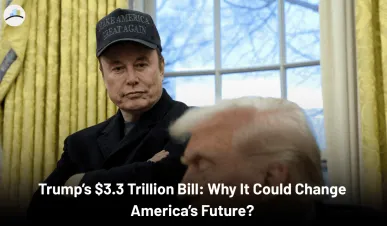
President Trump’s massive $3.3 trillion bill — officially called the “One Big Beautiful Bill Act” — is already making headlines for its size and its sweeping changes. But what’s grabbed even more attention now is Elon Musk openly criticizing it. And honestly, it’s not every day that Musk and Trump publicly clash like this, especially on something as big as national policy. Musk didn’t hold back, saying this bill could seriously hurt the country’s finances and goes totally against the goal of cutting government waste.
Basic math https://t.co/9LA9JgfvIz
— Elon Musk (@elonmusk) July 1, 2025
What the Bill is Actually About
The bill is trying to do a lot all at once. It includes:
-
Extended tax cuts from Trump’s first term.
-
New tax benefits for tips and overtime income.
-
A big jump in military and border spending.
-
Major cuts to social programs like Medicaid.
-
And most importantly, raising the debt ceiling by $4 trillion.
Basically, it aims to reduce taxes and boost spending on areas like defense, while trimming down programs that help lower-income families. Supporters say this will boost growth. Critics — including Musk — think it's dangerous.
Why Musk is Speaking Up
Elon Musk currently heads a department meant to reduce waste and improve how government spends money (it’s called the Department of Government Efficiency or DOGE). So when a bill shows up with over $3 trillion in spending and an even bigger national debt, it makes sense why he’d push back.
He said it plainly: This bill is the opposite of what DOGE was set up to do. He believes we should be trimming spending, not adding more to it. And let’s be real — when someone like Musk, who usually stays focused on tech and space, speaks out this clearly about politics, it gets attention.
What This Means for the Economy
Here’s where things get tricky. The bill is supposed to spark economic growth — that’s the argument from Trump’s side. They believe tax cuts will leave more money in people’s pockets, and that’ll drive business and hiring. But the Congressional Budget Office thinks this plan might add around $2.8 trillion to the national deficit over the next 10 years. That’s a lot.
If this happens, borrowing costs could go up, inflation might get worse, and the U.S. could end up with less room to respond to future economic problems. Musk and other fiscal conservatives are warning that the country might be heading toward a debt crisis if this kind of spending keeps happening.
It’s Not Just Musk Who’s Worried
Elon Musk might be the loudest voice here, but he’s not the only one raising red flags. A few Republican senators — the ones who still care about the debt — are also not fully on board. They’re worried about what this means long-term. On the other hand, some others in the party are backing the bill because they believe the tax cuts are necessary, especially with a new election cycle coming.
This tension is showing a pretty big split within the Republican party. There’s the traditional conservative side that wants smaller government and lower spending, and then there’s the Trump-aligned wing that’s okay with big spending as long as it helps their voter base.
More Articles:
The Bigger Picture
What makes all this really important isn’t just the amount of money or the fight between Musk and Trump. It’s that the U.S. is at a kind of tipping point. We’ve seen years of rising debt, fights over shutdowns, and now bills that just keep getting bigger. If this passes, it could set the tone for how future governments handle spending — which could be a major shift away from how things were done before.
Plus, it raises another question: What’s the role of big voices like Musk in these debates? He’s not an elected official, but he has a platform that reaches millions and is now actively shaping the conversation around how government should work.
Final Thoughts
No matter where you stand politically, it’s clear this bill is a big deal. It could change the country’s budget priorities for the next decade. Elon Musk calling it out shows there’s serious concern even from inside the system. And with the Senate preparing to vote, a lot of people — both in government and outside of it — are watching closely.
Whether this ends up being a bold move for growth or a dangerous leap into more debt, we’ll likely feel the effects for years to come



