
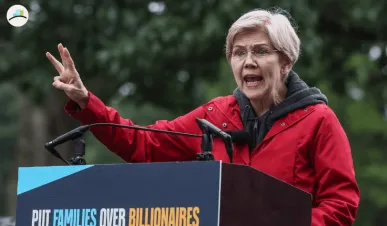
Elizabeth Warren has returned to the center of the national political spotlight, drawing attention through a mix of sharp criticism, policy advocacy, and renewed public engagement. As debates intensify around healthcare, corporate power, and foreign policy, Elizabeth Warren is emerging as one of the most consistent and outspoken voices shaping the conversation in Washington.
Elizabeth Warren Criticizes Republican Leadership
In recent public appearances, Elizabeth Warren has openly challenged Republican lawmakers on key national issues, particularly foreign policy and governance. She has argued that many Republican leaders privately express concerns about major decisions but hesitate to voice them publicly. According to Elizabeth Warren, this gap between private acknowledgment and public accountability weakens democratic processes and leaves voters without clear answers.
Sara Eisen: The president is simply expressing his views on monetary policy.
— Latest news (@issu_official0) April 22, 2026
Elizabeth Warren: I’m sorry—are you serious? There’s a clear difference between interpreting data and a president using the DOJ to pursue criminal charges against someone. pic.twitter.com/IpVVRGnlWJ
Elizabeth Warren has also stressed the importance of Congress playing a stronger role in decisions related to national security. She has pointed out that legislative oversight is essential to maintaining balance in government, especially when major actions are taken on the global stage. Her remarks reflect a broader concern about transparency and responsibility in policymaking.
Elizabeth Warren’s Stand on Corporate Influence
A recurring theme in Elizabeth Warren’s political approach is her criticism of concentrated corporate power. She has consistently raised questions about how large corporations influence both public policy and public discourse. Elizabeth Warren argues that unchecked corporate expansion can impact competition, limit consumer choice, and create conflicts of interest across industries.
Her concerns extend beyond economics into areas like media and information flow, where she believes corporate decisions can have wider societal consequences. Elizabeth Warren’s stance highlights her long-standing position that stronger regulations are necessary to ensure fairness and protect democratic institutions.
Elizabeth Warren and Economic Reform
Elizabeth Warren continues to emphasize economic reform as a central pillar of her agenda. She has called for policies aimed at addressing income inequality, reducing financial pressure on middle- and lower-income households, and increasing accountability for large corporations. Elizabeth Warren frequently highlights issues such as rising living costs, access to affordable healthcare, and the need for stronger consumer protections.
Her proposals often focus on creating structural changes rather than short-term solutions. Elizabeth Warren believes that lasting economic stability requires systemic reform, including better oversight of financial institutions and policies that prioritize working families over corporate interests.
Elizabeth Warren’s Role in Healthcare Policy
Healthcare remains one of the areas where Elizabeth Warren has been particularly active. She has supported efforts to address consolidation within the healthcare industry, where large organizations control multiple aspects of care delivery. Elizabeth Warren argues that such concentration can reduce competition and lead to higher costs for patients.
She has backed initiatives aimed at limiting this trend and promoting greater transparency in healthcare pricing and services. Elizabeth Warren’s position is that a more competitive and regulated healthcare system would improve access and affordability for Americans.
A More Direct Political Approach
Elizabeth Warren’s recent actions reflect a more direct and assertive political style. Rather than seeking compromise on every issue, she has increasingly taken clear and firm positions, especially on topics where she sees significant risks to economic fairness or democratic accountability. Elizabeth Warren’s approach is focused on drawing attention to systemic issues and pushing for meaningful change, even when it leads to political confrontation.
This strategy aligns with a broader shift in American politics, where some leaders are choosing to prioritize clarity and strong messaging over consensus-building. Elizabeth Warren has positioned herself within this approach, emphasizing the importance of addressing core issues head-on.
What This Means for U.S. Politics
Elizabeth Warren’s growing visibility signals an important moment in U.S. politics. Her focus on economic inequality, corporate influence, and policy reform reflects broader concerns among voters. Elizabeth Warren’s voice resonates particularly with those seeking structural changes to the current system.
Her continued involvement in key debates suggests that she will remain an influential figure in shaping policy discussions. Elizabeth Warren’s positions may also influence the direction of future legislation, particularly in areas related to healthcare, economic reform, and regulatory policy.
Final Take
Elizabeth Warren is reinforcing her role as a central figure in American political discourse. Through consistent messaging and policy-driven advocacy, she is highlighting issues that she believes are critical to the country’s future. Elizabeth Warren’s emphasis on accountability, fairness, and systemic reform continues to define her political identity.
As debates evolve and new challenges emerge, Elizabeth Warren’s influence is likely to remain significant. Her ability to connect policy discussions with broader public concerns ensures that she will continue to play a key role in shaping the national conversation.



