
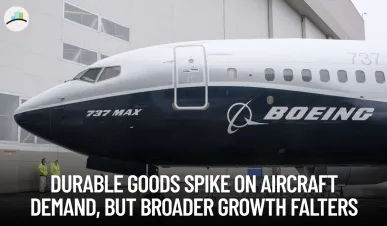
On paper, May looked like a win for American manufacturing. Durable goods orders rose 0.9%, continuing a modest three-month streak of growth. The main headline sounds strong. But if you read past the first paragraph, it starts to look a lot less like a comeback and more like a clever illusion.
The star of the show? Civilian aircraft. Big-ticket orders—many of them likely Boeing’s—pushed transportation equipment up over 3.5%, carrying the broader durable goods figure on its back. But beyond the tarmac, the factory floor is still pretty quiet.
Core capital goods orders—think machinery, computers, tools—barely moved, rising just 0.1%. That’s the number economists watch most closely because it strips away the volatile stuff and gets to the heart of how confident businesses are about the future. Right now, the message is clear: they’re cautious, bordering on anxious.
US Durable Goods Orders Spike on Solid Aircraft Demand, ‘Front-Running’ Tariffs https://t.co/xF2BjScnYF
— Randy S MAGA. (@RandyRazor1972) April 24, 2025
So, Why Did Aircraft Orders Take Off?
After years of COVID shocks, travel is back in full swing. Airlines are scrambling to update fleets, and Boeing, eager to regain lost ground, is hustling to deliver. But let’s be honest—this isn’t about a manufacturing renaissance. It’s about one industry, in one moment, temporarily powering the stats.
The aviation sector is living in a different economic reality than, say, construction equipment makers or small-scale machinery manufacturers. The latter are still wrestling with high interest rates, slow demand, and tight labor. It’s not an even playing field.
What’s Not Being Said Loud Enough
The core of the U.S. manufacturing base—those unsung producers of valves, pumps, industrial gears—is still playing defense. Many are in “wait and see” mode, reluctant to make big investments until they have more certainty around interest rates and demand.
And here’s the other problem: we’ve been here before.
In 2014, aircraft orders created a similar mirage. Wall Street cheered. But it masked an underlying slowdown in broader industrial activity. Months later, oil prices tanked, and investment collapsed. If we’re not careful, we could be repeating that pattern—this time under the shadow of inflation and geopolitical instability.
Where the Real Risks and Rewards Are
The Risks:
-
We could misread the room. Policymakers might think the economy’s humming along based on one buoyant sector, when the rest of the factory floor is flatlining.
-
We’re becoming too dependent. The transportation sector, especially aerospace, is driving the narrative. That’s risky if it falters again—especially with Boeing still facing scrutiny.
-
Investment fatigue. Companies holding back on spending today may struggle to catch up tomorrow. That lag could hurt productivity and innovation.
The Opportunities:
-
The aircraft supply chain could see a revival. Thousands of small suppliers that feed into the Boeing and Airbus ecosystems may get a new lease on life.
-
Reshoring is still in motion. Companies are rethinking supply chains post-COVID and post-China tensions. This moment of hesitation could pave the way for a big wave of domestic investment—once rates cool.
More Article:
So, Why Should You Care?
Because this isn’t just about one month’s data. It’s about how we read the tea leaves.
If you’re an investor, the surface-level optimism might tempt you. But the caution flag from core capital goods suggests this isn’t the time for blind bets.
If you’re a policymaker—or just a voter watching the economy ahead of 2025’s political storm—you need to understand the difference between growth that sticks and growth that slips away.
And if you’re a business owner, the story is a reminder: resilience will come from strategy, not just from sector luck.



