
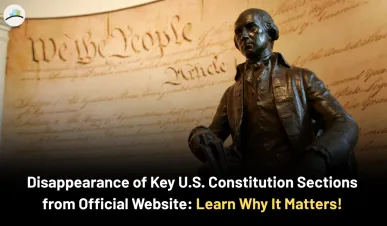
In early August 2025, significant portions of the U.S. Constitution vanished from the official Constitution Annotated website run by the Library of Congress. Specifically, parts of Article I—large sections of Section 8, and all of Sections 9 and 10—were missing for several hours before being restored. This unexpected removal caused alarm and widespread online discussion about the integrity and accessibility of foundational legal documents.
Portions of the Constitution were deleted from the Library of Congress' website after Trump ousted the librarian from her role
— •spooky•girl•cassiopeia•™ (@sadgirlcassi) August 7, 2025
The omitted portions of Article I cover limitations on Congress' ability to suspend habeas corpus and grant titles of nobility https://t.co/q99Ouy0ybw
Why This Event Is More Than Just a Website Glitch
Honestly, when parts of the Constitution suddenly disappear from the government’s official site, it naturally raises eyebrows. These sections cover crucial powers and limits of Congress and the states:
-
Section 8 defines Congress’s powers, including taxation, military funding, trade regulation, and currency creation.
-
Section 9 safeguards individual rights, such as the writ of habeas corpus protecting against unlawful detention, bans on bills of attainder, and rules against accepting gifts from foreign entities.
-
Section 10 restricts states from engaging in treaties or issuing currency.
Losing access to these protections and powers, even temporarily, affects public understanding of how government functions and citizen rights are safeguarded. It also comes against a backdrop of recent political debate over habeas corpus and executive powers, making the incident feel particularly sensitive.
More Articles:
Hidden Factors and Broader Implications
While the Library of Congress explained the removal as a “coding error,” there’s more beneath the surface:
-
The mishap highlights how digital infrastructure for government documents needs careful upkeep to avoid misinformation or confusion.
-
Given the politically charged nature of the missing sections, such errors can stoke conspiracy theories or distrust in government transparency.
-
Historically, shifts or censorship in how foundational texts are presented can echo times when access to knowledge was restricted, reminding us how important open access remains today.
-
Experts point out this incident, though unintentional, shows the fragile link between technology and democracy, where a small technical fault can cause outsized concern.
What This Means Moving Forward
For everyday citizens, scholars, and policymakers, this event is a wake-up call about digital stewardship:
-
Ensuring accurate, reliable online access to constitutional texts is essential for civic education and trust.
-
The quick restoration of the missing parts was reassuring, but scrutiny over government digital resources is likely to increase.
-
In a world where political debates frequently center on constitutional rights and limits, any disruption—even accidental—in official sources can have outsized ripple effects.
-
Going forward, expect calls for stronger safeguards and transparency when it comes to maintaining and updating key governmental information sites.
Final Thoughts: More Than a Coding Error
This episode may have been a technical glitch, but it underscores serious issues about how we preserve and share our most important documents in the digital age. Reliable access to the Constitution isn’t just about convenience; it’s about protecting democracy and ensuring everyone can understand their rights and the government’s limits. As technology becomes central to public knowledge, incidents like these remind us that vigilance and accountability must keep pace.
Looking ahead, the conversation sparked by this disappearance will likely push for better digital governance and increased public engagement with foundational legal materials—because even a momentary absence of key constitutional text can open the door to larger questions about access, trust, and the future of democracy.



