
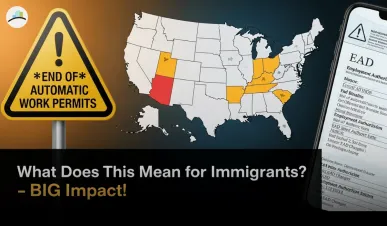
US Ends Automatic Work Permit Extensions – What It Means for Immigrants
Starting October 30, 2025, the U.S. Department of Homeland Security (DHS) will no longer automatically extend Employment Authorization Documents (EADs) for most immigrants. This change affects individuals who rely on EADs for legal work authorization in the U.S. and could create significant challenges for thousands of workers.
NEW: The Trump admin just ended the practice of automatically extending work permits when people file to renew them — meaning that if @USCIS takes too long to process a renewal the applicant loses their authorization to work legally.
— Aaron Reichlin-Melnick (@ReichlinMelnick) October 29, 2025
Applies to applications filed after tomorrow. pic.twitter.com/kLV2knofxo
Previously, immigrants who had applied for an EAD renewal would automatically receive an extension of their current work permit while waiting for approval. With the new rule, once an EAD expires, the individual must wait for the new document to be approved before resuming employment.
MORE ARTICLES:
Why This Change Matters:
-
Potential Employment Gaps: Immigrants whose work permits expire after October 30, 2025, may face delays in resuming employment if their new EAD is not approved promptly.
-
Increased Administrative Burden for Employers: Employers must track expiration dates more carefully and ensure that their immigrant employees submit renewal applications in time.
-
Longer Wait Times: With the removal of automatic extensions, applicants will face additional delays as USCIS processes renewals.
This policy shift is part of DHS's broader efforts to strengthen security and improve the vetting process for work authorization. However, it raises concerns for individuals dependent on EADs, particularly in industries like technology and healthcare, where immigrant workers make up a significant portion of the workforce.
Key Points:
-
Automatic EAD extensions will no longer be available starting October 30, 2025.
-
Immigrants will need to wait for new EAD approval before returning to work if their current permit expires.
-
Employers are advised to track EAD expiration dates and ensure timely renewal applications.
-
Some categories, like Temporary Protected Status (TPS) beneficiaries, will still have automatic extensions.
This change marks a major shift in U.S. immigration policy, and both workers and employers will need to adapt to the new requirements.



