
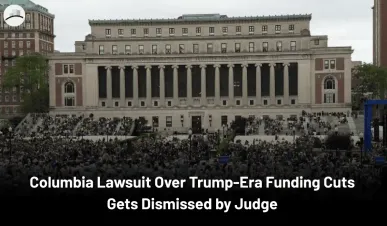
Alright, so here’s the situation. A judge in Manhattan just dismissed this case where some faculty unions from Columbia University were trying to fight back against funding cuts made during Trump’s time in office. The government had pulled $400 million in federal grants, saying the university didn’t do enough to handle antisemitism on campus. The faculty were like, “Hey, this isn’t fair,” and tried to take legal action. But the judge said nope — mainly because Columbia itself wasn’t part of the lawsuit, and the unions didn’t have the legal right to challenge it on their own.
A federal judge dismissed a lawsuit against the Trump administration by two labor unions for Columbia University faculty that challenged funding cuts and demands to overhaul student discipline and boost oversight for a Middle Eastern studies department. https://t.co/COBNaQ9lxG
— Reuters Legal (@ReutersLegal) June 16, 2025
Why This Is a Big Deal
So what’s the big fuss? Well, this isn’t just some college dispute. This is about how much control the government has over what happens on campuses. The Trump administration had basically said, “If you don’t fix this campus climate issue, we’ll pull your funding.” And they did. That scared a lot of universities, not just Columbia. Harvard’s in the same boat, trying to deal with similar accusations and possible funding freezes. This case was kind of seen as a test of how far the government can go before it’s seen as stepping on academic freedom.
What Actually Triggered This
It all started because of protests on Columbia’s campus. Students were demonstrating over the Gaza conflict, and the government said Jewish students felt unsafe. That’s when the Department of Education stepped in, saying the university wasn’t doing enough. Then the Middle States Commission on Higher Education got involved too, basically saying Columbia might lose its accreditation if it didn’t clean things up fast. That’s when Columbia made a bunch of changes — more security, no masks at protests, and tighter rules in certain academic departments.
The Faculty's Side of Things
The two main unions involved were part of the American Federation of Teachers (AFT) and another faculty group at Columbia. They weren’t just mad about the money — they were worried that this kind of government pressure could mess with what professors can teach, research, or say. But since Columbia itself didn’t officially join the case, the court said the faculty didn’t really have a right to sue on their own. That’s what “lacking standing” basically means.
What Legal Experts Are Saying
A bunch of law folks are saying this could be a bad sign. If faculty groups can’t legally challenge stuff like this, then who can? The AAUP (that’s a big professors’ rights group) says they’re going to appeal the decision. Some even think this could end up in the Supreme Court. It’s really about whether federal money can be used to force schools into making political or policy changes. Right now, it looks like the answer might be yes.
Other Schools Are Watching Closely
This isn’t just about Columbia. Harvard, Stanford, UPenn — they’ve all been warned too. The Department of Education is looking into how these schools handle discrimination and antisemitism. They’re using a law called Title VI of the Civil Rights Act to say, “If you don’t fix this, we’ll cut your funding.” Schools are now stuck trying to balance free speech with student safety — and it’s getting messy.
More Articles on ProCapitas:
The Money Problem
Without that $400 million, Columbia had to scramble. A lot of that cash goes into research and staff support. If this kind of thing keeps happening, schools might have to cut programs or raise tuition. Plus, companies that sell tech or lab gear to universities might see a drop in business too. It’s not just a campus issue — it could affect jobs, science, even public health research.
What Comes Next
The faculty unions say they’ll keep fighting. They want to make sure this doesn’t become the new normal, where funding gets used as a tool to control what happens on campus. Appeals are already being planned. If this goes all the way up to the top courts, we could see new rules for how much power the federal government really has over schools.
Final Thoughts
So yeah, even if this sounds like just another legal fight, it’s way bigger than that. It’s about who really gets to call the shots on campus — the schools themselves, or the people holding the checkbook in Washington. And honestly, that’s a question a lot of folks in higher education are starting to worry about.



