
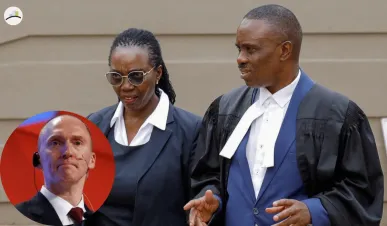
Former Trump campaign adviser Carter Page has reached the end of a years-long legal battle against former FBI Director James Comey and other federal officials after the U.S. Supreme Court declined to hear his appeal. The decision effectively closes one of the last major civil cases stemming from the controversial FBI surveillance of Page during the Russia investigation that dominated American politics following the 2016 presidential election.
The Supreme Court's refusal to take up the case leaves in place lower court rulings that dismissed Page's lawsuit, marking another significant legal conclusion in the aftermath of the FBI's Crossfire Hurricane investigation and the broader debate over government surveillance powers.
Supreme Court rejects former Trump adviser Carter Page’s bid to revive James Comey lawsuithttps://t.co/vlJ0INvbdm pic.twitter.com/NXXRBA6xVR
— 🌏PEACE✌️☮️🕊♻️☘️ (@PeaceOutPeaceIn) June 15, 2026
Supreme Court Rejects Carter Page Appeal
On June 15, 2026, the U.S. Supreme Court declined to review Carter Page's appeal seeking to revive his lawsuit against former FBI Director James Comey and several other current and former FBI officials. The justices did not provide a reason for refusing the case, which is standard practice for the court.
Page had argued that he was unlawfully targeted by the FBI through surveillance warrants obtained under the Foreign Intelligence Surveillance Act (FISA). His lawsuit claimed that government officials violated his constitutional rights by securing and renewing surveillance orders based on inaccurate and misleading information.
The Supreme Court's decision means a lower federal appeals court ruling remains in effect, ending Page's effort to pursue damages from Comey and other officials involved in the investigation.
Background: The FBI Surveillance Controversy
Carter Page served as a foreign policy adviser to Donald Trump's 2016 presidential campaign. During the FBI's investigation into Russian interference in the 2016 election, Page became a central figure because of his contacts with Russian individuals and previous interactions that drew the attention of investigators.
The FBI obtained multiple FISA warrants allowing investigators to monitor Page's communications. However, a 2019 Justice Department Inspector General report later identified significant errors and omissions in the applications used to obtain those warrants.
The report criticized the FBI's handling of the surveillance requests and found numerous inaccuracies that raised serious concerns about the process. Although the report did not conclude that political bias drove the investigation, it sparked years of legal and political controversy.
Page consistently denied any wrongdoing and was never charged with a crime related to the Russia investigation.
MORE ARTICLES:
Why the Lawsuit Was Dismissed
The central issue in the case ultimately became timing rather than the underlying surveillance allegations.
Federal courts ruled that Page waited too long to file certain claims against the individual officials he accused of misconduct. Judges determined that the statute of limitations had expired before Page initiated parts of his lawsuit.
Page argued that the legal clock should not have started until government misconduct became publicly known through official investigations and reports. However, lower courts rejected that interpretation and concluded that he had sufficient information years earlier to pursue legal action.
The U.S. Court of Appeals for the District of Columbia Circuit upheld the dismissal, and the Supreme Court's refusal to hear the appeal leaves that ruling intact.
The $1.25 Million Settlement
Although the Supreme Court rejected his appeal against individual officials, Page achieved a notable legal victory earlier in 2026.
The federal government agreed to pay Page $1.25 million to settle certain claims related to the surveillance controversy. The settlement resolved parts of his litigation against the United States, the Department of Justice, and the FBI.
However, the settlement did not revive or preserve his separate claims against James Comey and other individual defendants. Those claims remained subject to the statute-of-limitations dispute that ultimately ended before the Supreme Court.
The settlement represented one of the most significant financial resolutions connected to the FBI's handling of FISA surveillance during the Russia investigation era.
James Comey's Role in the Case
As FBI Director during the 2016 election and the early stages of the Russia investigation, James Comey became one of the most prominent figures associated with the surveillance decisions that affected Carter Page.
Page's lawsuit named Comey among several former and current FBI officials whom he alleged played a role in obtaining or renewing the surveillance warrants.
Comey has long defended the legitimacy of the Russia investigation while acknowledging that mistakes were later identified in the FISA application process. The former FBI director has repeatedly maintained that investigators acted based on national security concerns rather than political motivations.
With the Supreme Court declining to hear the case, Comey and the other individual defendants will not face further litigation from Page related to these claims.
Broader Impact on FISA Reform Debate
The Carter Page surveillance controversy has had a lasting impact on discussions about intelligence oversight and government surveillance authority in the United States.
Following the Inspector General's findings, the FBI implemented dozens of reforms designed to strengthen accuracy requirements and oversight procedures for FISA applications. Lawmakers from both parties have cited the Page case as evidence that additional safeguards may be necessary when seeking surveillance authority from secret intelligence courts.
Civil liberties advocates argue that the case demonstrates the risks of government surveillance powers operating with limited transparency. National security officials, meanwhile, maintain that FISA remains a critical tool for protecting the United States from foreign threats.
The Supreme Court's decision does not address those broader policy questions, but it closes one of the highest-profile legal challenges arising from the controversy.
What Happens Next?
For Carter Page, the Supreme Court's decision likely marks the conclusion of a legal fight that has lasted nearly six years. While he secured a multimillion-dollar settlement from the federal government, his effort to hold individual officials personally liable has now come to an end.
For James Comey and other former FBI officials, the ruling removes one of the remaining legal disputes tied directly to the Russia investigation.
The broader political debate over the FBI's conduct during the 2016 election period is likely to continue, but the courts have now largely resolved the civil litigation connected to Carter Page's surveillance claims.
Conclusion
The Supreme Court's decision to reject Carter Page's appeal represents the final chapter in a major legal battle stemming from the FBI's Russia investigation. While Page succeeded in obtaining a $1.25 million settlement from the federal government, he was unable to revive claims against former FBI Director James Comey and other officials. The ruling leaves unresolved political questions about surveillance and accountability but brings legal closure to one of the most closely watched cases connected to the 2016 election and its aftermath.



