
A Tribute the City Meant to Give
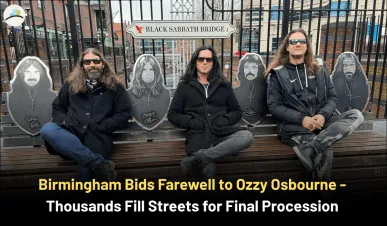
On July 30, 2025, Birmingham gave Ozzy Osbourne the kind of goodbye that felt bigger than a funeral. Thousands lined the streets before sunrise, not just to watch a procession—but to be part of it. The route was short but meaningful, pausing at Black Sabbath Bridge, a site that’s grown into a quiet monument to Ozzy over the years. It was less a ceremony and more a collective moment. Quiet, reflective, and loud in spirit.
For Birmingham, this wasn’t about celebrity. It was about one of their own—a man who came from the same streets, same grit, same industrial past. Ozzy wasn’t just from Birmingham. He was Birmingham, reimagined on the world’s stage.
Thousands of @OzzyOsbourne fans @BlackSabbath bridge in central Birmingham to pay their last respects to the #princeofdarkness
— Nick Ellerby (@NickEllerby) July 30, 2025
Funeral cortège expected sometime after 1pm.
Messages from Poland, El Salvador, Spain and the Holte End. pic.twitter.com/Rw0KEweJ8B
Why It Happened This Way
There’s something rare about a city-wide tribute like this, especially for a rock musician. But Ozzy wasn’t an ordinary frontman. His career wasn’t just long—it was transformative. From Sabbath’s early days to his later solo work, Ozzy defined a sound and shaped a generation. Holding the public procession before the private funeral felt like a deliberate move. A way of putting community first.
City officials coordinated closely with Ozzy’s family to make this happen. It wasn’t government-funded, but it was city-backed in spirit and infrastructure. Police managed crowd flow. Volunteers helped manage public safety. It had the weight of something official, even if it came from the people.
Emotional Economics of a Cultural Loss
Moments like this come with more than flowers and photos. They create cultural value—and, indirectly, economic impact. That bridge? That museum exhibit? They’re already drawing visitors. People traveled from all over Europe to stand there for ten minutes. That doesn’t just mean hotel bookings. It means long-term interest in Birmingham’s music legacy.
If city planners are paying attention, they’ll invest more into preserving Ozzy’s legacy in physical ways. Statues. Venues. Permanent exhibitions. This isn’t just about honoring him. It’s about connecting generations to Birmingham’s creative history in a way that still brings business.
For the music industry, Ozzy’s final chapter also opens space for a renewed focus on catalog artists—especially how cities can work with estates to turn memorials into economic opportunity. Think Elvis in Memphis. Lennon in Liverpool. Birmingham has that chance now with Ozzy.
More Articles:
A Global Audience and a Digital Shift
The fact that the procession was livestreamed—successfully drawing hundreds of thousands of viewers—proves something that’s rarely talked about: digital mourning is now part of how we grieve. This wasn’t just about being there. It was about witnessing the event in real-time, together. Even if you were halfway across the world.
Livestreaming memorials used to feel strange. Now it feels necessary. Especially for public figures. It gives closure to global fans who will never see a statue or sit near Black Sabbath Bridge. It also sets a precedent. Big public farewells will now likely include a digital plan—from drone coverage to archival footage.
What’s Being Missed in Coverage
There’s been a lot of focus on the crowd size and the photos, but here’s what’s not being talked about enough: Ozzy’s place in public memory is shifting from disruptive to institutional. That’s huge. A man once banned from radio and censored by networks is now a civic icon. It shows how mainstream culture has absorbed rock rebellion and turned it into legacy.
There’s also a generational handoff happening. Many fans at the procession were older. But many weren’t. Teens with vinyl reissues. Kids wearing new Black Sabbath merch. This wasn’t nostalgia—it was continuation. A reminder that Ozzy’s reach didn’t stop with the albums. It extended into family stories, personal identity, and city pride.
Where It Goes from Here
Ozzy’s private funeral took place the following day in Buckinghamshire. It was closed to press, as expected. But the public moment was never meant to be the end—it was a start. Birmingham will likely see increased cultural tourism. Schools and art institutions may create new programs around music history. The documentary version of his final concert, "Back to the Beginning," is expected to release early next year.
That release will matter. It could become one of the most viewed music memorials of the decade. And more importantly, it will close the story in the way Ozzy would've wanted—loud, honest, and surrounded by fans.



