
Ahmed al‑Sharaa: From Rebel Leader to Diplomatic Linchpin in Syria’s New Era
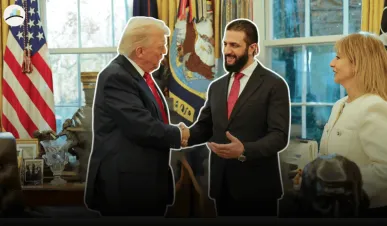
The recent visit of Syrian President Ahmed al‑Sharaa to the White House marked a significant shift in Syria’s foreign policy. Once a leader of militant factions, al‑Sharaa’s transition to president has become a key symbol of Syria's potential for reintegration into the international community. His rise from the battleground to the negotiating table signifies a pivotal change in Syria's geopolitical strategy, but it also raises significant questions about his future in power and Syria's road to recovery.
From once being opposed by the world’s powers to standing beside them, Ahmad Al Sharaa carries Syria’s national interest with pride & strength. His diplomacy is not submission, but sovereignty with dignity.@SharaaPresident pic.twitter.com/dNLJ9mUrTX
— Muhammad Jalal (@MJalalAf) November 10, 2025
MORE ARTICLES:
A Remarkable Trajectory
Ahmed al‑Sharaa’s political journey is nothing short of extraordinary. Before assuming the presidency of Syria in 2025, al‑Sharaa was a prominent figure in the rebel group Hay’at Tahrir al‑Sham (HTS), a faction deeply involved in the Syrian civil war. His appointment as president following the collapse of Bashar al‑Assad’s regime in late 2024 was seen as an unlikely turn of events, given his history as a leader of insurgent forces.
His meeting with U.S. President Donald Trump in November 2025 was a groundbreaking moment, as it marked the first visit by a Syrian head of state to the White House in decades. This momentous event symbolizes a new phase in Syria’s relations with the West, particularly as al‑Sharaa seeks to leverage his experience as a former insurgent to reshape Syria’s international image.
A Pivot in Diplomacy — And Its New Angle
What makes al‑Sharaa's rise unique is how he is using his past as a militant leader to his advantage in international diplomacy. While much of the coverage has focused on the symbolic nature of his meeting with President Trump, there’s a deeper narrative unfolding. Al‑Sharaa is not just looking for forgiveness; he is offering a strategic opportunity for cooperation. He’s positioning himself as a figure who can bridge the divide between Syria and Western powers, promising stability, reforms, and a new approach to counter-terrorism.
Al‑Sharaa's goal is not only to regain Syria’s standing but also to transform the nation into a key player in regional and global diplomacy. His shift from warlord to diplomat is a compelling narrative that suggests he might bring a pragmatic approach to governing—something that many view as necessary for Syria’s future.
Strategic Risks, Domestic Cracks
However, al‑Sharaa's presidency is not without challenges. His past as the leader of a militant group has led to scrutiny, with critics questioning his ability to transition into a leader of a nation. His presidency, while symbolizing a break from the Assad regime, still faces significant obstacles. Syria remains embroiled in economic turmoil, with millions displaced and much of its infrastructure destroyed. The country’s recovery will be a monumental task, one that will test al‑Sharaa’s ability to consolidate power and restore legitimacy.
Domestically, al‑Sharaa faces the difficult task of uniting a fractured society. He must balance the needs of various rebel factions, address the humanitarian crisis, and reassure a population deeply skeptical of any regime change. His ability to navigate these internal challenges will be a defining factor in whether his diplomatic shift can succeed.
Why It Matters Beyond Syria
Ahmed al‑Sharaa’s story is not just about Syria; it is about the shifting landscape of Middle Eastern politics. The way he has transitioned from rebel leader to head of state is part of a broader trend in the region, where former insurgents and opposition leaders are stepping into positions of power. Al‑Sharaa’s rise represents a new approach to leadership—one based on pragmatism and a willingness to engage with international powers.
For the broader Middle East, this transformation poses the question of whether countries can heal their divisions by integrating former adversaries into the political fold. Al‑Sharaa’s presidency could serve as a model for other nations facing similar conflicts, showing that peace and stability may not always come from traditional statecraft, but rather from the hands of those who once fought to dismantle the very system they now lead.
Strategic Implications for Syria's Future
The meeting between al‑Sharaa and President Trump not only signals a shift in diplomatic engagement but also reflects Syria’s growing importance in regional security. As a leader who has navigated the complexities of war and rebellion, al‑Sharaa is uniquely positioned to understand the dynamics of the region. His approach to counter-terrorism, regional stability, and economic recovery will likely influence Syria’s trajectory for years to come.
Al‑Sharaa’s vision for Syria includes plans for economic reconstruction, attracting foreign investments, and stabilizing regions affected by conflict. His leadership will be critical in determining how Syria engages with its neighbors, including Turkey, Iran, and Israel, as well as with global powers like the United States and Russia. His ability to strike deals and forge alliances will shape the future of the country.
Conclusion
Ahmed al‑Sharaa’s emergence as Syria's president is a bold experiment in the post-conflict political landscape. His journey from rebel leader to head of state is unprecedented, and it remains to be seen whether he can navigate the complex challenges of rebuilding Syria and establishing a new era of diplomacy. His meeting with President Trump is just the beginning of what could be a transformative phase for Syria—one that balances the scars of war with the hopes of peace. Whether al‑Sharaa can deliver on his promises of stability and reform will define his legacy and Syria’s future in the coming years.



