
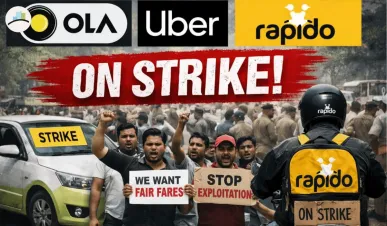
Millions of commuters woke up to surprises none wanted ride‑hailing apps like Ola, Rapido, and Uber are not accepting rides today. Drivers across the country have gone on strike, leaving passengers scrambling for alternatives. Whether you needed a ride to work, an airport pickup, or just a quick trip — your ride simply didn’t show up.
This isn’t a small outage or app glitch. It’s a nationwide driver protest that has caused widespread disruption, panic, and frustration for commuters from Delhi to Chennai Mumbai to Kolkata.
MORE ARTICLES:
The Real Reasons Behind the Strike
Here’s what’s driving ride‑hailing drivers to step away from the wheel:
1. Fare Cuts & Shrinking Earnings
Drivers say their earnings have been slashed after repeated fare reductions by the ride‑hailing platforms. Many complain that:
-
Desperate attempts to stay competitive forced companies to lower fares
-
Zero earning guarantees on certain trips
-
Surge pricing disappearing on short notice
-
Earnings barely cover petrol or maintenance
Drivers argue that they aren’t earning enough to survive, let alone run a car profitably anymore.
2. Rising Fuel & Maintenance Costs
All India Breakdown’: Ola, Uber, and Rapido Drivers Launch Nationwide Strike Over Minimum Fares. Gig workers are holding a six-hour strike today (Saturday) to demand government-regulated base fares and tighter rules on private vehicles used for commercial purposes.… pic.twitter.com/EAOrmKRQvW
— NewsPoint (@NP_App) February 7, 2026
With petrol/diesel prices still high, the cost of running a vehicle has soared. Yet the fare structures haven’t kept up. This means:
-
Drivers are paying more but earning less
-
Daily profits shrinking or disappearing
-
Many drivers losing money on long distance trips
For many, today’s strike isn’t just protest — it’s survival.
3. Lack of Social Security & Protection
Unlike formal jobs, app‑based drivers often have:
-
No fixed daily wage
-
No health or accident insurance
-
No paid time off
-
No structured benefits
During the COVID era, several drivers demanded minimum wage protections — but most platforms only offered temporary incentives or bonuses that disappeared later. Now many drivers say they feel abandoned by the apps they rely on.
4. App Policies & Incentive Cuts
Drivers are also furious about changes to app policies such as:
-
Sudden deactivation of driver bonuses
-
Unfair trip assignments
-
Opaque cancellation penalties
-
Reduced incentives without notice
Many drivers feel these changes benefit the companies but hurt the drivers’ pockets directly.
5. Poor Communication Between Drivers & Platforms
Instead of addressing concerns, drivers claim platforms have:
-
Ignored repeated requests for policy changes
-
Failed to consult driver unions
-
Used algorithms that force drivers to chase low‑paying trips
This has created a growing rift between drivers and companies, peaking in today’s nationwide walkout.
What Riders Are Experiencing Right Now
Here’s what users across India are reporting:
-
No taxis available on Ola/Uber apps
-
Rapido bikes offline or waiting for drivers
-
Drivers not answering calls
-
Prices skyrocketing on alternate services
-
Crowded public transit and auto‑rickshaw queues
Many commuters say rides that used to be 5–10 mins away are now showing up as unavailable or 20 mins+ wait time due to the driver shortage.
Are Public Transport Services Overloaded?
Yes. With millions now relying on buses, local trains, metro, autos, and cabs, public transport systems are stretched, leading to:
-
Longer queues at bus stops and metro stations
-
Auto‑rickshaw demand surge
-
Higher prices from private cabs and rentals
-
Crowded vehicle stands
In major hubs like Delhi, Mumbai, and Bangalore, commuters report near‑gridlock conditions as passengers struggle to find alternatives.
Will the Strike Continue? What Drivers Want
Drivers are demanding:
✔ Higher base fares
✔ Minimum income guarantee per hour
✔ Insurance & social benefits
✔ Better transparency in incentives
✔ Fewer cancellations penalties
It’s unclear how long the strike will last. Many drivers have vowed to stay off the platforms until companies restart negotiations and address their core concerns.
How This Could Change Ride‑Hailing Forever
This strike isn’t just a one‑day disruption — it could be the beginning of a much larger shift in how gig‑economy workers negotiate with big platforms.
Possible long‑term impacts:
🚨 Permanent fare restructuring
🚨 Stronger regulation from state governments
🚨 Driver unions gaining more influence
🚨 Competitive reshuffling among ride‑hailing companies
🚨 Higher transport costs for passengers
If drivers continue to withhold services, we could see:
➡ Public pressure forcing companies to raise driver payouts
➡ Governments stepping in to safeguard gig workers
➡ A new era of ride‑hailing rights in India



