
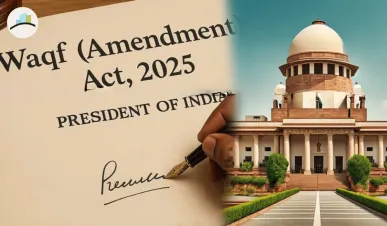
A Big Legal Twist: The Supreme Court and the Waqf Amendment Act
Imagine waking up to a decision that could change the way millions of people manage their community assets. That’s exactly what happened when the Supreme Court of India stepped in with a stay order on critical provisions of the Waqf Amendment Act. This Act was expected to bring much-needed reforms to the management of Waqf properties, which serve as a significant source of social welfare within India’s Muslim community. But, as fate would have it, the court has put these reforms on hold—leaving many wondering about the consequences.
MORE ARTICLES:
What is the Waqf Amendment Act?
The Waqf Amendment Act, passed in 2020, was designed to modernize and improve the management of Waqf properties across India. These properties, often vast tracts of land or valuable assets, are held in trust for charitable purposes, primarily serving the Muslim community. The amendments aimed to make these boards more transparent and accountable, addressing concerns about corruption, mismanagement, and lack of oversight.
For years, the Waqf boards were critiqued for not effectively managing these properties. Many allegations of misuse, squandering of resources, and inefficient handling of funds surfaced. The Waqf Amendment Act was seen as a glimmer of hope, introducing stricter regulations and a more robust framework for property management. But the recent stay has put all those reforms on pause.
Why Did the Supreme Court Step In?
The court’s decision to stay the provisions of the Act comes at a pivotal moment in the debate around the management of religious properties. This ruling essentially means that the new changes proposed by the Waqf Amendment Act cannot be implemented for the time being. While the reasons for the Supreme Court’s intervention are still being debated, many legal experts believe it’s because of concerns over the legitimacy and constitutional validity of the amendments.
A deeper look at the situation reveals that the Waqf property issue is not just a matter of religious management but one that touches on broader concerns like state control over religious affairs, political influence, and the autonomy of religious bodies. The ruling also raises questions about the role of the judiciary in interfering with laws that affect religious and community affairs.
What Are the Key Provisions Stayed?
While the full details of the court’s order are yet to be fully understood, the provisions of the Waqf Amendment Act that have been stayed include some key changes intended to:
-
Improve the transparency of Waqf boards by requiring them to disclose more information about their activities and finances.
-
Establish an independent regulator to ensure that Waqf properties are not misused and are effectively utilized for community welfare.
-
Limit political interference in Waqf board decisions, making them more autonomous and free from external influence.
These changes were meant to create a more efficient system of oversight, but now, they are delayed indefinitely, sparking debates on whether such reforms will ever see the light of day.
What Does This Mean for Waqf Property Management?
Waqf properties are some of the most valuable assets held in trust for public good. From land to funds, these resources can be used for education, health, and other community services. The stay order has left many questioning whether this delay will mean continued mismanagement of these assets. The long-term impact could mean that Waqf boards will continue operating without the much-needed oversight and reforms that could have empowered them to serve the community better.
Moreover, without the proposed regulations, there is a fear that corruption and inefficiency might continue to plague the management of these properties, depriving those who need them most. If the stay is extended or the reforms are ultimately struck down, it could be a huge setback for improving transparency in the management of religious assets in India.
Political and Social Implications
The Waqf Amendment Act has been at the heart of political debates for years. The ruling now brings even more political sensitivity to the issue. On one side, supporters of the Amendment Act argue that it is a necessary reform that can help modernize religious property management. On the other hand, critics view it as unnecessary state interference in religious matters.
The political fallout from this ruling could influence the debate over religious freedom, the role of the state in religious matters, and the autonomy of religious boards. The court’s decision could fuel tensions, with various factions either pushing for reforms or rallying against what they see as undue government influence.
What About the Future of the Waqf Amendment Act?
The future of the Waqf Amendment Act now hangs in the balance. While the Supreme Court’s stay is a temporary setback, it may not be the end of the story. The next steps could involve revisions to the Act that address concerns raised by the court or a more comprehensive review to ensure that it aligns with the Constitution.
For now, the public will be watching closely to see how the case unfolds, and whether future reforms in religious property management are likely to take place. If the court rules in favor of the amendments down the line, it could set a new precedent for how religious assets are managed in the country.
Conclusion: Looking Ahead
The Supreme Court’s stay on the Waqf Amendment Act has created uncertainty in the sector and raised questions about the future of Waqf property management in India. While the delay of these reforms is a setback, it is not the final word. What’s clear is that Waqf properties are a vital resource for social welfare, and reforms are essential to ensure they are used effectively. Whether these reforms will come to fruition or be permanently blocked remains to be seen, but the outcome will have significant implications for religious institutions, politics, and the future of public welfare in India.



