
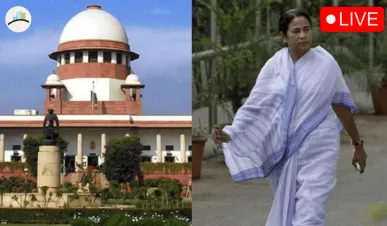
Mamata Banerjee, the Chief Minister of West Bengal, is currently at the Supreme Court of India for a crucial hearing regarding the Special Intensive Revision (SIR) of electoral rolls in West Bengal. The outcome of this hearing could have significant implications for the upcoming 2026 Assembly elections in the state. Here’s everything you need to know about the case, why it’s important, and what’s at stake for Banerjee and the people of West Bengal.
What is the SIR Case?
The SIR (Special Intensive Revision) is a process carried out by the Election Commission of India (ECI) to update voter lists. This process involves revising the electoral rolls to ensure that they reflect the most current and accurate information about eligible voters. However, Mamata Banerjee and her party, Trinamool Congress (TMC), have raised concerns that the SIR process could result in the exclusion of legitimate voters, particularly those whose names contain minor errors or discrepancies, such as spelling mistakes or address mismatches.
As the 2026 Assembly elections approach, the TMC has argued that the SIR process could disproportionately affect certain communities in West Bengal, potentially impacting the fairness of the elections. Banerjee is seeking to ensure that this process does not lead to unjustly excluding voters who are eligible to participate in the election.
Why is Mamata Banerjee in the Supreme Court?
Mamata Banerjee has approached the Supreme Court to challenge the ongoing SIR process. She believes that the Election Commission’s actions could result in large numbers of eligible voters being removed from the electoral rolls due to minor errors. Banerjee argues that this could lead to serious consequences for the upcoming elections, especially in a state as politically significant as West Bengal.
CM Mamata Banerjee has reached the Supreme Court to personally argue the case against the SIR process.
— Mahua Moitra Fans (@MahuaMoitraFans) February 4, 2026
A truly historic day for India’s democracy. #DidiAtSupremeCourt pic.twitter.com/1oz3WcaDhe
In her petition, Banerjee seeks to ensure that the electoral rolls are updated in a manner that is transparent and fair, without causing harm to the democratic process by unfairly excluding legitimate voters.
Mamata Banerjee’s Request to the Court
During the hearing, Mamata Banerjee made a rare request: she asked to argue her case in person before the Supreme Court. This is highly unusual for a sitting Chief Minister, but Banerjee’s request underscores the importance she places on this issue.
Banerjee wants to personally present her arguments, emphasizing the importance of this case for the people of West Bengal and their ability to participate in the democratic process. If granted, her request would set a precedent for other political leaders who wish to represent themselves in high-profile legal battles.
What Happened During the Hearing?
Mamata Banerjee arrived at the Supreme Court today for the hearing, where she was present in Courtroom 1. The Chief Justice Surya Kant is leading the bench that is hearing the case. The court has already directed the Election Commission to clarify certain aspects of the SIR process, including how discrepancies in voter records will be handled.
The TMC is urging the court to intervene and issue directions to the Election Commission, ensuring that voters are not removed from the list based on minor mistakes or discrepancies. The court is now considering whether to grant Banerjee’s request to personally argue her case and whether to issue any interim orders that could affect the SIR process.
What’s at Stake for Mamata Banerjee and West Bengal?
The outcome of this case is critical for both Mamata Banerjee and the people of West Bengal. If the court rules in favor of Banerjee’s petition, it could lead to a revised approach to the SIR process, with stronger safeguards in place to prevent the wrongful exclusion of voters.
For the TMC, Banerjee’s actions are part of a broader effort to protect the voting rights of the people of West Bengal, especially in light of the upcoming Assembly elections. If the SIR process continues without the necessary checks, it could potentially disenfranchise thousands of eligible voters, which could have a significant impact on the election’s outcome.
Banerjee’s leadership in challenging the Election Commission on this matter could shape the future of electoral processes not just in West Bengal, but across the country. Her efforts reflect her commitment to ensuring a fair and transparent election.
MORE ARTICLES:
What’s Next in the SIR Case?
The Supreme Court hearing is still ongoing, and Mamata Banerjee is waiting for the court’s decision regarding her request to argue the case herself. The court may issue a directive to the Election Commission on how to proceed with the SIR process or may ask for more information before making a final ruling.
The TMC is also preparing for the possibility of an interim ruling that could affect the voter list revision process in West Bengal. The decision made by the court in the coming days will have a significant impact on the electoral process, and it will be closely watched by political leaders, voters, and observers across the country.
Conclusion: What’s at Stake for Mamata Banerjee and West Bengal?
Mamata Banerjee’s appearance in the Supreme Court is a pivotal moment in the ongoing legal challenge to the SIR process in West Bengal. The outcome of this case could affect the electoral rolls and, consequently, the upcoming 2026 Assembly elections. Banerjee’s request to argue the case in person reflects her strong commitment to ensuring a fair electoral process for the people of West Bengal.
As the case progresses, the Supreme Court’s ruling will play a crucial role in shaping the future of electoral reform in India, particularly in terms of how electoral rolls are updated and revised. For Mamata Banerjee, this is not just a legal battle—it is an effort to protect democracy and ensure that every voter’s voice is heard.



