
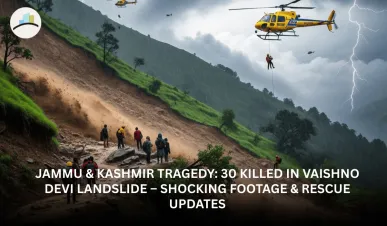
Jammu & Kashmir Faces Severe Flooding Amid Heavy Monsoon Rains
Jammu & Kashmir is reeling under extreme weather events as heavy monsoon rains triggered flash floods and landslides, wreaking havoc across the region. The Vaishno Devi pilgrimage route, one of the most frequented in India, has been hit hardest, with 30 confirmed deaths and dozens more reported missing. Authorities have described the situation as “critical and unprecedented”, warning that more areas remain at high risk due to ongoing rainfall.
Vaishno Devi Landslide: What Happened?
Vaishno Devi, located in the Trikuta Mountains near Katra, is visited by millions of devotees annually. On the night of August 27, sudden heavy rainfall led to flash floods, destabilizing the hilly terrain and triggering a massive landslide along the trekking path.
Key details:
-
The landslide occurred near Bhairon Temple, a critical checkpoint on the trek.
-
Pilgrims were trapped under debris and mud, with vehicles and personal belongings swept away.
-
Eyewitnesses reported water levels rising within minutes, giving little time to escape.
Experts note that deforestation, soil erosion, and unplanned construction in hilly areas can increase vulnerability to such disasters, especially during intense rainfall.
Rescue Operations: A Coordinated Response
The National Disaster Response Force (NDRF), Indian Army, Jammu & Kashmir Police, and local volunteers are actively engaged in rescue and relief efforts.
Actions taken:
-
Helicopter evacuations for stranded pilgrims in hard-to-reach areas.
-
Medical camps established at Katra and other towns for first aid and treatment.
-
Temporary shelters and food distribution for displaced individuals.
-
Traffic management and road closures to prevent further accidents.
Authorities have also advised residents and pilgrims to avoid non-essential travel, warning of possible secondary landslides in the coming days.
Weather Analysis and Causes
Meteorologists explain that the disaster was caused by:
-
Intense monsoon rainfall, with some regions reporting more than 200 mm of rain within 24 hours.
-
Hilly terrain of Jammu & Kashmir, prone to soil erosion and landslides.
-
Climate change patterns, leading to unpredictable and extreme weather events.
This combination created conditions for rapid water runoff, flash floods, and slope failures along the pilgrimage routes.
Impact on Pilgrimage, Tourism, and Local Economy
-
Thousands of pilgrims had to halt their journey mid-trek.
-
Hotels, eateries, and transport services faced temporary closure, affecting local incomes.
-
Families of missing pilgrims are experiencing trauma, with authorities calling for calm and patience as rescue operations continue.
Experts warn that repeated incidents like this may discourage tourism and pilgrimage activities, impacting the state’s economy, which relies heavily on religious tourism.
Government and Relief Measures
-
The Jammu & Kashmir administration has mobilized additional NDRF teams and medical personnel.
-
Relief operations include food, water, blankets, and emergency medical care.
-
The government is assessing long-term solutions, including better flood warning systems and slope stabilization projects to prevent future disasters.
How You Can Help
-
Donate through verified NGO and government relief channels.
-
Volunteer to provide medical or logistical support if trained.
-
Avoid spreading rumors; follow official updates to stay informed and safe.



