
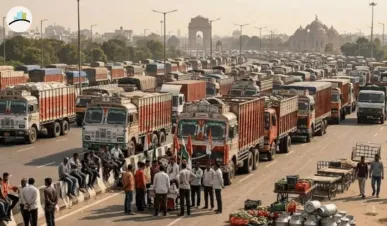
A massive three‑day transport strike began in Delhi today, bringing significant disruption to daily movement across the city. The strike, called by major transport unions and workers, has seen many buses, public transport services and hired vehicles grounded, leaving commuters scrambling for alternatives.
Delhi-NCR 3-Day Transport Strike Begins, Drivers Demand Fare Hike Amid Rising Fuel Costs
— ETV Bharat (@ETVBharatEng) May 21, 2026
Read More: https://t.co/j19QWC0L3O#TransportStrike #FuelPrices #TaxiAutoStrike #DelhiNCR #DriversUnion #Inflation #DelhiNews pic.twitter.com/aUF8WJVofY
The protest aims to push government authorities on wage demands and working conditions, and is expected to continue for 72 hours across the national capital.
Until When Will the Strike Continue?
The transport strike is scheduled to run for three full days starting today, meaning:
📅 Start: Day 1 — Today
🕐 End: Day 3 — 72 hours later
This means the strike is likely to continue throughout the weekend and end late on the third day, unless workers call a halt earlier or authorities and unions announce an agreement.
Commuters should plan their travel for this entire period, as disruptions are expected to remain significant.
What’s Closed Due to the Transport Strike?
Several key services and transport options are being impacted:
🚍 City buses: Most public transport buses are not running as drivers and staff participate in the strike.
🚕 Auto drivers: Many local auto drivers have also joined the strike in support.
🚗 Private transport: Some organized private transport unions have also paused operations.
🛣️ Road congestion: Fewer vehicles on the road in the morning have paradoxically caused local congestion as commuters switch to private cars and taxis.
The strike has brought the usual morning commuting rhythm to a standstill, with thousands forced to find alternative ways to reach work, school or errands.
MORE ARTICLES:
What Services Are Still Open?
Despite the transport strike, certain essential services continue to operate normally:
✅ Medical facilities & hospitals — Emergency services and outpatient departments are operating, though travel toward them may be slower due to strike conditions. Ambulances and emergency responders are also on duty.
✅ Pharmacies & medical stores — Most pharmacies remain open to serve urgent health needs.
✅ Food stores & grocery shops — Corner shops and major grocery stores are open, though staff travel delays may affect restocking or service hours.
✅ E‑commerce delivery services — Many delivery partners are still active, though delivery times may be slower due to strike traffic and reduced transport options.
Authorities have stressed that emergency and essential services will not be disrupted, and hospitals, clinics and medical professionals are urged to stay accessible.
How the Strike Is Affecting Daily Life
This transport strike has ripple effects across the city:
- Workplaces: Many employees are working from home or reporting late.
- Schools: Students are facing travel challenges, prompting some institutions to consider attendance flexibility.
- Offices & markets: Some businesses are operating with reduced staff due to commuting issues.
- Ride‑sharing surge: Taxi and cab services are in high demand, leading to surge pricing in some areas.
Commuters are increasingly relying on private vehicles, ride‑hailing apps, carpooling, cycling and walking where possible to get around.
Government & Union Stance
Government officials are in talks with union representatives to address the wage and working condition demands of transport workers. While no final agreement has been announced yet, authorities have assured monitoring of the situation and are urging patience from the public.
Union leaders have said the strike will continue unless they see constructive movement in negotiations, though they also emphasize the necessity of essential services remaining operational.



