
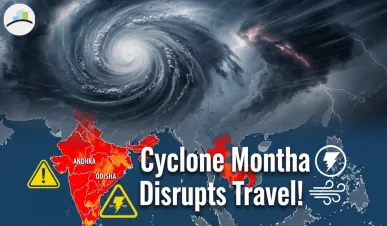
Cyclone Montha Hits Hard: Andhra and Odisha in Chaos
Cyclone Montha has stormed its way into the history books as one of the most disruptive weather events to affect Andhra Pradesh and Odisha in recent memory. What began as a distant threat quickly escalated into a force of nature, leaving both states grappling with the aftereffects. As the storm pounded the coastline with ferocity, authorities were forced to cancel flights, halt train services, and issue emergency warnings to the public. For many, the reality set in: life would not be the same for the next few days, as every scheduled event and travel plan came to an abrupt halt.
The cyclone arrived like an unexpected guest—uninvited, unrelenting, and demanding attention. With wind speeds topping 100 km/h and relentless rain pouring down, the cyclone didn't just knock on doors—it barged through them. As the storm raged, hundreds of travelers found themselves stranded at airports, train stations, and bus terminals, uncertain when they would be able to get back home. Flight cancellations piled up, while trains, which provide vital connections between cities, were suspended, leaving thousands of commuters with nowhere to go.
MORE ARTICLES:
The Aftermath: What We’ve Lost, and What We’re Fighting To Restore
The immediate impact of Cyclone Montha on travel has been disastrous. Over 100 flights were canceled, with airports in both Andhra and Odisha shut down for several hours, leaving passengers stranded and frustrated. At major airports like Visakhapatnam and Bhubaneswar, passengers were left scrambling for alternative travel arrangements, with limited access to information on flight statuses. While some flights resumed once the storm passed, the damage to travel schedules will take days, if not longer, to fully repair.
On the ground, train services were suspended, leaving many to wonder how they would return to their homes or continue with business trips. With rail tracks submerged in water or blocked by fallen trees, train delays and cancellations became unavoidable. The ripple effects have not been confined to travelers alone; entire communities that depend on trains for daily essentials found themselves disconnected from essential services.
While it’s easy to get caught up in the inconvenience of canceled plans, it’s important to remember that the storm has caused far more damage than just disrupted transportation. Thousands of lives were affected by the cyclone, with evacuations in vulnerable areas and homes left battered by floodwaters. The immediate priority is to save lives, restore basic services, and help those who are left in the wake of destruction. The recovery efforts are already underway, but it’s clear that it will take time for things to return to normal.
Resilience Amid the Storm: How Local Communities Are Rising to the Challenge
In the midst of all the chaos, one thing is clear: the human spirit is incredibly resilient. Local governments, first responders, and volunteers are working tirelessly to ensure the safety of citizens. Temporary shelters are being set up for families who have lost their homes, and emergency food and medical supplies are being distributed across the worst-hit regions. While it’s hard to imagine a silver lining during such a catastrophic event, the outpouring of support from communities and relief teams proves that even in the face of disaster, people pull together to rebuild.
Key Highlights from the Cyclone’s Devastation:
-
Flight Cancellations: A staggering 100+ flights were grounded, affecting thousands of passengers.
-
Train Disruptions: Hundreds of trains were halted across Andhra Pradesh and Odisha due to damage to tracks and safety concerns.
-
Evacuations and Shelters: Thousands have been evacuated to safer areas, with shelters offering food, water, and medical assistance.
-
Damage Assessment: The full extent of damage is still being determined, but reports suggest severe flooding, uprooted trees, and destroyed homes.
As we move forward in the aftermath of Cyclone Montha, the key challenge lies not only in restoring transport services but in rebuilding communities and ensuring that people can go back to their normal lives. The storm might have shaken the foundation of these regions, but the collective will of the people and authorities promises a swift recovery.



