
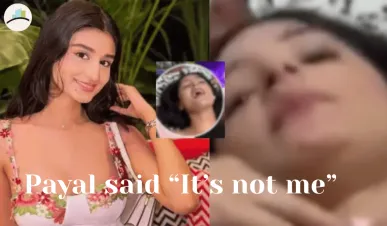
In a shocking turn of events, Payal Dhare, the popular Indian YouTuber and gaming creator known as Payal Gaming, has been dragged into a viral video controversy that exploded across social media — and she’s finally broken her silence. The gaming star, beloved by millions of fans for her engaging gameplay and energetic personality, was falsely linked to an intimate clip circulating online. Payal has firmly denied any involvement, calling the incident distressing, deeply hurtful and completely unrelated to her identity or life choices
Why Is Payal Facing Such Backlash? What Happened?
Over the past few days, an MMS‑style video began circulating on social media claiming to feature Payal Gaming. The clip quickly gained traction, shared across platforms like Instagram and X, and was widely discussed — without any verification. As the name “Payal Gaming” started trending, many users assumed the person in the video was the influencer herself, even though there was no proof at all that it was her.
The controversy escalated because the video seemed to be explicit in nature, which led to intense speculation, trending search terms, and widespread rumour‑mongering — all before any official confirmation. This fueled confusion, hurt Payal’s reputation, and generated massive online chatter.
RELATED ARTICLE:
Payal Gaming Viral Video Here: Explained and Full Breakdown
What Could Be the Reason Behind Defaming Her? Deepfake Fears and AI Misuse
Experts and fans alike are now pointing to a worrying trend: AI‑generated deepfake videos. These are highly manipulated digital clips that can place a person’s face onto another body or alter visuals to make it seem like someone did or said something they didn’t. Many observers believe the viral clip might be exactly that — a manipulated video designed to attract attention, clicks and chaos, rather than a genuine recording of Payal Gaming.
While nothing has been officially verified, deepfake technology has become alarmingly easy to misuse, especially against high‑profile social media figures with large followings. Payal herself stressed how damaging and dehumanising inaccurate content can be, especially when it spreads rapidly online.
How Are Payal Gaming’s Fans Taking It? A Massive Support Wave
Almost immediately, Payal’s community rallied behind her. Loyal supporters took to comments, community posts and fan forums to defend her character, insisting the clip is fake and urging others not to spread unverified videos. Many fans publicly called out the dangers of deepfake misuse and urged social platforms to remove misleading content before more reputational harm is done.
Viewers also noted how easy it has become to fabricate media, warning others to think before sharing and to respect Payal’s privacy — sentiments echoed across comment sections and live streams.
What Could Be the Next Move — Police Complaint, Legal Action & Accountability
In her official statement, Payal didn’t just deny the claims — she announced that she is taking appropriate legal action to address the misuse of her name and likeness and to hold those responsible accountable. This likely means a police complaint or cybercrime complaint could be filed soon. She also urged the public and media to stop sharing or speculating about the clip in any form.
Experts suggest that if deepfakes are involved, authorities may treat this under digital defamation and cyber harassment laws, which can lead to serious legal consequences for those who created or spread the manipulated content.
Who Could Be Behind It? Speculation, Motives & Online Risks
At this stage, there’s no confirmed identity of whoever first uploaded or created the viral clip linked to Payal Gaming. However, cyber analysts and social media experts point to a few common motives behind such controversies:
-
Clickbait and views: Fake videos often go viral because they attract eyeballs, driving traffic and ad revenue for the sharer.
-
AI abuse: With powerful tools available online, anyone with minimal technical skills can create deceptive deepfakes.
-
Trolling or harassment: Influencers — especially female creators — are often unfair targets of online abuse, leading to reputation damage.
-
Jealousy, competition or attention‑seeking: In some cases, rivals or malicious actors deliberately circulate misleading content to harm someone’s credibility.
None of these theories have been proven, but the speculation underscores how vulnerable public figures are to misinformation — and why strict action is necessary to curb such risks.



