
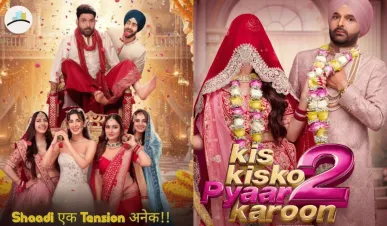
Fans of Kapil Sharma’s brand of comedy are in for a surprising twist! Kis Kisko Pyaar Karoon 2 — the sequel to the 2015 hit — is being re‑released in January 2026 just weeks after its original run. This decision turned heads because re‑releases are rare for mainstream Bollywood comedies, especially so soon after the film’s debut. But once you dig into why, the reasoning makes perfect sense — and it’s a story of tough competition, limited screens, and a second chance at success.
A Promising Start That Got Overshadowed
Kis Kisko Pyaar Karoon 2 premiered in cinemas on December 12, 2025, starring Kapil Sharma alongside a cast that included Ayesha Khan, Tridha Choudhary, Parul Gulati, Hira Warina and Manjot Singh. The comedy was welcomed with positive audience reactions and light‑hearted buzz online, with fans appreciating Kapil’s signature humour and situational comedy.
However, the film’s initial box office performance was more modest than expected. It collected around ₹11–12 crore in its first two weeks — respectable for a comedy but not enough to label it a blockbuster. Part of the reason for that shortfall wasn’t the film itself, but the movie landscape at the time.
Why It Struggled: The Blockbuster Blockade
Two mega‑films dominated screens at the same time:
-
Ranveer Singh’s Dhurandhar was smashing records and grabbing screens nationwide.
-
Hollywood’s spectacle Avatar: Fire and Ash also drew huge crowds and theatre slots.
These films soaked up a massive number of shows and screens across multiplexes, pushing smaller or newly released movies like Kis Kisko Pyaar Karoon 2 into a tight corner with limited showtimes. The result? Audiences who wanted to watch Kapil’s comedy simply couldn’t, because there literally weren’t enough screens available.
Film critics and trade analysts even pointed to skewed screen counts as a major reason the movie couldn’t find its groove at the box office. Many viewers ended up choosing the big‑budget blockbusters over the sequel — not because they didn’t like it, but because that’s what was being shown everywhere.
The Re‑Release Decision: A Strategic Second Shot
Instead of letting the film fade away, Kis Kisko Pyaar Karoon 2’s makers decided to give it a second life in theaters. Producer Ratan Jain and the team announced that the comedy would be re‑released nationwide in January 2026, with a fresh release date set to be revealed soon.
Why January?
-
Screens are expected to be more available after the holiday rush and theatre domination from heavy hitters like Dhurandhar and Avatar.
-
The family audience in January often returns to cinemas post‑festive season, which could boost footfall.
-
Positive audience reactions from the first run suggest there is demand that simply wasn’t met due to limited availability.
This move gives the film breathing room it didn’t have in December, offering a clean slate without box office giants hogging screens.
A Rare Move in Bollywood — But Not Without Precedent
Re‑releases are more common with classics or cult favourites celebrating anniversaries — not fresh comedies barely weeks old. But in this case, it’s a smart, uncommon strategy aimed at maximizing the film’s reach and giving audiences a chance to catch it properly on the big screen.
It also reflects the crowded nature of the current theatrical calendar, where sometimes a good movie gets lost in the shuffle simply because it didn’t have enough visibility.
What Fans Are Saying
Social media buzz suggests:
-
Many fans missed the film initially because theatres were full or screens were taken.
-
Some believe the comedy deserves a wider audience that wasn’t possible in December.
-
Others think this second release could turn the movie into a sleeper hit — if timing works in its favour.
The re‑release has given the film a new storyline of its own: not just a sequel, but a comeback underdog story.
What This Means for Kapil Sharma and Bollywood
For Kapil Sharma, this re‑release is more than a second run — it’s a chance to prove that Kis Kisko Pyaar Karoon 2 can succeed on its own terms, outside the shadow of box office blockbusters. It also highlights an evolving trend in Indian cinema where audience demand and strategic re‑scheduling can help films find their audience, even after a tough initial run.



