
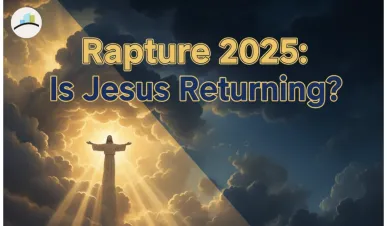
Understanding the Rapture
The Rapture is a central belief for many Christians who await the return of Jesus Christ. According to this teaching, believers will be “caught up” to meet Christ and live with Him forever. This hope is based on passages in the New Testament that describe the return of Christ and the gathering of His followers.
I heard that the rapture was meant to occur today. I think we're becoming too unserious with things about spirituality to concentrate on something Jesus said no one knows about when it will happen except God
— Blessed ❤️🎧 (@ChrisEjiofor5) September 23, 2025
While the exact timing of the Rapture has always been a mystery, it continues to inspire both hope and curiosity among Christians worldwide.
MORE ARTICLES:
Why the Rapture Creates Debate
The Bible speaks about Jesus returning but also makes it clear that the day and hour are unknown. This is why interpretations differ among denominations:
-
Some believe the Rapture will happen before a time of global tribulation.
-
Others think it will occur during or after such events.
-
A few view the Rapture symbolically, representing spiritual renewal rather than a physical event.
Because of these differences, every new prophecy sparks wide discussion.
The Latest Prophecy: September 2025
Recently, a pastor’s vision has reignited global conversation. He claims that Jesus will return on September 23–24, 2025, marking the time of the Rapture.
The dates coincide with the Jewish Feast of Trumpets, which some Christians connect with biblical end-time signs. This alignment has fueled speculation and widespread interest, especially on social media.
Reactions Among Believers
-
Faithful anticipation: Some Christians see this prophecy as a wake-up call to strengthen their faith and be spiritually prepared.
-
Skepticism: Many remind others that throughout history, specific predictions have repeatedly failed. They emphasize that Jesus Himself said no one knows the exact time.
-
Discussion within churches: Pastors and scholars are encouraging believers to focus on faith, prayer, and readiness, rather than on dates and timelines.
Why It Matters Today
The Rapture discussion goes beyond prophecy. It touches real lives in several ways:
-
It shapes how Christians live their daily faith, with emphasis on readiness.
-
It influences worship and teaching in churches worldwide.
-
It raises questions about hope, eternity, and salvation, especially during uncertain times



