
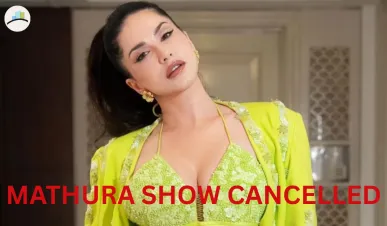
In a dramatic turn of events, Sunny Leone’s highly anticipated New Year programme in Mathura has been CANCELLED, sending shockwaves through the celebrity world. The event, set to be a glamorous celebration with Leone performing as a DJ, was met with furious opposition from local religious groups and seers who declared the show inappropriate for the holy city. The fallout from this cancellation raises big questions: What happened behind the scenes? What led to this intense backlash? And what does this mean for the future of celebrity shows in sacred cities like Mathura? Keep reading to find out the shocking details!
What Went Wrong? The Backlash That Led to the Cancellation
Sunny Leone, the actress turned DJ, was slated to perform at a private New Year event in Mathura, a city deeply revered by Hindus due to its connections with Lord Krishna. The event was supposed to feature Leone performing at a bar in Mathura, a venue that seemed at odds with the city’s spiritual legacy. The show was expected to draw in a crowd of both locals and tourists. However, things took a turn when local seers and religious groups voiced their disapproval, condemning the event as an affront to the sacredness of Mathura.
🚨Sunny Leone's New Year's Eve show cancelled in Mathura after protests by saints and sages. #SunnyLeone #sunnyleonehot pic.twitter.com/2RXM4maUko
— Armaan Kumar (@Armaan_Kumar02) December 31, 2025
The religious backlash didn’t take long to intensify. Protests erupted, with local leaders demanding that the show be cancelled, citing it as an act of cultural disrespect. The outrage reached a fever pitch as letters of protest were sent to the authorities, demanding the event be shut down. In a matter of days, the organisers were forced to pull the plug on what was expected to be a high-profile event. But what truly triggered such a fierce response? Let’s dive deeper.
Why Did Religious Groups Object to Sunny Leone’s Performance?
At the heart of the controversy lies Mathura's cultural significance. The city is home to some of the holiest sites in Hinduism, with people coming from around the world to visit the birthplace of Lord Krishna. For many, the idea of a high-profile event featuring a celebrity with a provocative public image clashed with the spiritual values that define the city.
The protests were not just about the event itself but the perceived disrespect to religious sentiments. Local religious leaders argued that such entertainment shows could tarnish the city’s image and distract from its divine purpose. They demanded that the show be stopped immediately to protect the sanctity of the region. This incident raises important questions about the intersection of modern celebrity culture and traditional religious values. Is there a limit to what can be done in sacred cities like Mathura?
The Organisers’ Response: Why the Event Was Canceled
After the uproar, the organisers had little choice but to cancel the event. In an official statement, they cited “respect for the local religious sentiments” as the reason behind their decision. They also assured ticket holders that refunds would be processed promptly. The cancellation, while disappointing to fans of Sunny Leone, seems to be a win for the local religious groups who fought hard for this outcome. But the question remains: Could this controversy lead to a broader impact on future celebrity events in places like Mathura and Vrindavan?
The cancellation also serves as a reminder of the delicate balance between entertainment and tradition. Is it possible for such high-profile events to coexist in cities with deep spiritual significance? And how will this impact future celebrity engagements in culturally rich regions?
MORE ARTICLES:
The Aftermath: What Does This Mean for Future Celebrity Events in Sacred Cities?
This incident could mark a turning point for the future of celebrity shows in cities like Mathura. With protests like these gaining traction, organisers may think twice before booking celebrities with controversial public personas for performances in deeply religious cities.
However, this controversy also highlights the growing tension between modern entertainment culture and traditional values in India. As cities like Mathura continue to develop as tourist hubs, there may be more such clashes in the future. The question that remains unanswered is whether such events will still be able to thrive in these cities, or if the voice of local religious communities will continue to overpower them.



