
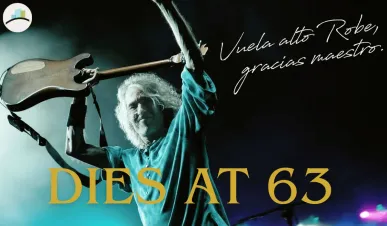
Robe Iniesta, the iconic frontman of Extremoduro — and one of the most influential voices in Spanish rock — has passed away at the age of 63. His death was confirmed on 10 December 2025. According to his agency, he died following complications from a pulmonary embolism, a health issue that had already forced him to cancel his tour last year. Spain’s music community, his fans, and cultural institutions have begun pouring out tributes. In his hometown of Plasencia (Cáceres), local authorities declared several days of official mourning to honor the man who many regard as a “poet of rock.”
From Humble Roots to Rock Icon: The Journey of Robe Iniesta
-
Robe was born on 16 May 1962 in Plasencia. Before fame, he even worked at a candy‑shop stand.
-
Passionate about music early on, he formed early musical projects before founding Extremoduro — a band that would define rock español for decades.
-
With Extremoduro, Robe blended raw energy, poetic lyrics, and rebellious spirit. Albums like Agila (1996) and songs like “So payaso” etched themselves into the hearts of generations.
-
Beyond the band, he also had a prolific solo career and even tried his hand at writing. He released a novel, and remained a respected lyricist — often described as a “poet” and “philosopher of rock.”
Through decades, his music gave voice to raw emotions — love, pain, rebellion, longing — making him not just a rock star but a cultural reference point for many across Spain and Latin America.
The Final Years: Health Struggles, Farewell Tour Cancelled
-
In 2024, Robe announced the cancellation of his concerts after being diagnosed with a pulmonary embolism.
-
That diagnosis seemed to mark an involuntary pause, but fans hoped for recovery and eventual return. Sadly, the embolism’s complications led to his death.
In his farewell statement, his agency described the news as “the saddest note” they’ve ever had to write.
The Legacy Left Behind — Why Robe Iniesta Means So Much
-
Robe and Extremoduro weren’t just musicians — they were a movement. Their style helped define rock transgresivo (transgressive rock), blending raw emotion, philosophical lyrics, and fearless honesty.
-
Beyond music, Robe was recognized for his cultural impact: he had recently received the Medalla de Oro al Mérito en las Bellas Artes (Gold Medal for Merit in Fine Arts) in 2024.
-
His songs — full of vulnerability, anger, longing, truth — reached fans across generations. Many say his lyrics helped them make sense of life, heartbreak, rebellion, and hope. He wasn’t just a rock star: he was a voice.
-
As both a band leader and solo artist, he proved that rock, poetry, and truth could intersect beautifully. His albums, books, and lyrics stand as testimony to a creative life dedicated to art and authenticity.
The Outpouring of Grief — How Spain (and the World) Reacted
Immediately after the news, tributes poured in — from fellow musicians, cultural leaders, political figures, and thousands of fans:
-
Social media was flooded with memories, songs, and messages: “Gracias Robe, maestro,” “Vuela alto, Hombre Pájaro.”
-
In Plasencia, the hometown of Robe, local authorities declared official mourning — flags lowered, day of remembrance — a sign of how deeply his loss resonates.
-
Music institutions paid homage, acknowledging him as one of the most important voices in Spanish-language rock. His influence transcended generations and genres.
What Happens Now? The Tribute, Memory & Future of His Work
-
Robe’s agency and band have announced they will soon release details about a public homage in Plasencia — a final farewell where fans can pay their respects.
-
His entire discography — band albums, solo works, writings — will likely see a resurgence in streams, sales, and public interest as fans old and new discover or rediscover his legacy.
-
For many young musicians and dreamers, Robe’s life will remain a blueprint: live with honesty, fight with passion, create with truth. His spirit will echo in new voices for decades.



