
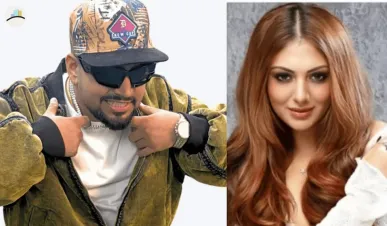
A fresh debate around influencer responsibility and online expression has erupted after rapper Santy Sharma commented on the bold social media content shared by actress and influencer Khushi Mukherjee. His remarks quickly gained traction online, with social media users divided over whether he was raising a legitimate concern or engaging in victim-blaming.
The discussion began when Sharma reacted to some of Mukherjee’s bold photos and videos posted on social media platforms. In his comments, the rapper argued that influencers with large followings should be mindful of the kind of content they share online, especially because social media platforms are easily accessible to younger audiences.
According to Sharma, while many platforms are designed for adult users, in reality teenagers and children also consume large amounts of content without supervision. He suggested that creators with significant influence should consider the impact their posts may have on young viewers who often look up to online personalities.
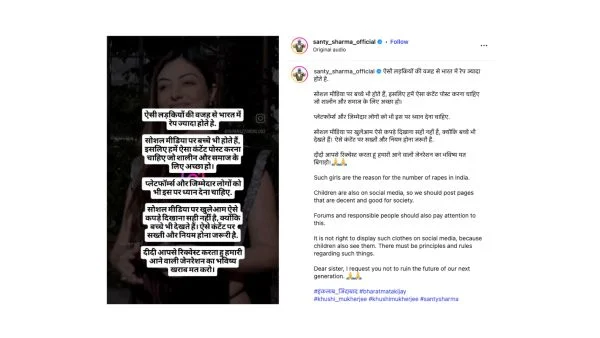
However, the controversy escalated when Sharma made a statement suggesting that content like this could contribute to rising crime rates in India. The remark triggered strong reactions online, with many users criticizing the comment and arguing that crimes such as rape cannot be linked to a person’s clothing, appearance, or social media content.
Supporters of Sharma, meanwhile, claimed that his comments were intended to spark a broader conversation about the responsibility of influencers and the type of content that circulates widely on social media platforms.
As the discussion gained momentum, it expanded into a larger debate about freedom of expression, digital influence, and the role of public figures in shaping online culture. Some commentators emphasized that conversations around crime and safety should focus on accountability for perpetrators rather than the behavior or appearance of individuals. Others argued that conversations about cultural influence and online standards are also worth exploring.
For those unfamiliar with him, Santy Sharma is an independent rapper known for addressing social themes in his music and public commentary. He first gained recognition with songs like Suni Suni Sadko in 2016 and the motivational track Udaan in 2017.
Over the years, Sharma has released multiple songs including Koshish Meri, Tribute, Ek Thi Meri Girlfriend, Killin, Choco Moco, Gangsta, Black Heart, Baahon Mein, Ek Din, Backless Dress, and Peeta Daaru, gradually building a dedicated audience.
Other Articles
-Karnataka’s Proposed Social Media Ban for Children Under 16: Details, Concerns, and Impacts
In 2025, Sharma released his first solo album Reborn, featuring eight tracks that showcased his evolving musical style. Originally from Ratlam, he is often regarded as one of the early rappers from the region to gain wider recognition in India’s independent hip-hop scene.
Meanwhile, the artist has announced that his upcoming single “I Don’t Care” will release on March 10, 2026, across major music streaming platforms.
As the conversation continues online, the incident highlights how comments made by public figures can quickly spark wider debates about social media responsibility, cultural influence, and freedom of expression in the digital age.



