
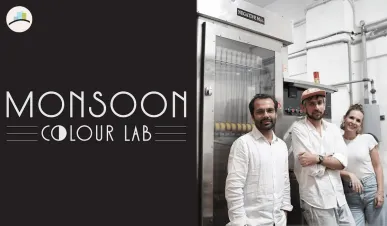
India’s film production landscape is set for a major upgrade as Prasad Corp and Monsoon Colour Lab have announced a strategic partnership aimed at building a fully integrated, end-to-end film production ecosystem in the country.
The collaboration is designed to support filmmakers working with traditional film formats by combining processing, scanning, restoration, and post-production services under a single streamlined workflow.
The announcement reflects a growing global revival of analogue filmmaking, where directors and production houses are once again showing interest in shooting on 35mm, 16mm, and Super 8 film for its visual texture and cinematic depth.
What Is the Prasad Corp and Monsoon Colour Lab Partnership?
The partnership brings together two major players in India’s film technology ecosystem:
- Monsoon Colour Lab, which is reviving the legacy of Film Lab India
- Prasad Corp, a leading global name in film restoration and post-production technology
Together, they aim to create a complete infrastructure that supports filmmaking from the original camera negative stage to final digital output.
This includes:
- Film processing
- Native 4K film scanning
- Colour grading
- Digital restoration
- Full post-production support
Why This Partnership Matters for the Indian Film Industry
For decades, India’s film production pipeline has relied heavily on fragmented services, often requiring filmmakers to depend on multiple vendors or even overseas facilities for post-production work.
This partnership aims to solve that gap by bringing everything under one integrated system.
The key goals include:
- reducing dependency on international film labs
- improving turnaround time for productions
- making analogue filmmaking more accessible
- strengthening India’s domestic film infrastructure
This is especially important as more filmmakers experiment with film-based shooting again after years of digital dominance.
Revival of Analogue Filmmaking in India
One of the biggest drivers behind this collaboration is the resurgence of analogue filmmaking globally.
Across the world, directors are returning to film formats because:
- it provides a distinct visual texture
- it offers a more organic cinematic feel
- it creates a different storytelling aesthetic compared to digital
Formats like 35mm, 16mm, and Super 8 are being used again in feature films, advertisements, and music videos.
This partnership is expected to support that growing demand within India’s creative ecosystem.
What Technology Will Be Used?
A major highlight of this collaboration is Prasad Corp’s advanced film scanning infrastructure.
One of the key systems involved is:
- Scanity HDR 4K film scanner
This technology allows:
- high-speed scanning of film negatives
- preservation of original film grain and quality
- creation of high-resolution digital rushes
- efficient production workflows for filmmakers
It bridges the gap between traditional film shooting and modern digital post-production needs.
Already Supporting Film Projects
According to industry reports, the combined capabilities of Prasad Corp and Monsoon Colour Lab have already been used in:
- feature films shot on 35mm and 16mm
- short films
- advertisements
- music videos
This shows that demand for film-based production is already active, not just theoretical.
Why India Needs an Integrated Film Ecosystem
India is one of the largest film production hubs in the world, but historically:
- processing labs have been scattered
- post-production often depends on separate vendors
- advanced film scanning infrastructure has been limited
This partnership attempts to build a centralised ecosystem, allowing filmmakers to access everything from one connected workflow.
This is expected to:
- boost efficiency
- reduce production delays
- improve quality control
- support both indie and large-scale productions
MORE ARTICLES:
Industry Impact and Future Potential
Experts see this move as part of a broader transformation in Indian cinema infrastructure.
If successful, it could:
- attract more international film projects to India
- revive interest in film-based production
- strengthen India’s role in global post-production services
- create new technical jobs in film restoration and scanning
It also aligns with the global trend of preserving and restoring cinematic heritage while supporting modern content creation.
Final Takeaway
The partnership between Prasad Corp and Monsoon Colour Lab represents a major step toward modernising India’s film production ecosystem while preserving traditional filmmaking techniques.
By combining advanced scanning technology with film processing expertise, the collaboration aims to create a seamless pipeline for filmmakers working across analogue and digital formats.
This move signals a broader revival of film-based production in India and positions the country as a stronger player in global film technology infrastructure.



