
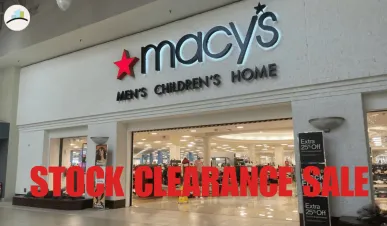
Macy’s, the iconic American department store that has anchored shopping malls for decades, is now shutting down more locations across the U.S. — and the news has sent shoppers and retail watchers into a frenzy. As part of a major strategic overhaul, Macy’s is closing down 14 more stores across 12 states in early 2026, launching clearance sales that promise deep discounts, and reshaping the future of brick‑and‑mortar retail.
This isn’t just another round of closures. It’s a signal of how retail is evolving — a legacy brand that once defined department‑store culture is now reinventing itself to survive. If you’ve ever shopped at a mall or walked past a Macy’s store, these changes could affect your neighborhood.
Why Macy’s Is Closing Stores
Macy’s isn’t shutting these stores down for lack of history or loyalty. The company is executing a long‑term plan called its “Bold New Chapter” strategy, first unveiled in 2024. Under this approach, the retailer has committed to closing around 150 underperforming locations by the end of 2026, while redirecting its attention and resources to stores that are performing strongly. Retail experts say this is part of Macy’s effort to modernize, simplify operations, and invest in experiences that matter most to today’s shoppers.
Macy’s store closures 2026: See the full list of doomed locations in 12 states as clearance sales begin https://t.co/9epUY19fTx
— Doug OConnell (@DougOConnell7) January 10, 2026
According to the strategy’s backers, focusing on a leaner number of profitable stores — along with bolstering its digital presence and enhancing in‑store experiences — gives Macy’s a better chance at long‑term success in a competitive retail landscape.
MORE ARTICLES:
When Are the Clearances and Closures Happening?
Stores earmarked for closure will begin their clearance sales in mid‑January 2026, and those sales are expected to run for about 10 weeks as the stores gradually wind down operations.
That means deep discounts, markdowns on apparel, home goods, accessories, and more — everything must go before these doors close for good. For loyal Macy’s customers, bargain hunters, and deal‑seekers, this could be one of the biggest store‑closing sales of the year.
Full List of Macy’s Store Closures (Early 2026)
Here’s where Macy’s is shutting doors in the first quarter of 2026:
California
-
Grossmont Center — 5500 Grossmont Center Drive, La Mesa
-
West Valley Mall — 3400 Naglee Road, Tracy
Georgia
-
Northlake Mall — 4880 Briarcliff Road NE, Atlanta
Maryland
-
Marley Station — 7900 Ritchie Highway, Glen Burnie
Michigan
-
RiverTown Crossings — 3850 Rivertown Parkway SW, Grandville
Minnesota
-
Crossroads Center — 4101 W Division St., Saint Cloud
New Hampshire
-
Mall at Fox Run — Fox Run Road, Newington
New Jersey
-
Livingston Mall — 112 Eisenhower Parkway, Livingston
-
Interstate Shopping Center — 233 N Franklin Turnpike, Ramsey
New York
-
Boulevard Mall — 1255 Niagara Falls Blvd., Amherst
North Carolina
-
Triangle Town Center — 3801 Sumner Blvd., Raleigh
Pennsylvania
-
Galleria at Pittsburgh Mills — 100 Pittsburgh Mills Cir, Tarentum
Texas
-
La Palmera — 5488 S Padre Island Dr., Corpus Christi
Washington
-
Budget House Clearance — 17855 Southcenter Parkway, Tukwila
These closures span coastal cities, major metro areas, and long‑standing mall locations, reflecting Macy’s efforts to pivot toward higher‑performing markets.
What This Means for Shoppers and Mall Culture
For shoppers, this could be a dream or a heartbreak. On one hand, clearance sales with up to 70% off could bring big savings on clothing, home goods, accessories and seasonal items. Savvy bargain hunters are already lining up for early deals.
On the other hand, these closures mark the end of an era for many communities where Macy’s once served as a major anchor store — the kind that drew foot traffic to malls and shaped retail culture for decades. Losing a Macy’s location often means smaller mall traffic, fewer jobs, and a changing footprint for the local economy.
What Happens Next for Macy’s?
Macy’s isn’t disappearing — far from it. The plan is to focus on 350 “go‑forward” stores, elevate customer experiences, strengthen digital services, and even grow parts of its business like Bloomingdale’s and Bluemercury luxury brands. Analysts say that closing underperforming stores — while painful — could free up resources to improve profitability, expand e‑commerce, and keep Macy’s relevant in a retail world dominated by online giants.
For now, customers, local communities, and retail watchers alike will be watching closely as clearance sales start and those iconic red star logos gradually disappear from more storefronts.



