
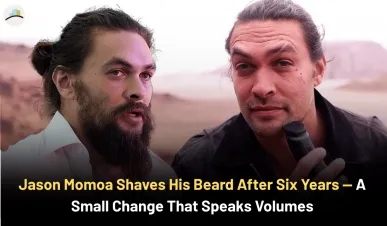
Jason Momoa just shaved his beard for the first time in six years, and people can't stop talking about it. What sounds like a simple grooming update is actually layered with meaning. It connects to his return in Dune: Part Three, to his activism, and to the ongoing way celebrity identity and character branding work today. And while fans may joke or gasp at the change, it reflects something much deeper about how actors manage image, purpose, and performance in today’s industry.
Jason Momoa shaves beard for first time in 6 years. pic.twitter.com/YGE2GStfTK
— Pop Crave (@PopCrave) July 30, 2025
A Personal Sacrifice for a Bigger Role
Jason Momoa has been known for that beard. It’s been part of his look through Game of Thrones, Aquaman, and the first two Dune movies. So when he shaved it off for Dune 3, it caught attention. But this wasn’t just a style switch. It was a creative decision tied to the story. Momoa is returning as Duncan Idaho — but as a clone, a different version of the character. So the fresh face marks a reset. It’s a visual way to show that this isn’t the same Duncan we knew before.
He even joked in the video that he “hated it,” saying “only for you, Denis,” referring to director Denis Villeneuve. That tells you the change was not about vanity — it was about doing what the role needed. And honestly, that kind of commitment is rare in actors who already have a brand that works. Momoa was willing to mess with something that’s worked for him for years, just to make the character feel right.
Also read on Procapitas
The Sustainability Message That Was Hiding in Plain Sight
What’s interesting is that he didn’t just shave and post the video. He tied the whole moment to a cause: reducing plastic waste. In the same clip, Momoa promoted his company, Mananalu, which sells water in aluminum bottles as a way to fight single-use plastic. That connection might seem random, but it’s smart. He used a personal transformation to bring attention to a global issue — turning a viral moment into a message.
This matters because we’re seeing more celebrities try to link personal updates to public impact. And when it’s done well — like this — it lands naturally. The key here is authenticity. Momoa didn’t feel like he was selling anything. He was just being himself, and the activism came through as part of his personality, not just part of a marketing plan.
A Changing Image and Its Industry Implications
The clean-shaven face is more than just a look. It’s part of a bigger conversation in Hollywood about how actors evolve their image. Momoa is known for playing tough, rugged characters. The beard helped sell that. But this shift — going beardless, being vulnerable, even a little uncomfortable — shows he’s open to growth. He’s not stuck in one image.
That kind of adaptability is crucial now, especially for actors involved in long-running franchises. Hollywood has become less about individual roles and more about shared universes, spin-offs, and sequels. So when an actor changes something major about their look or tone, it’s not just personal — it’s strategic. It signals to audiences and producers that the character arc is evolving.
What’s Not Being Talked About Enough
There’s a subtle layer that hasn’t really been explored. Momoa’s change could impact how audiences relate to Duncan Idaho in Dune 3. Will the absence of the beard affect how people emotionally connect with the character? It sounds silly, but in visual media, small details matter. Familiarity creates trust. So taking that away, even for story reasons, adds a layer of unpredictability.
Also, the fact that his son, Nakoa-Wolf, is reportedly joining the cast makes the timing of the change even more symbolic. It’s not just a professional reset — it feels like a generational handoff. There’s something powerful about a father adjusting himself, even physically, in a project where his child is stepping in too.
The Business of Personal Change
This whole moment also works as a marketing strategy. Momoa has built a brand — one that includes his look, his causes, and his roles. Shaving the beard disrupted that brand, but not in a reckless way. It actually refreshed it. For fans, it made him more relatable. For the industry, it showed flexibility. And for his water company, it provided a burst of free press and cultural relevance.
Actors don’t often get to control their image on this level — they’re usually reacting to scripts, costumes, and directors. But here, Momoa owned the transformation. He did it on his terms, shared it on his platform, and aligned it with his values. That’s smart branding.
Conclusion
Jason Momoa’s beard shave might seem like a small thing on the surface, but it’s actually a case study in modern celebrity strategy. It shows how physical changes, when done with intention, can support storytelling, drive activism, and refresh a public image. Whether or not fans like the clean-shaven look doesn’t matter as much as why he did it — and what it says about where he’s headed next, both on screen and off.



