
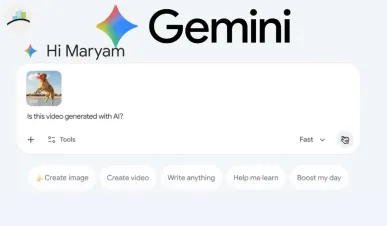
In a world where AI-generated content is becoming increasingly sophisticated, one question is on everyone’s mind: How do you tell if a video is real or AI-generated? Thanks to Google Gemini, the search giant’s cutting-edge AI tool, identifying whether a video has been created by artificial intelligence has just gotten a whole lot easier. In this article, we’ll explore how Google Gemini can distinguish AI-made videos and what this means for content creators, consumers, and the digital landscape as a whole.
What is Google Gemini?
Before diving into how Google Gemini works, let’s first understand what it is. Google Gemini is a powerful AI tool developed by Google that leverages advanced machine learning to detect patterns, images, and videos that are synthetically created. Gemini is a significant advancement in AI tools, designed not only to enhance user experiences but also to improve content verification. With the rise of deepfakes and AI-generated media, Gemini’s ability to distinguish between real and synthetic content is set to revolutionize the way we consume and verify videos online.
Can Google Gemini Detect AI-Generated Videos?
Yes, Google Gemini can now identify whether a video was created using AI. By analyzing patterns and inconsistencies that are often present in AI-generated videos, Gemini can flag content that appears to be synthetic or altered. Whether it's a video of a person talking, a highly realistic animation, or a scene that looks too perfect to be true, Gemini’s deep learning algorithms can detect the subtle tell-tale signs that differentiate human-made videos from AI-generated ones.
How Does Google Gemini Work?
So, how does Google Gemini actually work? Here’s a breakdown of the process:
-
Pattern Recognition: Gemini uses advanced AI to analyze visual and auditory patterns within the video. It looks for unusual pixel patterns, lighting inconsistencies, or even unnatural facial movements, all of which are common in AI-generated content.
-
Metadata Examination: Google Gemini also scans the metadata associated with the video. AI-generated videos often leave behind unique metadata footprints that can be traced back to their creation using tools like deep learning software.
-
Audio Analysis: Along with visual patterns, Gemini examines the audio track. AI-generated speech often sounds slightly unnatural or has certain rhythm or tone inconsistencies that can be picked up through sophisticated audio analysis.
-
Source Verification: If the video is part of a news feed or a social media platform, Gemini can check its source history to verify whether the content was uploaded or modified in ways that indicate AI involvement.
Why Does This Matter?
As the line between reality and AI-generated content continues to blur, it becomes increasingly difficult to trust everything we see online. Deepfakes and AI-generated videos can be used maliciously, whether for spreading misinformation, creating fake news, or even just fooling consumers into believing something that isn't true. That’s where Google Gemini’s detection system comes in — it provides an extra layer of security and transparency in a digital landscape full of synthetic media.
For content creators, this tool could serve as an invaluable asset, helping to verify the authenticity of their work and ensuring that their videos aren’t unknowingly being mixed with AI-generated content. For consumers, it means a safer online environment where they can trust the media they consume with more confidence.
The Impact on Content Creators and Consumers
As AI-generated videos become more common, the responsibility to discern between genuine content and AI-made media grows. Here’s how Google Gemini impacts both content creators and consumers:
-
Content Creators: Google Gemini provides a way to verify that their content hasn’t been tampered with or mistakenly categorized as AI-generated. This could be crucial for businesses, influencers, and individuals who rely on their videos for credibility.
-
Consumers: For everyday viewers, Gemini provides an added layer of trust, helping to ensure that the videos they watch, share, and interact with are authentic. It will also make it harder for deceptive AI-created content to slip by unnoticed.
How Can You Use Google Gemini?
Currently, Google Gemini’s detection system is being gradually integrated into Google’s search and video platforms. It’s also available to a select group of partners and developers who can use the tool through Google Cloud services. For everyday users, it may take a little time before Gemini’s capabilities are widely accessible. However, once available, Gemini could be incorporated into Google Search results, allowing users to check if a video is AI-generated before even clicking on it.
What’s Next for AI Detection Tools?
As AI-generated content continues to rise, tools like Google Gemini are just the beginning. The next step in this tech evolution will likely be AI that not only detects synthetic content but also creates countermeasures — such as digitally watermarking real content or providing users with immediate alerts about potential fakes.
In the coming years, we may see a major shift in how digital media is consumed, with AI detection becoming a standard tool for every content creator and consumer. The stakes are high, and the need for tools that verify the authenticity of media is more critical than ever.



