
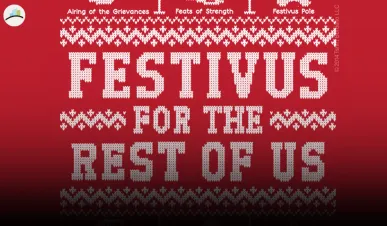
Today marks Festivus, the unique secular holiday that has grown into a cultural phenomenon since its creation decades ago. Originally introduced on the popular television show Seinfeld, Festivus has become an alternative way to celebrate the season for those seeking humor, reflection, and a break from the commercialization of traditional holidays.
The Origins of Festivus
While Festivus gained widespread attention in the 1997 Seinfeld episode titled The Strike, the holiday’s origins trace back to the 1960s. It was created by writer Dan O'Keefe’s family as a way to bring humor and simplicity to the often stressful holiday season. The celebration was later adapted for TV, but over time, it has developed into a real-world tradition for many, especially those who prefer a less conventional approach to the holidays.
Festivus Traditions: Airing of Grievances and Feats of Strength
Unlike most holidays, Festivus doesn’t focus on gifts or elaborate decorations. Instead, its traditions are designed to celebrate humor, honesty, and personal connection:
-
The Festivus Pole: A simple, unadorned aluminum pole is displayed as the holiday’s central symbol, representing a minimalist alternative to traditional holiday decorations.
-
The Airing of Grievances: After a festive meal, participants gather to share their grievances — a time to air frustrations and humorously complain about how others have disappointed them throughout the year.
-
Feats of Strength: After dinner, a physical challenge ensues, with one participant (often the head of the household) having to engage in a “feat of strength” to finish the celebration. The event usually ends when the head of the household is pinned.
Additionally, some celebrants add their own twists, such as calling out “Festivus miracles” to label everyday, often humorous occurrences as miraculous.
Why Festivus Matters in 2025
In a world where traditional holidays can sometimes feel overwhelming or exclusionary, Festivus provides an alternative that focuses on connection, reflection, and humor. It offers a way to bond over shared frustrations and celebrate the absurdity of the modern holiday season.
In 2025, Festivus has gained even more popularity, with people using the holiday to highlight their own personal grievances or to engage in creative and funny ways with their community. Its ability to offer an inclusive, light-hearted alternative to the pressures of commercial holiday celebrations resonates with many, especially in today’s fast-paced world.
The Growing Popularity of Festivus
What started as a fictional gag on Seinfeld has become a real-life tradition for many who embrace its humorous spirit. Fans of the holiday hold small gatherings, public protests, or community events, where grievances are shared, and people bond over laughter. It has even been adopted by various cultural groups who use it as an opportunity to express frustrations or just take a break from traditional holiday stress.
Looking Ahead: The Future of Festivus
As Festivus continues to grow in popularity, it’s clear that it’s more than just a TV reference. It’s become a global celebration of humor, community, and simple rebellion against the commercialization of the holiday season. Whether through the airing of grievances, feats of strength, or just a good laugh with loved ones, Festivus stands as a reminder that the holiday season doesn’t have to be just about tradition, gifts, or pressure — it can be about fun, self-expression, and shared moments of joy.