
Daredevil: Born Again Season 2 Ends With a Bold Bet on Marvel's Reinvented Streaming Playbook
The Season 2 finale with its identity reveal, Defenders reunion, and imprisoned hero is Marvel Television's most deliberate test yet of a strategy built around long-running, culture-permeating shows. The ratings tell a complicated story.
⚠️ Full spoilers for Daredevil: Born Again Season 2, Episode 8 follow.
When Daredevil: Born Again Season 2 concluded on Disney+ on Tuesday, May 5, it closed its most audacious chapter to date: Matt Murdock publicly unmasking himself in a courtroom, Wilson Fisk forced into exile, and Luke Cage appearing in the final moments to suggest what Season 3 might become. Read purely as television, it is a confident, well-constructed finale. Read through the lens of Marvel's broader streaming strategy, it is something more pointed and its performance data raises urgent questions.
What the Finale Actually Does
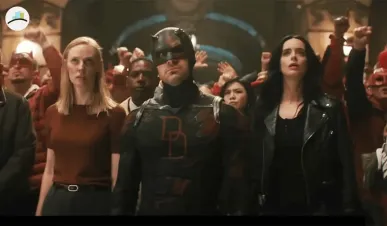
In the Season 2 finale, Murdock reveals his identity as Daredevil during Karen Page's trial, using his first-hand witness testimony about Fisk's black-market arms operation to clear her of all charges. The judges previously cowed by Fisk belatedly rule in Murdock's favor.
Fisk, stripped of his mayoralty and facing racketeering, smuggling, and attempted murder charges filed by the Attorney General, accepts a deal forcing him to renounce his U.S. citizenship and leave the country. His monetary assets are frozen and his Red Hook port placed under government control.
But the victory is engineered to be temporary. New York police arrest Murdock shortly after for crimes committed as a masked vigilante crimes he can no longer deny imprisoning him in the same penitentiary as the Anti-Vigilante Task Force officers rounded up during the finale's climactic confrontation.
In the episode's closing moments, Mike Colter appeared as Luke Cage, reuniting with Charlie Cox's Murdock and Krysten Ritter's Jessica Jones the three of them back together for the first time since their original Netflix run, with Jessica having reopened Alias Investigations
Other Stories-
-Michael Strahan Celebrates Career Milestone as Retirement Buzz Grows
-Lisa Kudrow Trends Again: ‘Friends’ Star Opens Up on Fame, Fortune, and the Show’s Lasting Impact
-John Sterling Dead at 87: Yankees Legendary Radio Voice Dies, Legacy & Career
The Strategic Architecture Behind the Ending
Every one of these story beats is structurally consequential for Marvel Television's stated goals. Under head of television Brad Winderbaum, Marvel Television has instituted what it describes as a "slowdown" in output to favor quality over quantity, pivoting to make "television more in a traditional style" with a focus on shows that can "last multiple seasons" and "brew in the culture" for years.
Born Again is the flagship proof of concept for that model. Winderbaum confirmed on the Official Marvel Podcast that Krysten Ritter's role in Season 2 represents a full "re-establishing" of Jessica Jones within the MCU a deliberate use of an existing show as a launchpad before any standalone series is considered. That approach has already prompted speculation that a solo Jessica Jones Disney+ revival could follow, should Ritter's return prove popular enough — mirroring how Born Again itself emerged from Charlie Cox's cameo in Spider-Man: No Way Home.
Season 3, already in production, is confirmed by executive producer Sana Amanat to continue drawing from the Mayor Fisk and Devil in Cell Block D comic storylines, with Murdock's imprisonment as the opening thread. Set photographs have confirmed that Jessica Jones, Luke Cage, and Danny Rand Iron Fist have all filmed scenes for the upcoming season. The Defenders, in other words, are being reconstituted not through a dedicated crossover event, but incrementally, through a single show being used as a connective hub.
The Problem the Finale Cannot Solve
Here is the tension that no amount of careful storytelling addresses: the audience. Despite critical praise for Season 2 and its deeper investment in the Netflix-era narrative, Daredevil: Born Again failed to appear in Nielsen's streaming charts in its premiere week of March 23–29, continuing a troubling trend from Season 1 of being the only live-action MCU Disney+ series to never chart.
Marvel Television's strategy switch is explicitly designed to create shows that "brew in the culture" yet the available data suggests Born Again has not yet achieved that cultural penetration, despite being the division's highest-profile and most critically praised offering.
Marvel has not officially commented on the show's viewership figures. Whether the finale's Defenders reunion and the Season 3 Defenders-as-ensemble arc it engineers will convert critical momentum into measurable audience growth has not been officially confirmed.
What the Season 2 finale does make clear is that Marvel Television is fully committed to the bet. The ending is not written to close a story. It is written to make abandoning it impossible.



