
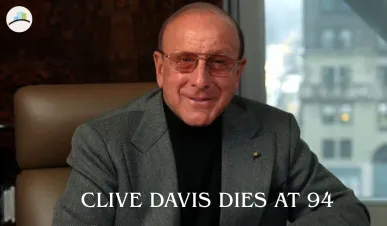
Clive Davis, the legendary music executive who helped shape the careers of Whitney Houston, Bruce Springsteen, Alicia Keys, Janis Joplin and many more, has died at the age of 94. His death has sparked tributes across the music world, but it has also revived public interest in the extraordinary career of a man often called one of the most powerful “ears” in modern music. Davis was not simply a record executive. For decades, he was the industry figure artists trusted, feared, argued with and often credited for changing their lives. People reported that Davis died peacefully from age-related illness at his Manhattan home on June 22, surrounded by family and loved ones.
Who Was Clive Davis?
Clive Davis was one of the most influential record executives in American music history.
He began his career as a lawyer before rising through the music business to become president of Columbia Records in the 1960s. From there, he helped launch or guide some of the biggest names in rock, pop, soul, R&B and hip-hop.
Davis later founded Arista Records in 1974 and J Records in 2000. He also worked with RCA, BMG and Sony Music, where he was appointed chief creative officer in 2008. People described him as a five-time Grammy winner and one of the most important executives in the modern recording industry.
To casual fans, he may be best known as the man who helped introduce Whitney Houston to the world. But inside the music business, his name was connected to decades of hit records, artist development and label-building.
How Did Clive Davis Die?
Clive Davis died at 94 from age-related illness, according to a statement shared by his longtime representative with People. The report said he passed away at his home in Manhattan on Monday, June 22, surrounded by his family and loved ones.
The news came shortly after Davis had been hospitalized earlier in 2026. The Guardian reported that he had recently been treated for respiratory problems and had been recovering at home before his death.
His death led to tributes from artists, songwriters and music executives who remembered him not only as a business figure, but as someone who shaped the sound of several generations.
Why Clive Davis Mattered So Much In Music
Clive Davis mattered because he had something rare: commercial instinct and long-term artist vision.
He was known for spotting talent early, but also for knowing how to position artists so they could reach wider audiences. That made him powerful, but sometimes controversial. He was not a passive executive who simply signed artists and waited. He pushed songs, shaped careers, questioned creative choices and often insisted on what he believed would become a hit.
The Guardian reported that Davis signed major artists including Bruce Springsteen, Janis Joplin, Santana, Billy Joel, Aerosmith and Whitney Houston, while also leading major labels such as Columbia, Arista, J Records, RCA Group and BMG North America.
That is why his legacy is bigger than one label or one decade. Davis helped shape the sound of pop music from the 1960s into the streaming era.
Clive Davis And Whitney Houston: A Career-Defining Bond
For many fans, Clive Davis will always be linked most closely with Whitney Houston.
Davis signed Houston to Arista Records when she was 19 years old in 1983. He helped guide her early career and played a major role in turning her from a young vocalist with extraordinary promise into one of the biggest global pop stars of all time. The Guardian reported that Davis mentored Houston and was involved with all but one of her albums.
Their relationship was professional, personal and deeply visible. Davis often spoke proudly about Houston’s voice, her crossover appeal and her place in music history.
Houston’s career was not without pain or controversy, and Davis’ role in her life has been discussed many times over the years. But there is no doubt that his name is permanently tied to her rise. For millions of listeners, the Clive Davis-Whitney Houston partnership helped create some of the most memorable pop and R&B moments of the 1980s and 1990s.
Why Fans Are Searching “Clive Davis Whitney Houston”
Searches for “Clive Davis Whitney Houston” are rising because Houston remains one of the most famous artists Davis ever worked with.
Many younger fans know Whitney Houston’s songs but may not know the executive behind her early career. Davis helped place her in the right rooms, connect her with major songs and build the kind of mainstream career that crossed pop, soul and adult contemporary audiences.
He was also one of the most public figures connected to Houston after her death in 2012. His annual pre-Grammy gala was famously held at the Beverly Hilton Hotel on the night Houston died, making their connection even more widely discussed in pop culture history.
That is why any news about Davis naturally brings Houston back into the conversation.
Clive Davis’ Biggest Career Moments
Clive Davis’ career was filled with major turning points.
At Columbia Records, he helped push the label deeper into rock music during a major cultural shift. He signed or championed artists who would become defining figures of their time.
After leaving Columbia, he founded Arista Records, where he built another powerhouse label. At Arista, he worked with Barry Manilow, Patti Smith, Dionne Warwick, Aretha Franklin, Whitney Houston, Alan Jackson and others. People reported that he also helped create LaFace Records with L.A. Reid and Babyface, bringing artists like TLC, Toni Braxton and Pink into the broader pop and R&B conversation.
He later launched J Records, where Alicia Keys became one of the label’s biggest early successes.
That kind of run is almost impossible to repeat. Most executives are strongly linked to one era. Davis stayed relevant across many.
What Artists Did Clive Davis Discover Or Help Launch?
Clive Davis was associated with a long list of major artists.
His career included work with Janis Joplin, Bruce Springsteen, Billy Joel, Aerosmith, Santana, Barry Manilow, Patti Smith, Whitney Houston, Aretha Franklin, Dionne Warwick, Alicia Keys, Kelly Clarkson, Carlos Santana, TLC, Toni Braxton and Pink.
Not every artist relationship was simple. Some musicians praised him as a visionary, while others pushed back against his control. But even his critics usually recognized his influence.
The Associated Press described Davis as a music industry “starmaker” who launched or revived the careers of major names including Janis Joplin, Whitney Houston, Carlos Santana and Alicia Keys.
Clive Davis Net Worth: How Much Was He Worth?
Clive Davis’ net worth has become one of the biggest search terms after his death.
There is no fully verified public figure for his exact personal fortune. However, Celebrity Net Worth estimated Clive Davis’ net worth at around $850 million. That figure should be treated as an estimate, not an official financial disclosure, because celebrity net worth sites usually calculate wealth using public records, career earnings, assets and industry assumptions rather than confirmed private financial statements.
The estimate is believable in the sense that Davis spent decades at the top of the music business, founded major labels, held senior executive roles and worked with some of the biggest-selling artists in history. Still, readers should understand that “Clive Davis net worth” numbers online are estimates unless confirmed by estate filings or family statements.
MORE ARTICLES:
Why Was Clive Davis Called “The Man With The Golden Ears”?
Davis earned the nickname because of his ability to identify hit potential.
He could hear an artist, song or arrangement and understand how it might connect with a mass audience. That instinct helped him build a career across rock, pop, R&B, soul, country and hip-hop-linked labels.
People noted that Davis was widely known as the “man with the golden ears,” a phrase that became attached to his reputation as one of the industry’s most successful talent spotters.
The nickname also explains why his death matters so much. He was not just wealthy or famous inside the industry. He represented an older kind of music executive whose personal taste could still change the direction of popular culture.
Diane Warren And Music Stars Pay Tribute
Tributes to Clive Davis have come from across the music world, including artists and songwriters who worked with him for decades.
The Rolling Stone link you shared focuses on songwriter Diane Warren’s tribute, which is a strong emotional angle for this article because Warren’s career crossed paths with many of the same powerhouse voices and pop moments that Davis helped shape.
The Guardian reported tributes from major artists including Patti Smith, Bruce Springsteen and Barry Manilow, all of whom remembered Davis as a deeply influential figure in their careers and lives.
These tributes matter because they show the human side of Davis’ influence. He was not only a label boss signing contracts. For many artists, he was a mentor, challenger and lifelong presence.
Clive Davis And The Business Of Pop Stardom
Clive Davis understood that talent alone was not enough.
He believed in songs, timing, image, production and audience connection. That made him one of the most effective executives in the industry, but it also made him demanding. He often pushed artists toward choices they did not initially want to make.
That tension is part of his legacy. Davis could help create superstars, but his style also raised questions about how much control a record executive should have over an artist’s sound.
Still, his commercial results were hard to ignore. From Whitney Houston’s global rise to Santana’s late-career comeback and Alicia Keys’ early breakthrough, Davis repeatedly proved that his instincts could work across generations.
His Legacy Beyond The Charts
Clive Davis’ influence was not limited to hit songs.
He also supported music education. People reported that Davis gave a $5 million gift to NYU’s Tisch School of the Arts, helping create the Clive Davis Institute of Recorded Music.
That part of his legacy matters because it connects his career to future generations of artists, producers and music executives.
Davis spent his life inside the music business, but his impact continues through the artists he shaped, the labels he built and the students who study at the institute that carries his name.
Why Clive Davis’ Death Feels Like The End Of An Era
Davis belonged to a different age of the music industry.
He came up when labels had enormous power, when executives could still shape careers from behind office doors, and when a single album rollout could define a generation. Today’s music world is driven by streaming platforms, viral moments and social media discovery. The role of the old-school record executive has changed dramatically.
That is why Davis’ death feels bigger than the loss of one person. It marks the passing of a figure from an era when record labels built long-term stars and executives became cultural power brokers.
Few people had that kind of reach. Fewer still kept it for as long as Davis did.
Final Takeaway
Clive Davis’ death at 94 closes the chapter on one of the most influential careers in modern music history. From Columbia Records to Arista, J Records and Sony Music, he helped build the careers of artists who defined generations.
His connection to Whitney Houston remains one of the most important parts of his legacy, but it is only one chapter in a much larger story. Davis shaped rock, pop, soul, R&B and contemporary music through instinct, discipline and a relentless belief in hit songs.
His net worth may draw curiosity, but his real legacy is easier to measure through music. The artists he discovered, mentored and challenged became part of the soundtrack of millions of lives.



